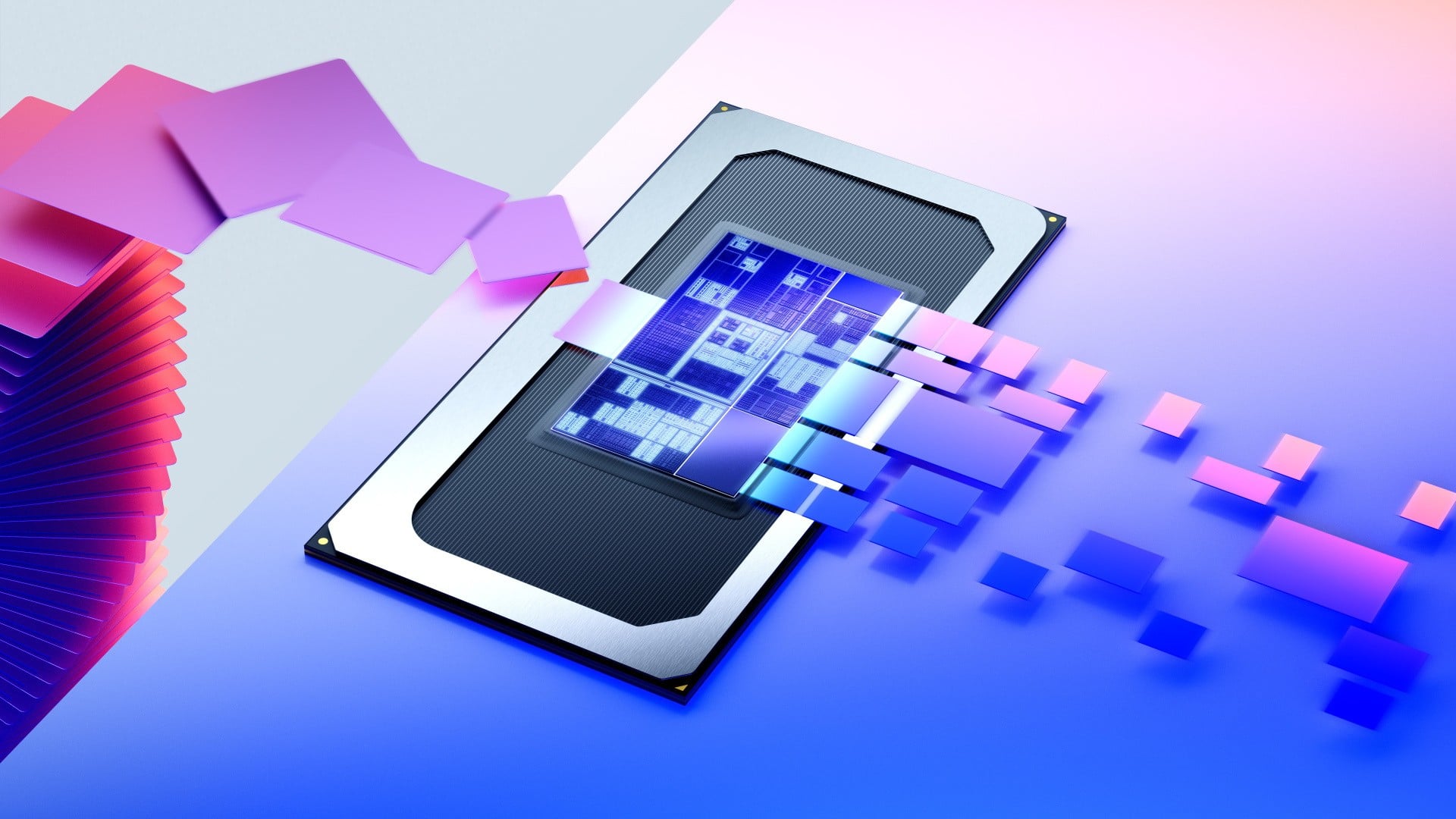
Intel's Panther Lake mobile platform, showcased at CES 2026, positions integrated Arc B390 graphics (12 Xe cores) and a Core Ultra X9 388H CPU (16 cores: 4 P, 8 E, 8 low-power E) with an NPU rated at 50 TOPs and 120 TOPs of integrated graphics, as a significant step up for energy-efficient gaming. Intel claims up to +77% performance versus Lunar Lake and an 82 percentage-point lead versus AMD's Strix Point Ryzen AI 9 HX 370; real-world Cyberpunk 2077 testing at 1080p/ultra/RT showed 29.05fps on Panther Lake vs 15.66fps on a similarly configured 65W Strix Point (an 85.5% uplift), while XeSS balanced mode boosted Panther Lake to 55.96fps (+92.6%). These results suggest Intel could strengthen its laptop and handheld market positioning versus AMD (and challenge discrete GPU incumbents at lower power budgets), with potential implications for market share in portable gaming devices.
Market structure: Intel (INTC) is the clear near-term beneficiary — Panther Lake’s integrated Arc B390 + XeSS/frame-generation reduces OEM reliance on AMD APUs for gaming laptops/handhelds, shifting ~5–10% of addressable mobile-GPU demand toward Intel within 6–12 months if OEM adoption accelerates. AMD (AMD) is the principal loser in mobile/handheld GPU share and could see downward pressure on ASPs in that segment; Qualcomm (QCOM) is a modest beneficiary where Snapdragon X2 partners with OEMs. Expect short-term re-rating in equities, a tightening of INTC credit spreads if momentum sustains, and elevated options IV for AMD on competitive uncertainty.
Risk assessment: Tail risks include biased CES demos/driver immaturity, Intel yield or power-budget issues, and a swift AMD counter-release (RDNA4/FSR Redstone) — any of which could reverse share moves within 1–3 months. Immediate (days) risk is event-driven volatility; short-term (1–6 months) depends on OEM design wins and inventory build; long-term (1–3 years) hinges on software adoption of ML upscalers and developer optimization. Hidden dependencies: independent benchmark validation, thermal/BIOS tuning by OEMs, and supply-chain constraints for LPDDR5/BIOS firmware updates.
Trade implications: Favor tactically long INTC exposure via 3–6 month call spreads (target +30–60%, stop -20%) and a dollar-neutral pair trade long INTC / short AMD sized 2–3% each to capture relative re-rating over 3–9 months. Buy protective 3-month 10–20% OTM puts on AMD (1% portfolio) to hedge downside if independent benches confirm losses; add a 1–2% tactical long in QCOM for ARM/mobile upside over 6–12 months. Rotate 1–2% from pure-GPU longs (NVDA) into PC OEMs with likely Panther Lake adoption (HPQ, DELL) on 6–12 month thesis.
Contrarian angles: Consensus may overstate durability of integrated wins — discrete GPUs still dominate high-end gaming and cloud rendering, limiting total addressable value for iGPU monetization. Intel could sacrifice margin to gain share, compressing profitability and creating an inventory risk for OEMs (histor precedent: past Intel mobile pushes that reversed). If AMD’s software/architecture counter is timely, current sentiment could be an overreaction; watch independent gaming benches and OEM design-win disclosures as the true arbiter.
AI-powered research, real-time alerts, and portfolio analytics for institutional investors.
Request DemoOverall Sentiment
moderately positive
Sentiment Score
0.60
Ticker Sentiment
