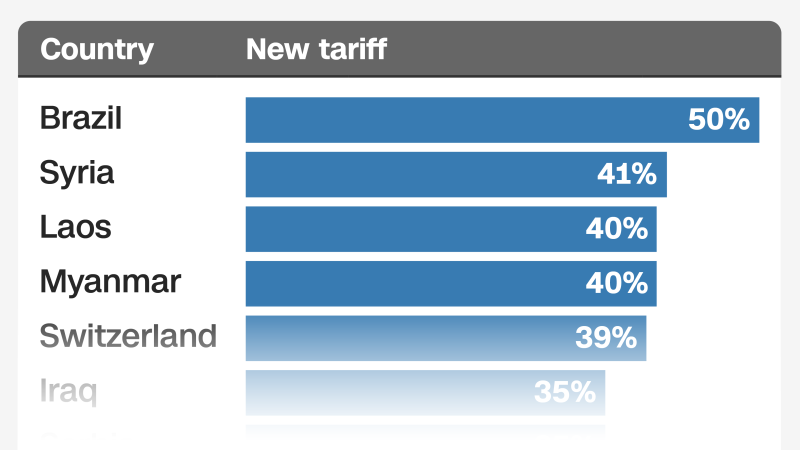
President Trump announced new "universal" tariffs, effective August 7, imposing a 10% levy on imports from trade surplus nations and 15% on goods from approximately 40 trade deficit countries, with some, like Brazil, facing up to 50%. These duties, the highest since 1933, are set to significantly disrupt the global trade landscape, raising concerns given their historical precedent during the Great Depression.
The United States is set to implement a sweeping new tariff regime effective August 7, representing a significant escalation in global trade tensions. The policy imposes a 10% levy on imports from countries with which the U.S. has a trade surplus and a 15% tariff on goods from approximately 40 nations with which it has a trade deficit, with certain countries like Brazil facing levies as high as 50%. The breadth of these duties is historically significant, cited as the highest since 1933, a period where similar protectionist measures are historically associated with exacerbating the Great Depression. This move introduces substantial uncertainty and disruption for global supply chains, with the high market impact score (0.75) and strongly negative sentiment (-0.8) signaling expectations for significant economic and market repercussions. The policy's unprecedented modern scope upends the existing trade landscape, affecting nearly all U.S. trading partners and likely prompting retaliatory measures.
AI-powered research, real-time alerts, and portfolio analytics for institutional investors.
Request DemoOverall Sentiment
strongly negative
Sentiment Score
-0.80
Ticker Sentiment
