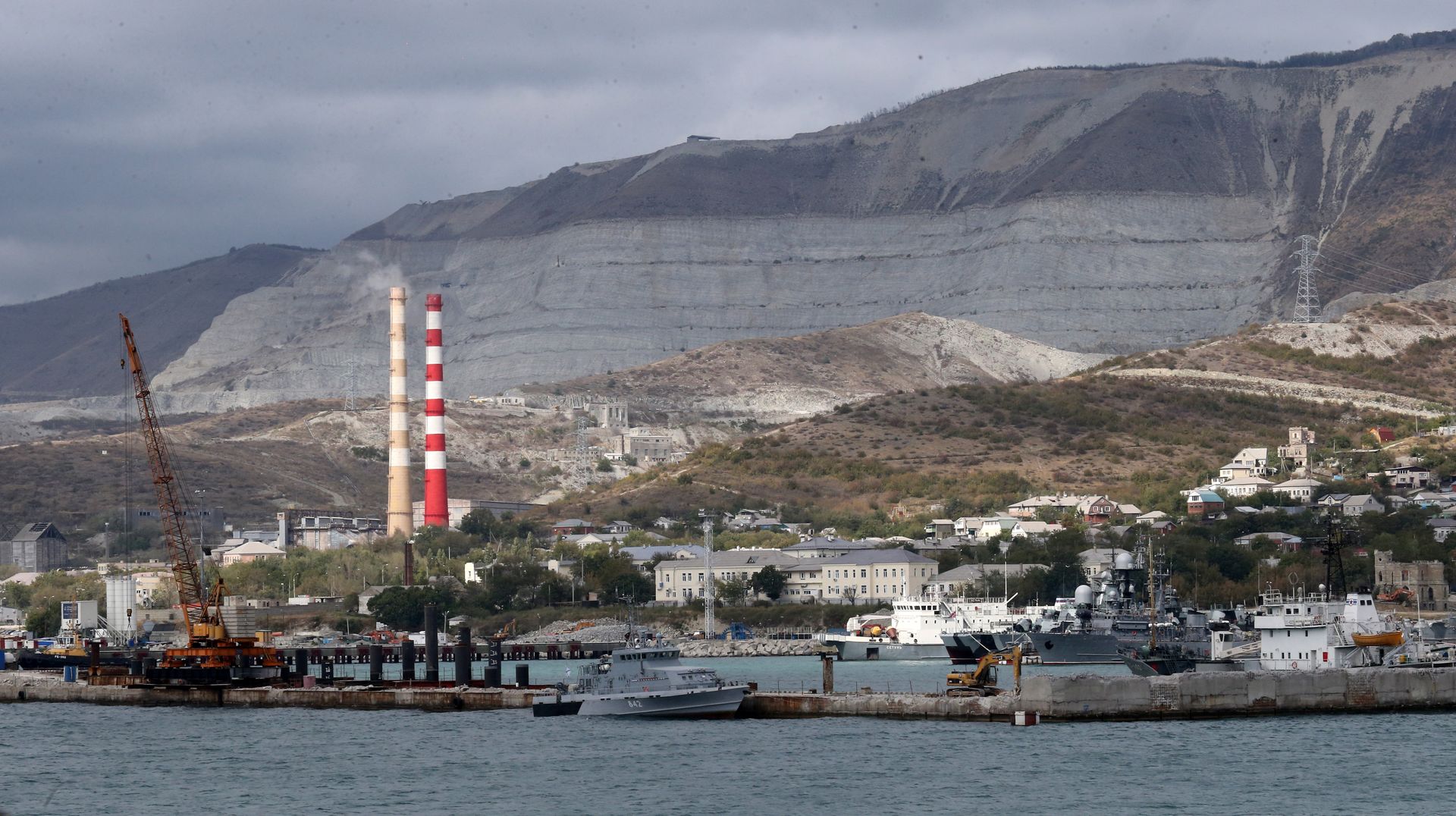
On Nov. 29 naval drones struck the Caspian Pipeline Consortium's marine terminal in Novorossiysk, seriously damaging mooring point two (SMP-2) and prompting port authorities to suspend all loading operations and order tankers out of the water area. The consortium—an international venture linking Kazakhstan's western oil fields to Novorossiysk's sea terminal—has now been hit three times this year, further constraining a key export corridor and adding near-term downside risk to Russian oil export capacity and related logistics. The incident heightens geopolitical risk in the Black Sea region and could tighten regional oil flows, with potential knock-on effects for market prices and shipping dynamics.
Market structure: The Novorossiysk/CPC hits tighten Black Sea export capacity and favor owners of crude (integrated majors XOM/CVX) and tanker/insurance providers while hurting Russia-linked exporters and European refiners dependent on Russian grades. If the terminal outage removes “several hundred kb/d” (conservative 200–400 kb/d) for multiple weeks, expect Brent to gap +$3–$7/bbl near-term and European refining margins to compress 5–15% relative to US Gulf Coast. Cross-asset: RUB likely weakens (USD/RUB up 3–8%), Russian sovereign/energy bonds widen vs. global IG, and oil implied vols spike 20–50% intraday.
Risk assessment: Tail risks include broader escalation (closure of additional terminals or Bosphorus bottlenecks) that could remove >500 kb/d and push Brent >$100; alternatively, diplomatic de-escalation/OPEC spare capacity could reflate supply within 4–12 weeks. Hidden dependencies: Kazakhstan flows via CPC make Kazakh fiscal revenues and Kazakhstan-linked E&P names vulnerable; insurance/war-risk premiums could reroute cargoes adding $1–3/bbl in freight costs. Catalysts to monitor: CPC operational notices, S&P Platts flow data, and Russian naval responses; if >3 strikes in 30 days, reprice for chronic outage.
Trade implications: Tactical plays: express near-term tightness with short-dated Brent call spreads or long XLE via 3-month call spreads, and implement relative-value by going long integrated majors (XOM) vs. short pure-refiners (PBF) to capture margin compression. Use options to size asymmetric exposure (0.5–3% NAV per trade), hedge RUB/CW exposure if you hold EM Russia assets, and rotate 1–2% into defense primes (LMT/RTX) on a 6–12 month view. Entry window: act within 48–72 hours for near-term volatility; scale in if Brent moves +$3.
Contrarian view: Markets may overestimate duration — alternative routes and storage/tanker arbitrage historically resolved similar disruptions in 4–12 weeks, so cap position sizes and set mechanical exits (take profits if Brent >$95 or rallies >10% in 2 weeks). Unintended consequences: higher prices accelerate US shale response in 3–6 months, capping medium-term upside and pressuring smaller E&P names that need sustained $80+/bbl to fund growth.
AI-powered research, real-time alerts, and portfolio analytics for institutional investors.
Request DemoOverall Sentiment
moderately negative
Sentiment Score
-0.50
