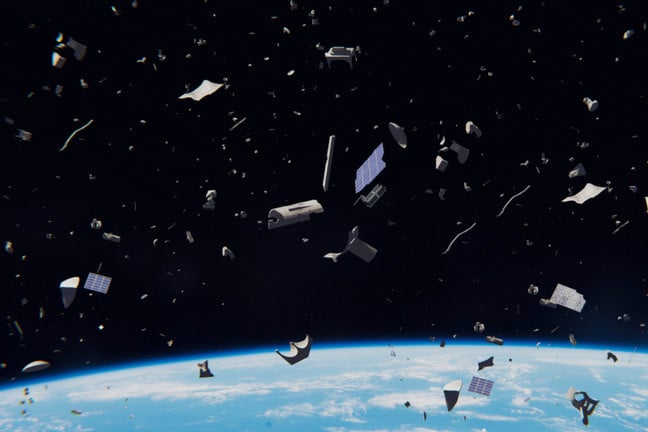
Researchers led by Professor Sam Lawler have proposed the CRASH (Collision Realization And Significant Harm) Clock — a Key Environmental Indicator that estimates how long before a catastrophic orbital collision would occur if collision-avoidance failed — and it currently reads 2.8 days versus 121 days in 2018, underscoring sharply increased congestion in low Earth orbit. The paper highlights operational pressure from mega-constellations, noting SpaceX data showing Generation 1 and 2 Starlink satellites average 37 and 44 propulsive maneuvers per year (equating to one avoidance maneuver across the constellation every 1.8 minutes) and that SpaceX applies a far more conservative collision threshold (3e-7) than the industry norm (1e-4). Authors warn that while continued flawless avoidance would avert immediate disaster, the compressed margin for error raises real risks of a Kessler-style cascade, growing disruption to astronomy, increased upper-atmosphere pollution and ground casualty exposure, and calls for urgent changes to how LEO is used and regulated.
Researchers led by Professor Sam Lawler introduce the CRASH (Collision Realization And Significant Harm) Clock as a Key Environmental Indicator that estimates time to a catastrophic orbital collision if avoidance maneuvers cease; the clock reads 2.8 days today versus 121 days in 2018, highlighting a sharp increase in low Earth orbit (LEO congestion). The metric is intended to quantify how quickly a loss of situation awareness or system failure could escalate into a major collision event.
Operational data from SpaceX filed with the FCC underline the pressure on collision-avoidance systems: Generation 1 Starlink satellites average 37 maneuvers per year and Generation 2 average 44, which the CRASH Clock authors translate to one avoidance maneuver every 1.8 minutes across the constellation. SpaceX also reports using a far more conservative collision threshold (3 in 10 million) compared with the industry norm (1 in 10,000), implying material operational burden to maintain current safety margins.
The compressed margin for error raises a pronounced tail-risk: if collision-avoidance systems falter, the chance of cascading debris (Kessler-like scenarios), disruption to astronomy, increased upper-atmosphere pollution from ablation, and elevated ground-casualty exposure rise materially. The paper’s call for immediate changes suggests potential regulatory, operational and cost implications for LEO operators and downstream stakeholders.
AI-powered research, real-time alerts, and portfolio analytics for institutional investors.
Request DemoOverall Sentiment
moderately negative
Sentiment Score
-0.50
