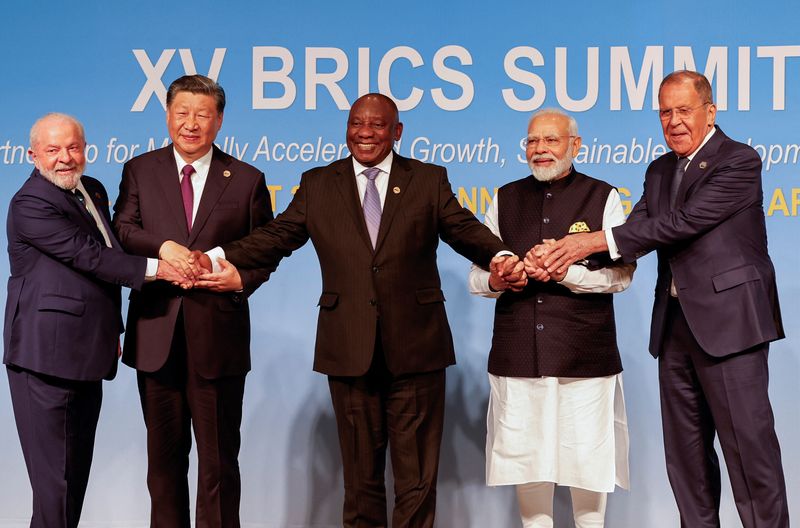
The Trump administration's new tariffs on BRICS members—including India, Brazil, and South Africa—are prompting increased calls for bloc unity and collective response. However, macroeconomic research firm Capital Economics indicates that despite this heightened "diplomatic noise," deep-seated political rivalries, such as the China-India border dispute, and significant economic fragmentation, evidenced by limited intra-BRICS trade outside of China, will likely prevent meaningful integration, deeper trade ties, or a significant shift away from the dollar. Instead, members are expected to prioritize managing bilateral relations with Washington, suggesting the tariffs will generate rhetoric rather than tangible collective action.
Recent U.S. tariff actions targeting BRICS members, including a 25% additional tariff on certain Indian goods that raises its effective rate to 36%, represent a notable escalation in trade tensions. According to macroeconomic research firm Capital Economics, these measures are significant as they are politically motivated and aimed at members like India, Brazil, and South Africa, which have historically maintained more cordial relations with Washington. This has prompted heightened diplomatic rhetoric about bloc solidarity, evidenced by discussions between Brazil's President Lula and China's President Xi and a planned visit by India's Prime Minister Modi to China. However, the prospect of a unified, tangible response appears limited due to deep-seated structural impediments. Key obstacles include the strategic rivalry between China and India, underscored by their ongoing Himalayan border dispute, and economic friction caused by China's dominance in intra-BRICS trade, which has led to protectionist responses such as India's numerous anti-dumping measures against Chinese goods. Trade data further reveals the bloc's fragmentation; excluding China, only 2-5% of exports from India, Brazil, and South Africa are directed to other BRICS members, compared to 8-18% shipped to the U.S. Consequently, while the diplomatic noise surrounding BRICS cohesion will likely intensify, it is not expected to translate into deeper trade integration or a significant shift away from the U.S. dollar, with member nations instead prioritizing their individual bilateral relationships with the U.S.
AI-powered research, real-time alerts, and portfolio analytics for institutional investors.
Overall Sentiment
moderately negative
Sentiment Score
-0.45
Ticker Sentiment
