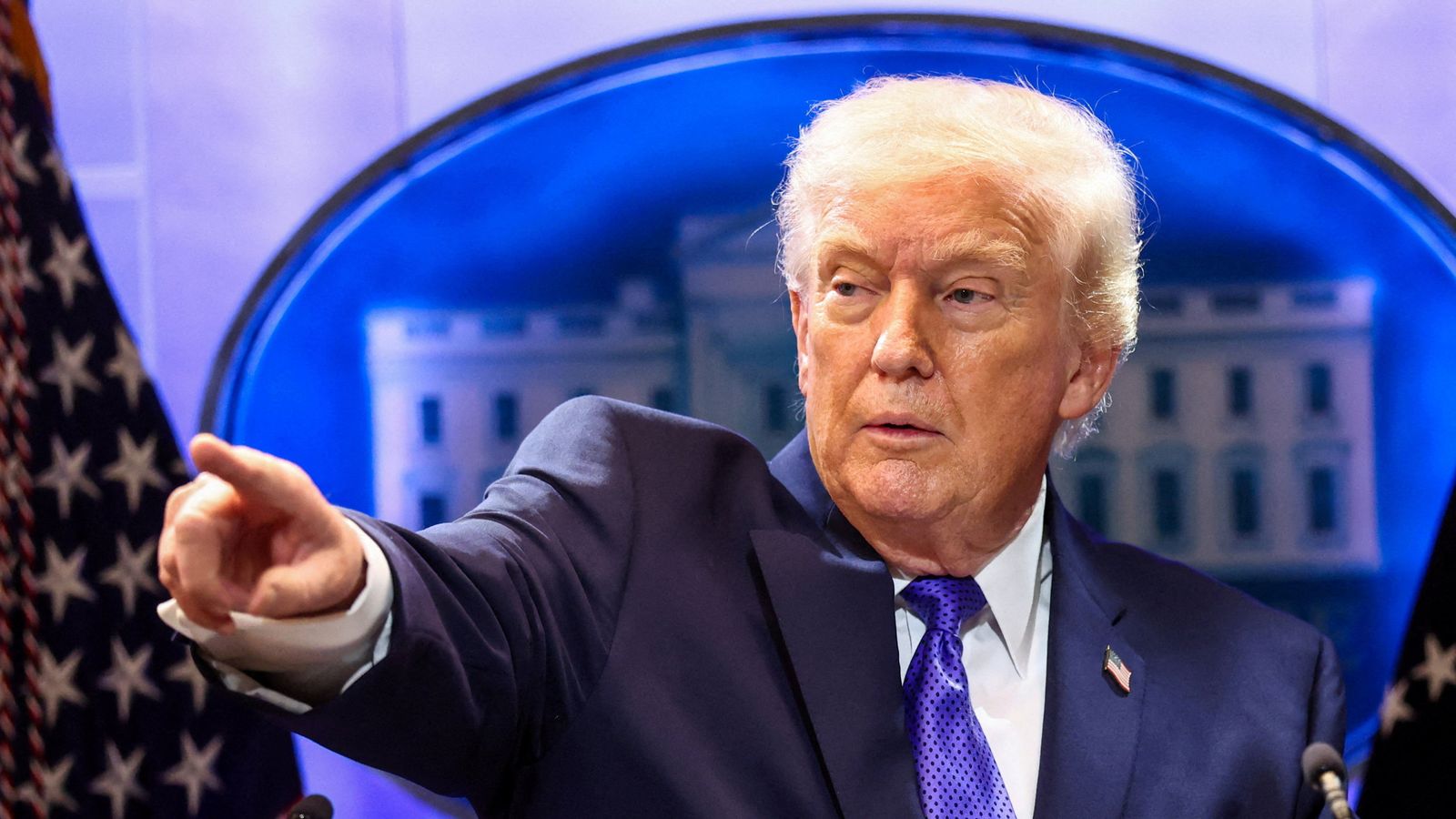
The US is moving to impose a temporary 15% import tariff on all countries after the Supreme Court ruling overturned the prior 'Liberation Day' approach, up from an earlier 10% figure; the measure is being invoked under section 122 and is limited to 150 days unless Congress extends it. UK exporters face an immediate effective 5 percentage-point tariff increase versus the May UK-US deal, prompting UK business groups to warn of higher costs, the government to seek clarifications and the EU to pause ratification of its US deal; global markets reacted with a continued sell-off.
Market structure: A blanket 15% US import tariff (vs 10% previously) is a direct tax on import-intensive exporters — winners are US domestic producers of tradable goods (steel: NUE, X, STLD; autos: F, GM) who regain ~5–10% price competitiveness in the US market; losers are UK/EU exporters and retailers with high US sales exposure (ETF proxies EWU, VGK) facing immediate 5pp margin shock. Expect a quick re-pricing of traded-goods margins (near-term margin compression of ~3–7% of gross margin for exposed exporters) and a rotation into domestically-oriented cyclicals.
Risk assessment: Tail risks include escalation to larger, sustained tariffs (>150 days) or tit‑for‑tat EU/UK retaliation causing global growth shock and a >200bp rise in sovereign risk premia; conversely, Congressional non-extension or a refund mechanism (Dem bill) could blunt impact within 30–90 days. Immediate (days) risk is volatility and FX moves; short-term (weeks–months) is rerouting supply chains and invoicing changes; long-term (quarters–years) is capex on onshoring and permanent trade fragmentation.
Trade implications: Tactical plays: go long US domestic industrials/steel (NUE, STLD) 1–3% portfolio each with 3–6 month horizon; hedge exporters by buying 1–2% notional of 3-month put protection on EWU or short EWU outright. Use FX: initiate 0.5–1% portfolio long USD/GBP (short GBPUSD) via forwards, target 3–6% move, stop if GBPUSD falls <1.20 (or equivalent). Options: buy 3-month ATM puts on UK/Europe export ETFs to cost-effectively hedge downside while purchasing 3–6 month calls on NUE sized to expected tariff pass-through.
Contrarian angles: Consensus underestimates the probability of rapid policy dilution (refunds or carve-outs) within 30–60 days, and overprices permanent demand destruction. That creates two trades: oversold high-quality UK exporters with diversified markets (select FTSE 100 multinationals) as 6–12 month recovery candidates, and a short-term volatility trade where buying protection (puts) is cheaper than selling long-term exposure; historical parallels: 2018 US tariffs produced 10–20% re-rating in domestic steel vs cyclical exporter drawdowns that partially reversed within 6–9 months.
AI-powered research, real-time alerts, and portfolio analytics for institutional investors.
Request DemoOverall Sentiment
strongly negative
Sentiment Score
-0.65
