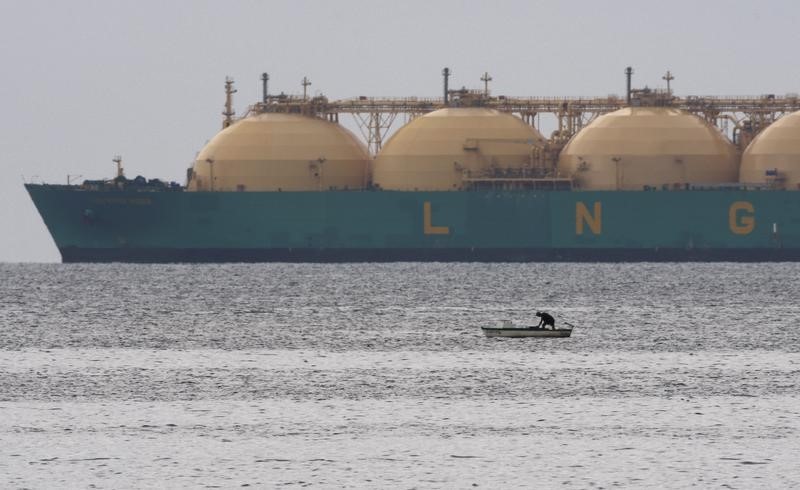
Chiyoda shares jumped 15.5% to ¥1,116.0 after reports the company is considering resuming on-site work at the Ras Laffan LNG project in Qatar; the Nikkei 225 rose 5.3%. The move follows a tentative U.S.-Iran two-week ceasefire, which could reduce geopolitical risk and enable reconstruction of energy infrastructure disrupted by an Iranian drone attack. The development is positive for Chiyoda given its heavy Middle East exposure and could benefit energy-sector contractors if de-escalation holds.
Engineering and specialist supply chains are the invisible leverage here: firms that provide cryogenic piping, specialty valves, and skilled field welders will see utilization and pricing power re-accelerate faster than headline EPC contractors because their capacity is tight and mobile. Expect small-to-mid cap suppliers and local fabrication yards to capture margin expansion of 200–500bps for the first 3–6 months of a restart, while large EPCs absorb most execution risk and potential penalty exposure.
The immediate operational gating factors are administrative (site access, permits, insurer confirmations) not engineering — those clearances should manifest in measurable ways within 7–21 days, but full manpower and materials ramp is a 8–16 week process. Tail risks that would unwind any re-rating are asymmetric: renewed strikes or sanctions can re-invoke force-majeure and leave contractors with mobilization costs equal to low-single-digit percentages of multi-billion projects (order of tens-to-low-hundreds of millions), and insurance repricing can add similar magnitude to near-term cash needs.
Consensus upside is underestimating restart friction and cost drag: the market prizes the headline resumption but often ignores two second-order effects — (1) margin concentration to specialist suppliers and (2) project schedule slippage from crew-mobilization bottlenecks. That argues for trade structures that capture directional upside while limiting exposure to an on/off geopolitical shock that can reappear on short notice.
AI-powered research, real-time alerts, and portfolio analytics for institutional investors.
Overall Sentiment
moderately positive
Sentiment Score
0.45
