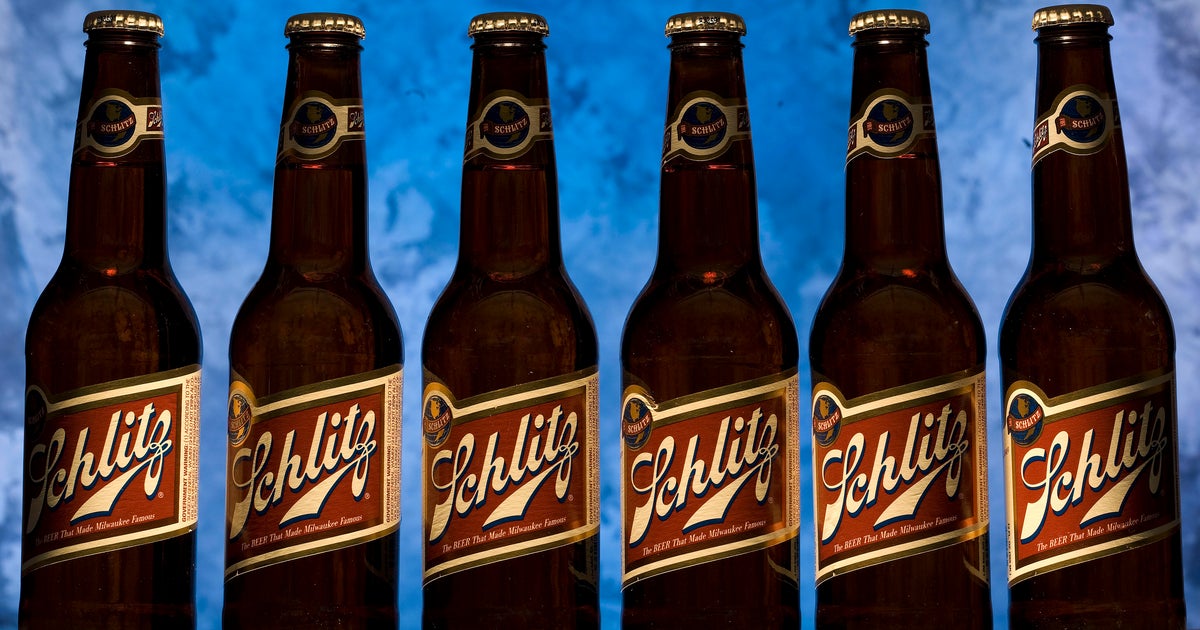
Schlitz will brew its final batch this weekend, ending 177 years of production after Pabst cited declining demand and rising storage costs. The brand, founded in 1849 and once one of America's top-selling beers, has been losing relevance for years despite its historic Milwaukee identity. The event is symbolically notable but is unlikely to have meaningful market impact beyond the consumer staples beer category.
The economically relevant signal here is not the loss of one heritage label, but the confirmation that shelf-space is getting more punitive for legacy, low-velocity beer brands. In a flat-to-down beer market, distributors and retailers are rationally consolidating around faster turns and higher-margin SKUs, which mechanically raises the cost of staying listed for subscale brands. That dynamic favors large brewers with broader portfolios, stronger trade spend, and the ability to use innovation or non-beer adjacencies to defend share.
The second-order read-through is negative for any brand relying on nostalgia alone without pricing power or active reinvestment. Once a label slips below a certain velocity threshold, the economics deteriorate quickly: more storage, more working capital, lower case turns, and less attention from wholesalers. That creates a reinforcing loop where even moderate demand softness can become an abrupt rationalization event over a 6-18 month horizon.
From a competitor standpoint, this is a small but useful reminder that regional and value-beer portfolios remain vulnerable to attrition even before volume declines show up in industry data. The beneficiaries are likely mainstream domestic brewers and premium import owners that can absorb displaced shelf space, plus retailer private label if consumers trade down on price rather than brand. The risk to the bullish read is that this could be idiosyncratic to one aging asset rather than a broader category signal; if so, any sector-wide selloff would be an overreaction.
The contrarian angle is that closing a deadweight brand can actually improve economics for the owner if it frees capital and inventory capacity for more productive labels. So the market should not assume this is uniformly bearish for the parent or for beer overall; it may be margin-accretive housekeeping. The key catalyst to watch is whether this is followed by additional quiet portfolio pruning across other legacy brands, which would confirm a wider rationalization cycle rather than a one-off closure.
AI-powered research, real-time alerts, and portfolio analytics for institutional investors.
Request DemoOverall Sentiment
mildly negative
Sentiment Score
-0.20
