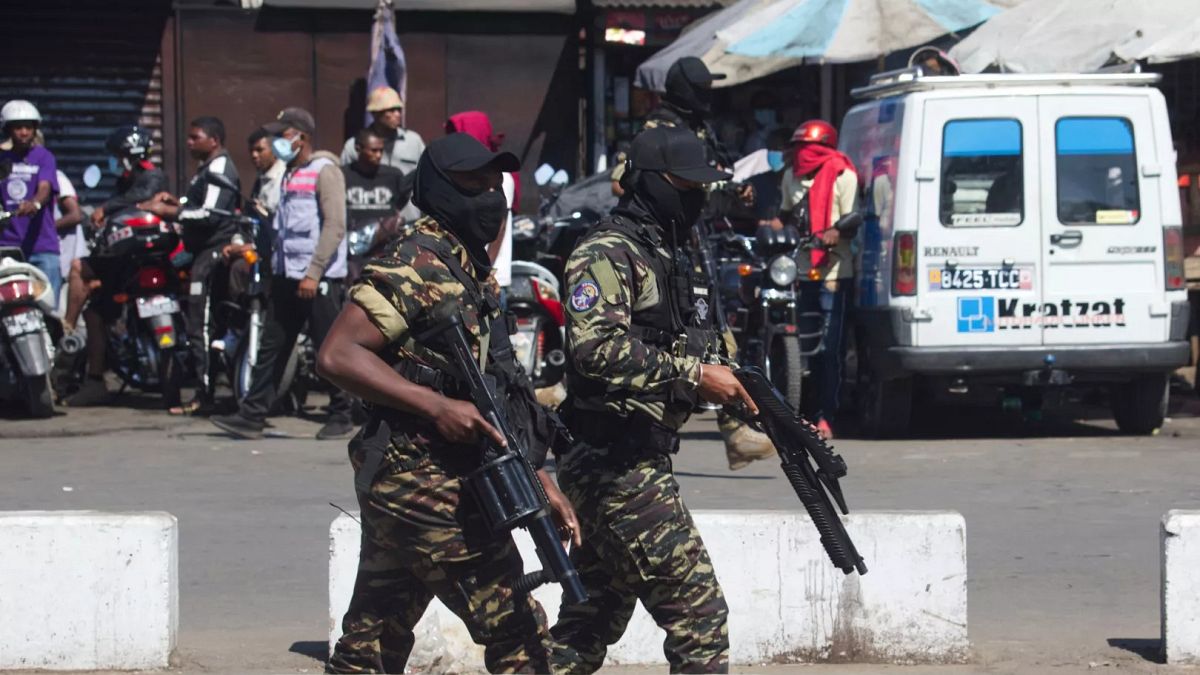
Madagascar is experiencing an attempted military coup as the elite CAPSAT unit, supporting anti-government protests, claimed control of the military and saw its chosen officer acknowledged as the new army chief by the Minister of Armed Forces, despite President Rajoelina condemning the action as an illegal power grab. This escalating political instability, following weeks of deadly protests, has prompted Air France to suspend flights to Antananarivo, indicating significant operational disruption and heightened risk for the island nation.
Madagascar is currently experiencing significant political instability following an attempted military coup, with an elite army unit, CAPSAT, claiming control and appointing a new army chief, General Demosthene Pikulas, who was acknowledged by the Minister of Armed Forces. This action directly challenges President Andry Rajoelina's authority, who has condemned the move as an illegal power grab, highlighting a severe breakdown in constitutional order. The situation is exacerbated by Rajoelina's unknown whereabouts, despite official statements claiming he remains in the country.
This attempted coup follows weeks of widespread anti-government protests, reportedly among the largest since September 25th, led by "Gen Z Madagascar," which have resulted in at least 22 fatalities and dozens injured, according to the United Nations. CAPSAT forces joined these protests on Saturday, with reports of exchanges of fire with security forces, indicating a violent escalation of the unrest. The historical context of Madagascar's frequent leadership changes via coups since 1960 underscores the fragility of its political landscape.
The escalating security concerns have already translated into tangible economic and operational disruptions, as evidenced by Air France's decision to suspend all flights between Paris-Charles de Gaulle Airport and Antananarivo from October 11th to 13th. This suspension, citing the "security situation," signals heightened risk for international travel and logistics sectors with exposure to the region, and implies a broader negative impact on the country's economy and foreign relations.
AI-powered research, real-time alerts, and portfolio analytics for institutional investors.
Overall Sentiment
strongly negative
Sentiment Score
-0.80
