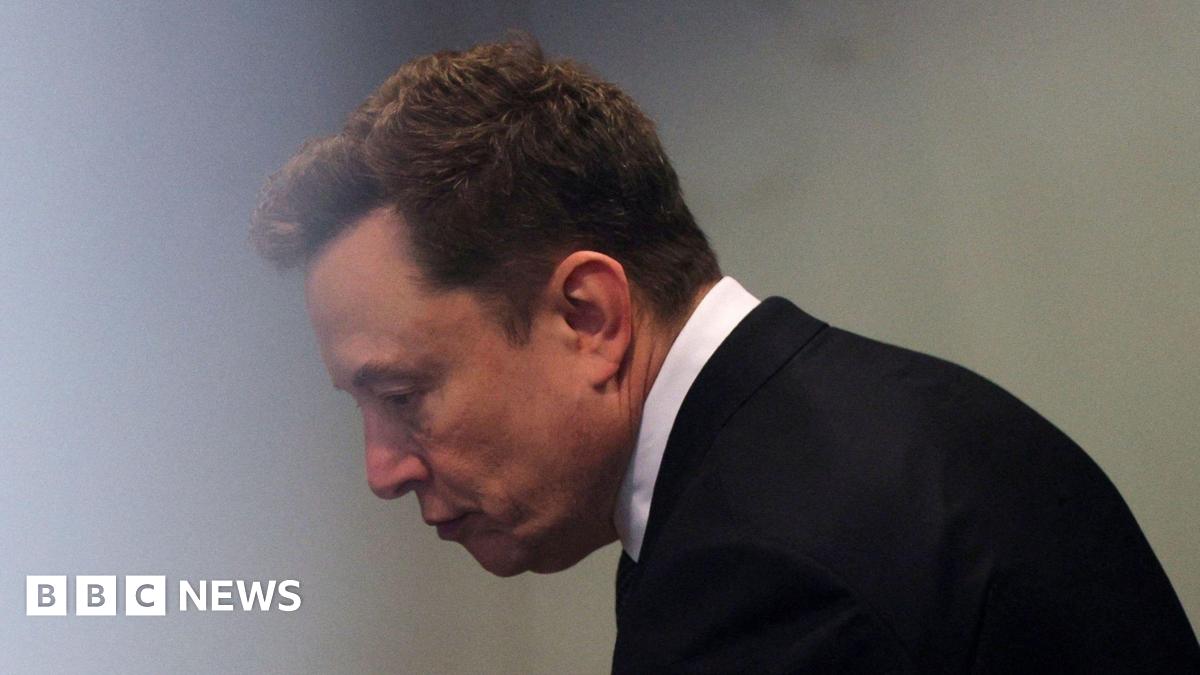
Elon Musk lost his lawsuit against OpenAI and Sam Altman and said he will appeal, adding to a run of legal setbacks including disputes tied to X, Tesla, advertisers, and DOGE-related actions. The article highlights a $1.5 million SEC fine and the invalidation of Tesla’s pay package in December 2024, but frames these as unlikely to materially deter Musk given his scale of wealth and willingness to keep fighting. Market impact is limited, though the litigation overhang is notable for Tesla, X, SpaceX, and OpenAI.
The market implication is less about the headline loss itself and more about governance drag: Musk’s willingness to litigate, appeal, and publicly attack counterparties increases management distraction and raises the probability of recurring overhangs in TSLA’s discount rate. For a stock priced partly on optionality and leadership premium, persistent courtroom noise matters because it keeps the narrative anchored to key-person risk rather than execution milestones. The second-order effect is that every new legal fight increases the chance of capital allocation inefficiency, whether through settlements, management time, or reputational damage that bleeds into customer and regulatory relationships.
The bigger issue is asymmetry: the downside from these disputes is incremental and cumulative, while the upside from them is mostly reputationally irrelevant unless one of them produces a structural win. That means the stock can absorb individual losses, but multiple adjacent setbacks raise the probability that institutional investors demand a higher governance discount and lower multiple. In practical terms, this is a months-long pressure mechanism, not a one-day earnings-style shock, unless a legal issue directly constrains financing, disclosure, or an IPO process.
The contrarian read is that the market may already be overfitting to Musk’s litigation style, which it has historically treated as noise rather than signal. If he continues to generate commercial growth or a credible near-term catalyst, the legal overhang may remain a multiple cap rather than a trend breaker. The key reversal would be a demonstrated shift from reactive fighting to disciplined settlement behavior, or a fresh operating catalyst that re-centers the tape on fundamentals instead of governance.
Competitive winners are likely the better-governed EV and AI-adjacent names that can attract capital at a lower cost of equity while TSLA remains a headline-risk vehicle. Suppliers and partners with diversified exposure may also benefit if investors rotate toward less idiosyncratic management risk. The cleanest trade expression is to fade the governance premium rather than make a directional macro call on the EV market.
AI-powered research, real-time alerts, and portfolio analytics for institutional investors.
Request DemoOverall Sentiment
moderately negative
Sentiment Score
-0.30
Ticker Sentiment
