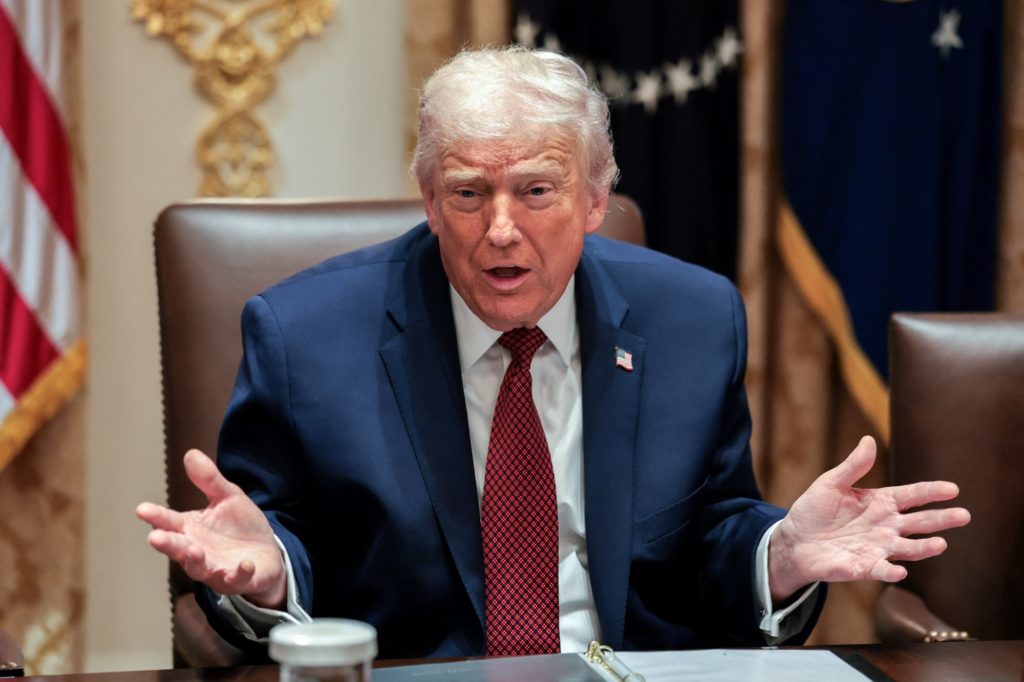
The Supreme Court heard arguments over whether presidents can remove members of independent agencies for reasons beyond inefficiency, neglect or malfeasance, centering on President Trump’s 2025 firing of FTC commissioner Rebecca Slaughter and invoking a 1935 precedent protecting agency independence. The administration argues for broader unitary-executive removal power, while liberal justices warned about eroding congressional checks and agency independence; a ruling for the government could affect roughly two dozen independent agencies and potentially implications for the Federal Reserve and other bodies with for-cause protections. For investors, the decision raises regulatory and governance uncertainty—possible politicization of agencies (including precedent risk for Fed governance) could increase policy volatility, but immediate market effects are likely limited until a final ruling or follow-on actions materialize.
Market structure: A SCOTUS ruling that weakens for‑cause protections would shift quasi‑independent agencies (FTC, NLRB, CFPB, ~24 similar bodies) toward greater presidential control, benefiting incumbents that gain regulatory relief (large banks, Big Tech, energy contractors) and hurting firms that rely on agency predictability (regulated utilities, insurers). Expect a modest margin tailwind: large-cap banks/tech could see ~1–3% EBITDA improvement over 12–24 months from lower enforcement and compliance volatility; small caps with regulatory exposure face higher bid‑ask spreads and risk premia.
Risk assessment: Immediate (days) market moves should be muted; short term (weeks–months) volatility spikes around opinions and related Fed litigation (Lisa Cook) are likely. Tail risks include a broad politicization of rulemaking that raises sovereign/term premium by 50–150bp over 1–3 years and litigation costs rising 10–30% for targeted sectors. Hidden dependencies: SEC/Fed interplay, state enforcement backstops, and private antitrust litigation could offset some deregulatory gains.
Trade implications: Favor tactical long positions in regulated beneficiaries while hedging rate and governance risk — e.g., financials vs. utilities, and defined‑risk options on megacaps to capture asymmetric upside if antitrust eases. Use small, event‑sized bets (1–3% portfolio) and protect macro exposure with 1–2% notional rate hedges (TLT puts/steepener futures). Key catalysts: SCOTUS opinion window and the concurrent Fed removal case — positions should be re‑tested within 30–90 days of rulings.
Contrarian angles: Consensus underprices the chance of a narrow, precedent‑limited ruling (FTC only) — if so, long exposures will be overpaid and will suffer a 5–12% reversion. Historical parallel: Humphrey’s Executor (1935) suggests the Court may carve narrow doctrinal rules; unintended consequence: increased regulatory turnover could raise compliance spending and earnings volatility, creating alpha for active stock‑pickers rather than passive index bets.
AI-powered research, real-time alerts, and portfolio analytics for institutional investors.
Request DemoOverall Sentiment
neutral
Sentiment Score
0.00
