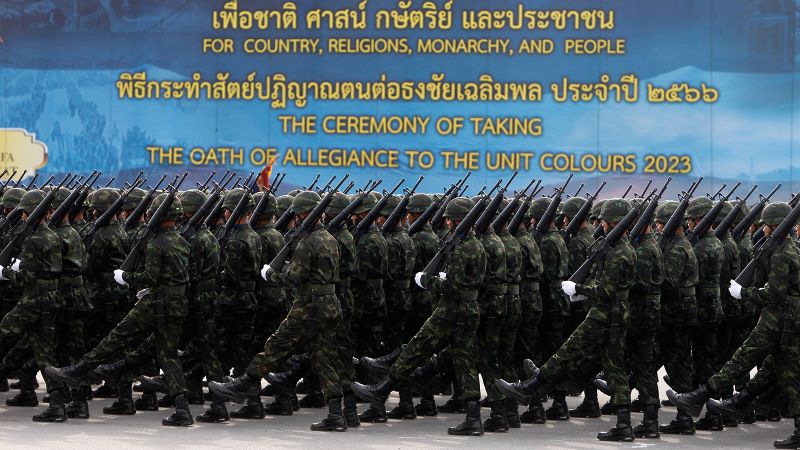
A deadly border conflict has erupted between Thailand and Cambodia over disputed territory, resulting in casualties and mass evacuations. Thailand's military, a long-standing US ally now also increasing ties with China, holds a significant advantage in size, equipment, and experience over Cambodia's forces, which are heavily reliant on Chinese defense support. Despite this disparity, the terrain favors Cambodia, suggesting Thailand will likely employ air power and long-range weaponry in the conflict.
A military conflict has materialized on the Thai-Cambodian border, stemming from a century-old territorial dispute. The engagement highlights a significant power imbalance, with Thailand's military possessing three times the active personnel and a GDP more than ten times larger than Cambodia's. This disparity is reflected in military asset quality; Thailand operates a modern air force with Swedish Gripen and US F-16 jets, supported by a long-standing status as a major non-NATO US ally. In contrast, Cambodia's younger military has no comparable air combat capability and relies heavily on older Chinese and Soviet-era equipment, with China emerging as its key defense partner, evidenced by joint exercises and the development of the Ream Naval Base. Despite its historical US ties, Thailand is pursuing a more neutral foreign policy, increasing engagement with China and diversifying its arms suppliers to include nations like Israel and Sweden. From a tactical perspective, while Thailand holds a clear advantage in air power and long-range firepower, expert analysis cited in the report suggests the border terrain favors Cambodian ground forces, potentially leading Thailand to prioritize standoff attacks to mitigate this disadvantage.
AI-powered research, real-time alerts, and portfolio analytics for institutional investors.
Overall Sentiment
Neutral
Sentiment Score
0.00
