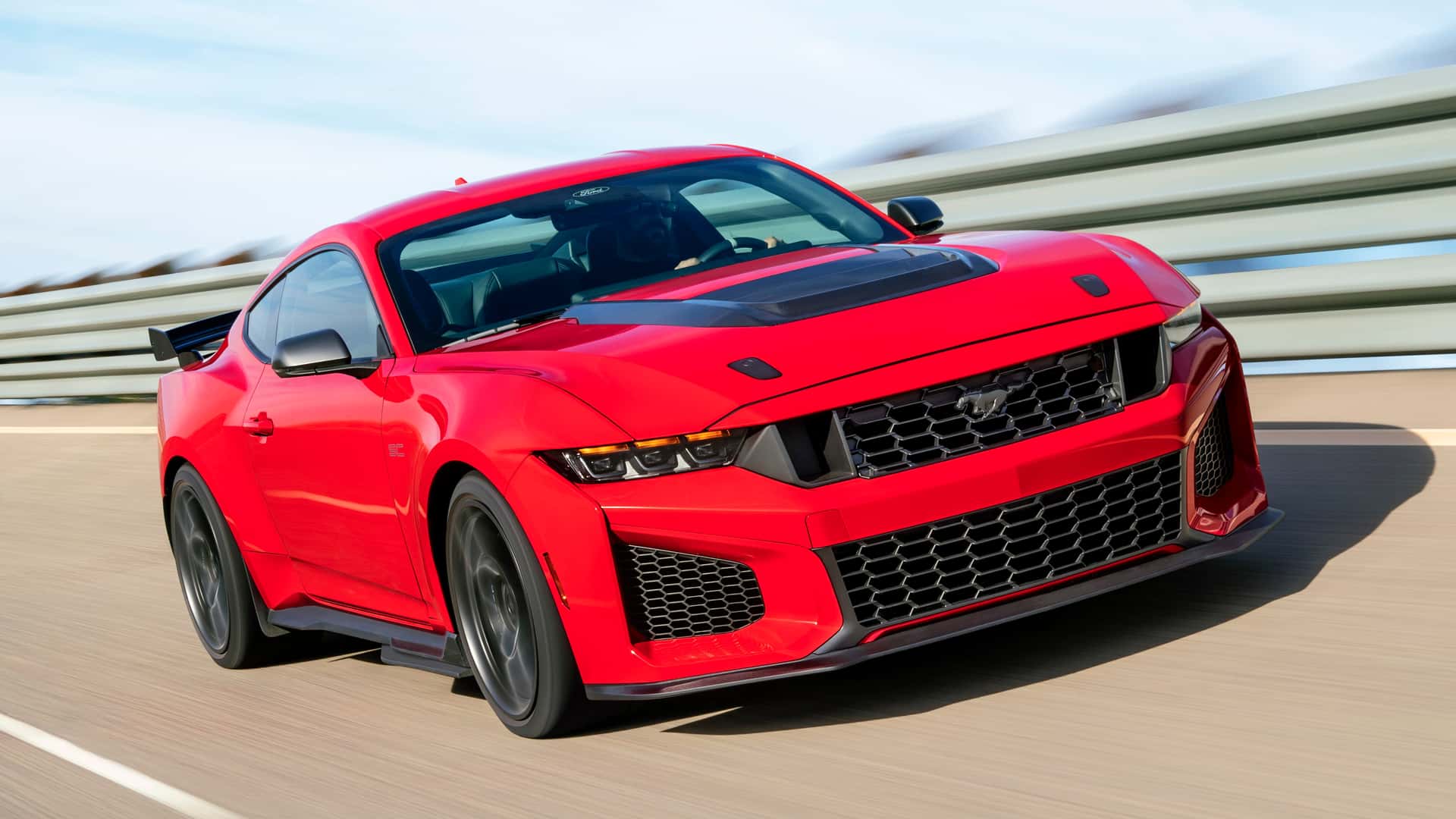
Ford’s Mustang Dark Horse SC will deliver 795 horsepower and 660 pound-feet of torque, positioning it just 20 hp below the $327,000 Mustang GTD at a far lower starting price of $103,490. The Track Pack version starts at $139,990 and adds weight-saving and performance hardware, while the Special Edition climbs to $170,970. The article frames the car as a high-performance bargain and a notable addition to Ford’s Mustang lineup, but with limited broader market impact.
This is less a “halo car” story than a signal that Ford is leaning harder into the profitable upper end of performance branding to protect mix at a time when mainstream automotive demand is choppy. The second-order benefit is not the niche trim itself but the price architecture it reinforces: every credible, attention-grabbing performance variant makes the broader Mustang franchise more defensible and gives dealers a vehicle to pull shoppers up the ladder. That matters because emotional, low-volume products can disproportionately improve brand heat without requiring the volume risk of a full model refresh. The more important competitive effect is on the adjacent performance market, where Ford is effectively challenging Chevrolet and Porsche on headline output while undercutting both on entry price. That puts pressure on GM’s performance halo economics and on Porsche’s U.S. value proposition in the lower 911 trims, especially if buyers start viewing these cars as “track-capable enough” rather than prestige objects. In the supply chain, this kind of car quietly favors specialty components with high margin content — carbon fiber, ceramic brakes, dampers, supercharger systems — while stressing Ford’s ability to allocate constrained parts without disrupting more important truck/SUV programs. The contrarian risk is that the market may overestimate how much this helps Ford’s earnings. The product likely improves brand equity more than near-term profit, and the customer mix at the top end can be sensitive to credit conditions, insurance costs, and track-to-street usability; if financing tightens, the walk-up from core Mustang trims to this level could become more fragile over the next 6-12 months. If the launch is delayed, quality issues emerge, or reviewers emphasize interior/ride compromises, the halo narrative could fade quickly even if the spec sheet remains compelling. For investors, the setup is bullish on sentiment but not enough by itself to justify chasing the equity unless broader auto fundamentals turn. The tradeable edge is in expectation management: if Ford can convert halo attention into better Mustang/brand traffic, that supports medium-term mix, but if not, the market will treat this as marketing spend in disguise. The key catalyst to watch is dealer reception and order conversion in the first 30-60 days after pricing becomes live.
AI-powered research, real-time alerts, and portfolio analytics for institutional investors.
Request DemoOverall Sentiment
moderately positive
Sentiment Score
0.40
Ticker Sentiment
