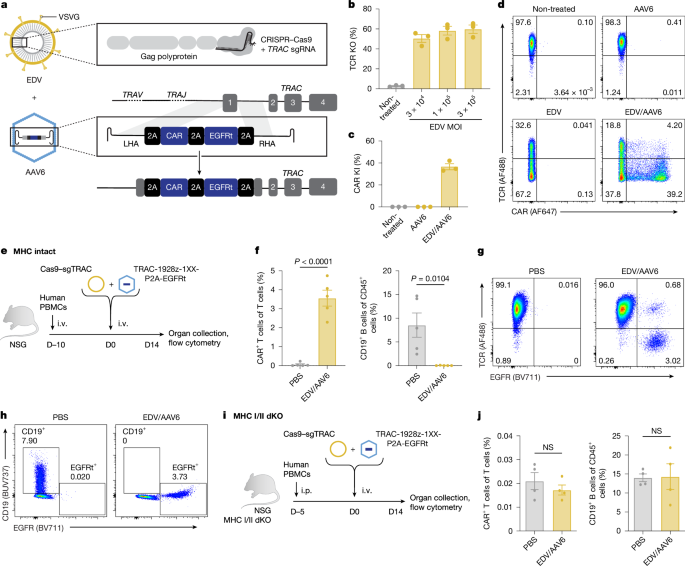
Researchers demonstrated in vivo site-specific integration of a promoterless CAR into the TRAC locus, achieving up to 19.7% CAR+ splenic T cells with the optimized anti-CD3 EDV + AAV-hT7 system and producing therapeutic effects (18/20 complete responses in a NALM6 B-ALL model across four donors). In vivo engineered TRAC-CAR T cells showed rapid expansion (peaking week 2) with 21–50x higher expansion versus lentiviral approaches and produced complete responses in additional models (8/8 myeloma; substantial responses in a B7H3 sarcoma model), with no systemic cytokine release observed in the humanized mouse studies. Findings are preclinical (immunodeficient humanized mice), raise translational promise for off-the-shelf in vivo CAR T manufacturing, and may materially affect biotech companies and investors focused on cell therapy platforms, delivery technologies and gene-editing IP.
This technology — if it scales from mice to primates and humans — shifts the value chain away from unit-level, patient-by-patient cell manufacturing toward high-throughput vector engineering and reagent supply. That implies concentrated demand for AAV capsid engineering, large-scale GMP AAV/EDV production capacity and specialty reagents (capsid libraries, high‑titer production media), creating durable revenue leverage for instrument and supply companies with >$500M bioprocessing footprints. Regulatory and immunology risks are the dominant near-term constraints: pre-existing anti‑AAV humoral immunity and de novo neutralizing responses will cap redosing and complicate patient selection, compressing addressable market in year‑1 human programs and favoring single‑dose, high‑price launches. Expect two inflection windows — non‑human primate safety/dosing readouts (6–18 months) and first‑in‑human IND filings (12–36 months) — that will re‑rate platform and supply players depending on biodistribution and immunogenicity signals. Second‑order winners will be companies that monetize scale (vector/CDMO capacity, analytics, QC) rather than intellectual property for the CAR itself; sequencing and in‑process QC vendors will capture recurring revenue as in vivo programs demand deep lineage and off‑target surveillance. Conversely, firms whose business models rely on long, manual ex vivo manufacturing or that have concentrated revenue tied to autologous CAR throughput face margin pressure if in vivo editing becomes broadly adopted over the next 3–7 years.
AI-powered research, real-time alerts, and portfolio analytics for institutional investors.
Overall Sentiment
strongly positive
Sentiment Score
0.80
Ticker Sentiment
