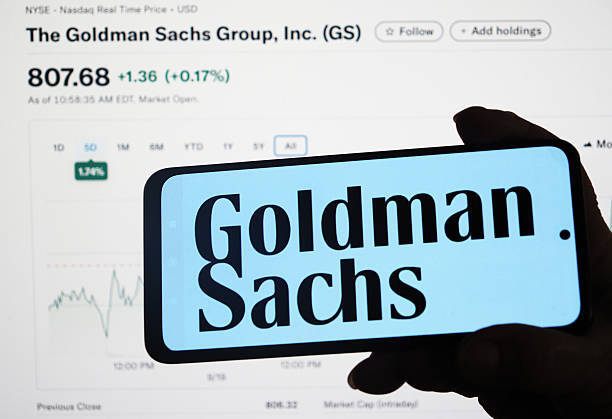
Investors are focused on upcoming results from Goldman Sachs and Morgan Stanley after strong reports from JPMorgan and Bank of America, with analysts expecting solid quarterly revenue at both lenders. A proposed U.S. cap on credit-card interest rates has pressured bank stocks, so markets will be watching management commentary and guidance on consumer lending, credit quality and outlook for direction.
Market structure: A legislative cap on credit-card APRs shifts value from consumer-card-heavy franchises to capital markets / wealth managers. Expect relative winners: GS and MS (higher fee/IB/wealth mix) and fintechs that can underwrite at lower cost; relative losers: large card issuers (JPM, BAC) where card yields are 20–40% of consumer NII and could see a 5–15% revenue hit to card income over 12 months if caps are enacted. Pricing power will shift to issuers with low marginal funding costs (large deposit bases) and to non-bank lenders who can pivot product-repricing faster.
Risk assessment: Tail risk is legislative passage (low-probability but high-impact) that forces 2–3 quarter EPS cuts and 25–75 bps higher loan-loss provisions if originations accelerate; immediate risk (days) is headline-driven volatility, short-term (weeks–months) is guidance revisions in upcoming earnings, long-term (quarters) is structural margin compression and product migration to BNPL/fintech. Hidden dependencies include repricing lags (funding vs. asset yields) and reserve build timing—banks can hide pressure behind vintage-specific provisions for 1–2 quarters. Key catalysts: Congressional schedule in next 30–90 days, upcoming GS/MS earnings tone, and Fed rate path.
Trade implications: Bias toward owning GS/MS and shorting consumer-bank exposures if political risk increases: consider a 2–3% portfolio long GS (ticker GS) and MS (ticker MS) allocation vs a matched short in JPM/BAC to capture relative resilience; use 3–6 month option collars to limit tail loss. If volatility spikes, buy 3-month puts on BAC or JPM 5%–7% OTM sized to 0.5–1% portfolio risk, and consider buying 6–9 month put spreads on KBE (regional bank ETF) as cheaper systemic hedges. Rotate 5–10% from retail/consumer banks into capital markets/wealth ETFs over 1–3 months.
Contrarian angles: The market may be overpricing permanent damage—historical parallels (post-CARD Act adjustments) show banks recover via fees and tighter underwriting within 6–12 months; if legislative probability remains <30% the pricing dislocation is an opportunity. Unintended consequences include accelerated fintech adoption and interchange fee increases of $5–20/household/month, which could sustain revenues elsewhere; watch delinquency inflection (30+ day delinquency up >50bps) as a real catalyst rather than headlines alone.
AI-powered research, real-time alerts, and portfolio analytics for institutional investors.
Request DemoOverall Sentiment
neutral
Sentiment Score
0.00
Ticker Sentiment
