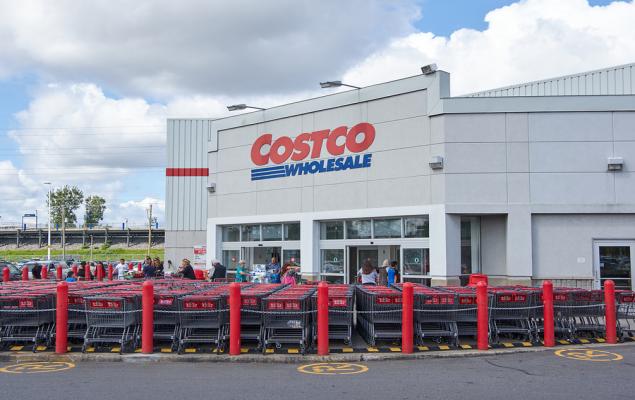
Costco's expansion of its big-and-bulky channel and investment in logistics drove a 13% year-over-year rise in Costco Logistics deliveries in Q4 fiscal 2025 and the 15th consecutive quarter of improved member experience; e-commerce site traffic jumped 27% in the quarter. The company reported digitally enabled sales of more than $27 billion for fiscal 2025, but shares have fallen 7.2% over the past year and the stock trades at a premium (forward 12-month P/E 44.65) with a Value Score of D and a Zacks Rank #4; Zacks consensus implies FY sales and EPS growth of 7.7% and 11%, respectively, leaving investors to weigh strong operational digital momentum against rich valuation and mixed near-term sentiment.
Market structure: Costco’s 13% YoY growth in big-and-bulky deliveries and $27B of digitally enabled sales signal rising Average Order Value (AOV) and a higher-margin channel vs grocery foot traffic. Direct winners: carrier/3PL partners, appliance/tires vendors and firms selling installation services; losers: brick-and-mortar-focused peers with weaker logistics (Target) and low-AOV discounters if they can’t match fulfillment. Higher digital mix should modestly raise working capital needs (inventory & transport) while supporting pricing power in categories where Costco bundles service. Cross-asset: stronger retail execution is mildly inflationary (upward pressure on CPI components) — positive for commodity demand (steel, rubber) and negative for long-duration sovereigns if durable consumption persists.
Risk assessment: Tail risks include a large-scale logistics failure (service recalls, data breach) or rapid fuel/wage inflation that converts growth into margin erosion; regulatory risk around delivery/environmental rules is low-probability but high-impact. Immediate (days): headline-driven volatility around earnings/traffic prints; short-term (weeks–months): execution and capex cadence; long-term (1–3 years): ROI on logistics investments and membership retention. Hidden dependencies: third-party carrier contracts, warehouse real-estate availability, and installation subcontractor capacity; watch shipping lead-times and NPS trends for early warning.
Trade implications: Direct play — establish a tactical long in COST via a 9–12 month call spread sized 2–3% NAV to capture continued digital scaling, target +25–35% upside, stop at -18%. Pair trade — long COST (2%) / short TGT (1.5%) equity for 3–9 months to express logistics/outcome divergence given P/E spread (44.7 vs 11.9). Options — buy 3–6 month puts on TGT or sell covered calls on existing TGT exposure; avoid chasing DG after its 38% run without fresh catalysts. Rotate 3–5% from general retail into logistics/3PL suppliers and commodity cyclicals (steel, rubber) over next 6 months.
Contrarian angles: Consensus underestimates the capital intensity and diminishing marginal returns of scaling big-and-bulky; logistics can flip from moat to cost center if fuel/labor rises >10% YoY or installation claims spike. Conversely, the market may be overstating near-term valuation risk: membership economics and repeat rates from improved NPS create durable cash flows that justify a premium if digitally enabled sales grow >8–10% annualized. Historical parallel: Walmart’s expensive e-commerce buildout (mid-2010s) compressed margins before reaccelerating share — Costco could follow similar path; unanticipated downside is warranty/returns liability growth eroding gross margins.
AI-powered research, real-time alerts, and portfolio analytics for institutional investors.
Request DemoOverall Sentiment
mixed
Sentiment Score
0.10
Ticker Sentiment
