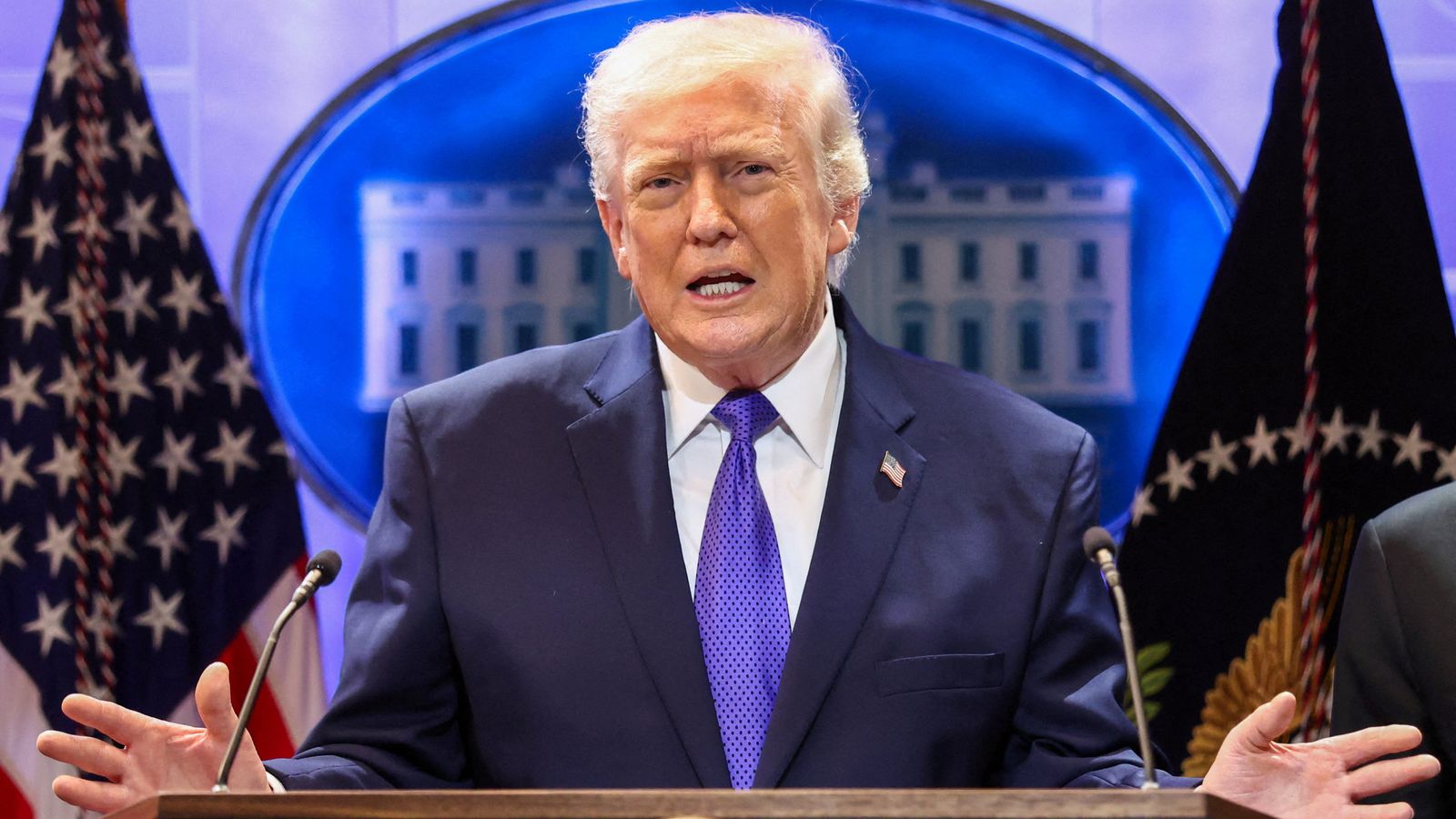
President Trump announced a unilateral increase in global import duties to 15% (up from 10% announced a day earlier), invoking Section 122 of the Trade Act of 1974 after the Supreme Court ruled his prior tariff approach under a 1977 emergency statute unconstitutional. The new measures are temporary (noted as lasting 150 days), contain exemptions reportedly for some agricultural products, steel and cars, and are creating widespread legal and policy uncertainty as governments seek clarity—risking supply‑chain disruption and heightened market volatility for trade‑exposed sectors.
Market structure: A blanket 15% global tariff is an immediate negative shock to import-dependent retailers, electronics assemblers and apparel (expect ~150-300bps margin pressure if firms cannot fully pass costs). Domestic producers of previously offshored goods (steel-adjacent manufacturers like NUE, select industrials XLI) and inflation hedges (gold, commodities) gain pricing power short-to-medium term. Cross-asset: expect a risk-off knee-jerk (USD up, UST yields +10–30bp intraday on inflation repricing), equities volatile (VIX +20–50% short-term), and commodity basis shifts (industrial metals +/− depending on retaliation; gold up ~3–6% on safe-haven flows).
Risk assessment: Tail risks include rapid foreign retaliation (XL retaliation causing -1.5% GDP hit to global trade in 6–12 months), WTO/legal reversals restoring prior regime, or forced repayments creating fiscal/credit strain for affected firms. Immediate (days): liquidity and vol spikes; short-term (weeks–months): earnings downgrades, inventory re-pricing and FX moves; long-term (quarters–years): supply-chain reshoring vs higher consumer prices and sticky inflation. Hidden dependencies: tariff carve-outs and HTS classification ambiguity create idiosyncratic winners/losers at SKU level and litigation exposure; corporate hedges and buyback programs may amplify volatility. Catalysts: Treasury guidance, Congressional response, foreign retaliatory tariffs and Q1 earnings calls (next 30–90 days).
Trade implications: Tactical: buy 1–3 month volatility (XIV/XIV? avoid inverse; instead buy XRT 1-month 5% OTM puts or VIX calls) and take selective long positions in GLD/IAU (2–3% allocation) as an inflation/safe-haven trade for 3–6 months. Relative-value: long domestic steel/industrial names (NUE 1–2% position, or XLI overweight) and short import-heavy retail ETF XRT (1–2% short or buy 1–3 month puts) to capture margin compression. Hedging: buy 3-month AAPL 10% OTM puts (2% notional) as a hedge against large-cap multinational margin risk.
Contrarian angles: Consensus presumes permanent 15% and uniform pass-through; market may be overpricing duration — if exclusions/clarifications cover >30% of import value within 30–60 days, panic will reverse. Historical parallel: 2018–19 tariff episodes caused ~5–10% sector dispersion but limited permanent GDP impact once rules clarified — expect concentrated, tradable mispricings in 1–3 months. Unintended: aggressive tariff rhetoric can accelerate reshoring capex (positive for domestic-capex equipment names) but also provoke currency/retaliation spirals that hit cyclical commodity demand — size positions accordingly and keep stop-loss triggers tight.
AI-powered research, real-time alerts, and portfolio analytics for institutional investors.
Request DemoOverall Sentiment
strongly negative
Sentiment Score
-0.70
