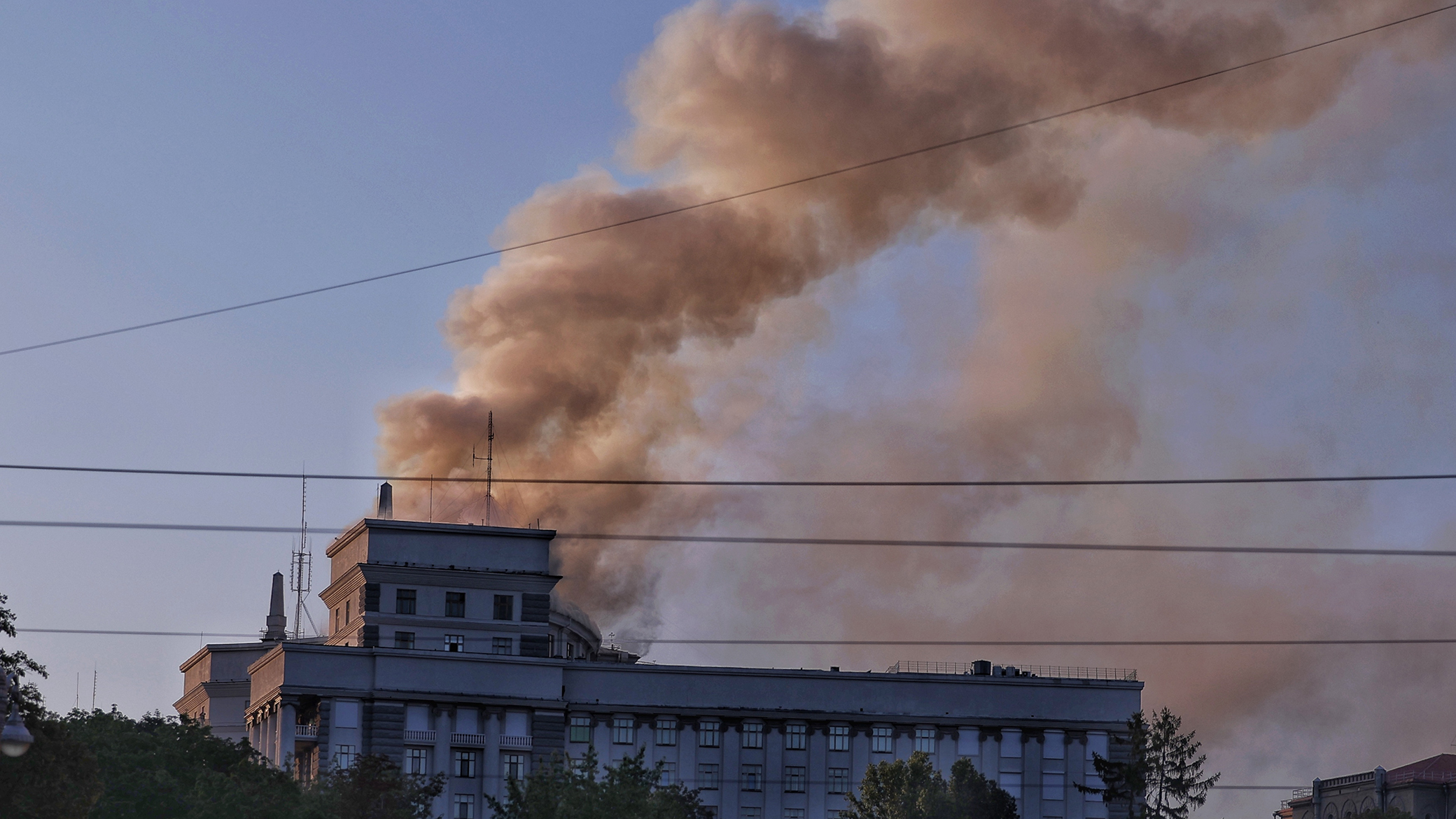
Russia recently unleashed its largest aerial barrage of the war, deploying over 800 munitions against Kyiv and other Ukrainian regions, including the Cabinet of Ministers building, underscoring its escalating 'salvo strategy' of coercive punishment. This tactic involves increasingly frequent and larger attacks, with salvos now averaging nearly 370 munitions every eight days, up from 100 monthly in 2022, and is strategically calibrated around negotiation periods. Despite high interception rates, Russia adapts tactics to overwhelm defenses and inflict psychological pressure, highlighting a sustained, evolving drone warfare campaign that demands enhanced air defense capabilities and signals significant implications for defense spending and geopolitical stability.
Russia's military strategy in Ukraine has evolved into a systematic 'punishment campaign' characterized by escalating 'salvo' strikes, as evidenced by the recent record-breaking barrage of over 800 munitions. This represents a significant strategic shift; what began as sporadic events in 2022 with approximately 100 munitions per month has intensified to a baseline activity of nearly 370 munitions per salvo occurring every eight days by 2025. The targeting of Ukraine's Cabinet of Ministers building marks a notable escalation in this coercive strategy. The data reveals a clear pattern of Russia calibrating the tempo of these attacks around political negotiations, exemplified by the dramatic reduction in aerial munitions from over 6,300 to around 3,300 during the August 2026 talks, only to resume with greater force afterward. This demonstrates that the pauses are tactical, designed to manage political optics and rebuild inventories, rather than a move toward de-escalation. While Ukraine maintains a high interception rate of around 85%, the effectiveness of Russia's strategy lies in psychological attrition and exhausting defense resources. Critically, Russia is adapting its tactics, with improved swarming methods and upgraded Geran drones increasing penetration rates to nearly 20%, signaling a persistent technological challenge that necessitates a parallel evolution in Western-supplied defense capabilities, including AI-enabled systems and advanced surveillance drones like the MQ-9.
AI-powered research, real-time alerts, and portfolio analytics for institutional investors.
Overall Sentiment
strongly negative
Sentiment Score
-0.70
