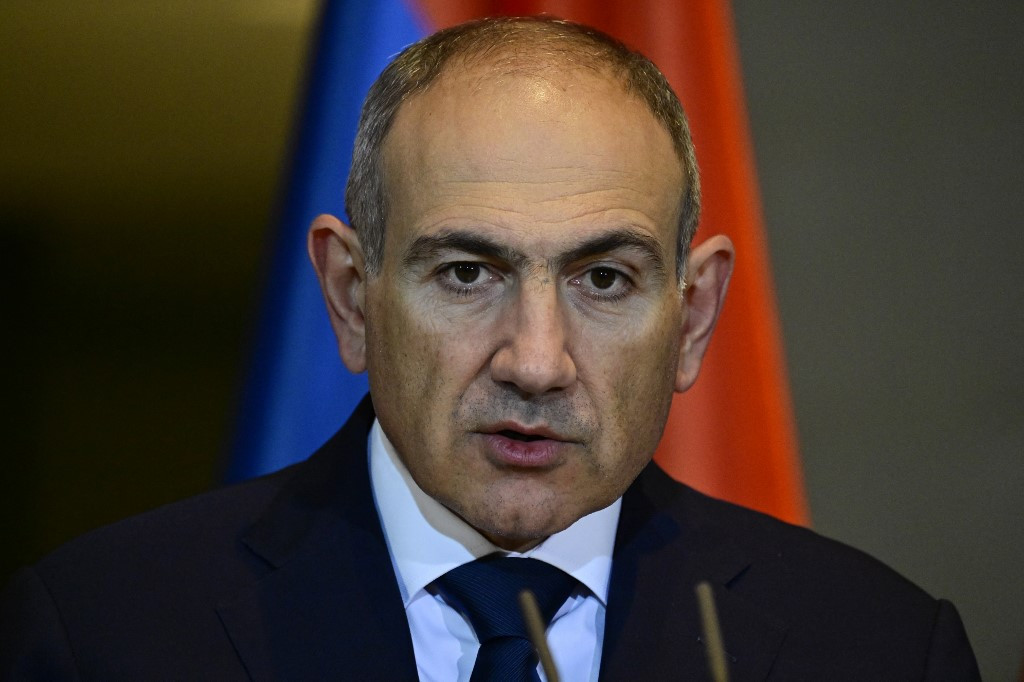
Armenian Prime Minister Nikol Pashinyan said Armenia is not allied with Russia on Ukraine and reiterated that Yerevan is pursuing its own foreign policy and peace framework. He also noted Armenia has sent humanitarian aid to Ukraine and has frozen participation in the Russia-led CSTO since February 2024. The comments underscore Armenia’s continued distancing from Moscow, but the direct market impact is likely limited.
This is less a Russia/Ukraine headline than a signal that Moscow’s coercive leverage in its near abroad is decaying. The first-order market read is modest, but the second-order effect is meaningful: every visible defection by a CSTO member raises the expected cost of Russian security commitments and weakens the credibility of Russian-backed institutions across the post-Soviet perimeter. That matters for regional risk premia because it increases the odds that neighboring states hedge toward the EU/Turkey/US, shifting procurement, infrastructure, and defense spending away from Russian-linked channels.
For investable implications, the key medium-term beneficiaries are not defense primes per se, but firms exposed to border security, telecom resilience, power-grid hardening, and logistics rerouting in the Caucasus and Black Sea corridors. If Armenia continues reorienting over the next 6–18 months, expect more Western technical assistance, more capex tied to transport/energy interconnects, and incremental pressure on Russian transit influence. The most important path dependency is whether Azerbaijan and Armenia normalize enough to unlock corridor projects; if so, the region becomes a niche beneficiary of EU-backed infrastructure spending rather than a pure geopolitical risk zone.
The contrarian point is that the market may overestimate the speed of strategic realignment. Armenia is still constrained by geography, legacy dependency, and the fact that distancing from Moscow can provoke short-term retaliation through trade, remittances, or security ambiguity. That means the trade is not a clean directional macro call; it is a slow-burn optionality trade with a nontrivial setback risk if Russia chooses to punish a smaller neighbor to deter others. Near term, the catalyst set is event-driven rather than earnings-driven, so positioning should favor liquid proxies and call spreads rather than outright leverage.
AI-powered research, real-time alerts, and portfolio analytics for institutional investors.
Request DemoOverall Sentiment
neutral
Sentiment Score
-0.05
