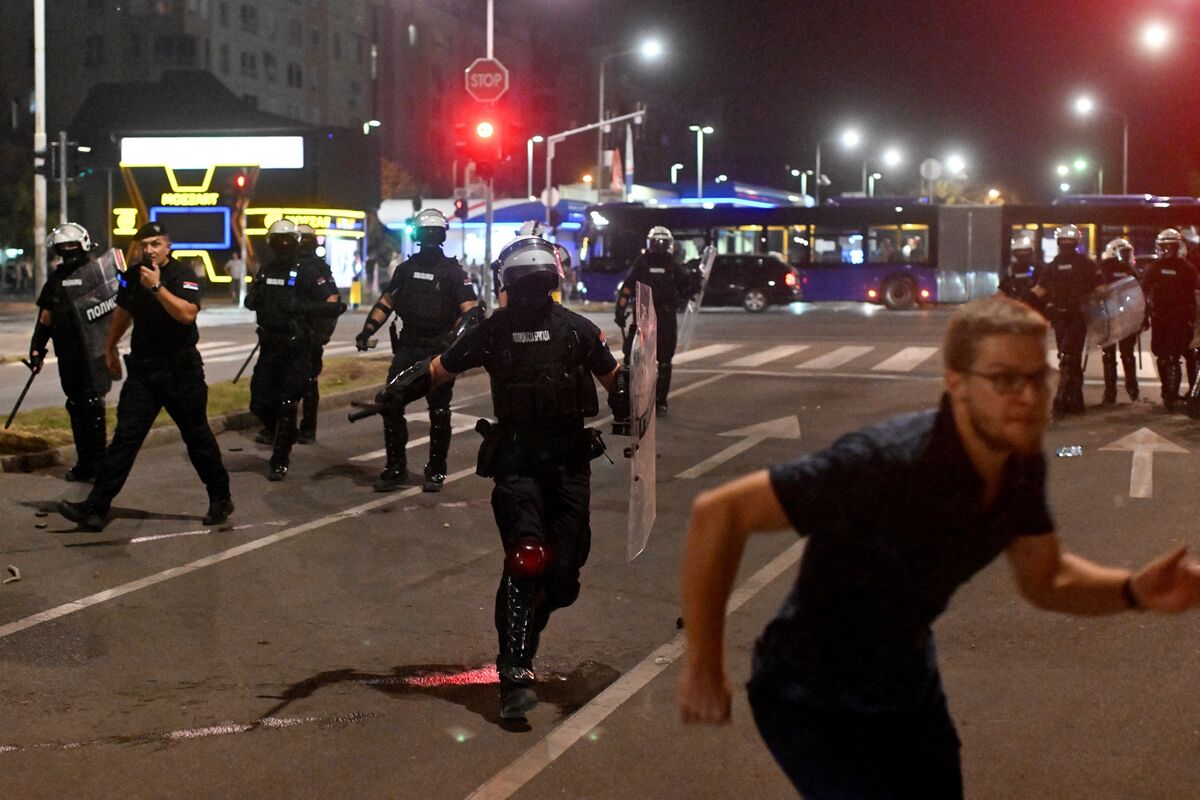
Political protests in Serbia have turned violent, with clashes between supporters of President Aleksandar Vucic and his opponents reported in Belgrade, Novi Sad, and Nis. These incidents mark an escalation in the nine-month anti-government rallies, which represent the most significant challenge to Vucic's decade-long rule and are increasing pressure for snap elections, signaling heightened political instability in the Balkan nation.
Escalating political tensions in Serbia have culminated in violent clashes in key cities, including Belgrade, Novi Sad, and Nis, signaling a significant increase in domestic instability. These events represent a material deterioration after nine months of persistent anti-government rallies, which now pose the most substantial challenge to President Aleksandar Vucic's decade-long rule. The growing unrest is increasing pressure for snap elections, introducing a high degree of political uncertainty and volatility into the Balkan nation. While the immediate broader market impact is assessed as low with a score of 0.25, this heightened domestic instability represents a material sovereign risk, potentially affecting investor confidence and the local economic outlook.
AI-powered research, real-time alerts, and portfolio analytics for institutional investors.
Request DemoOverall Sentiment
moderately negative
Sentiment Score
-0.50
