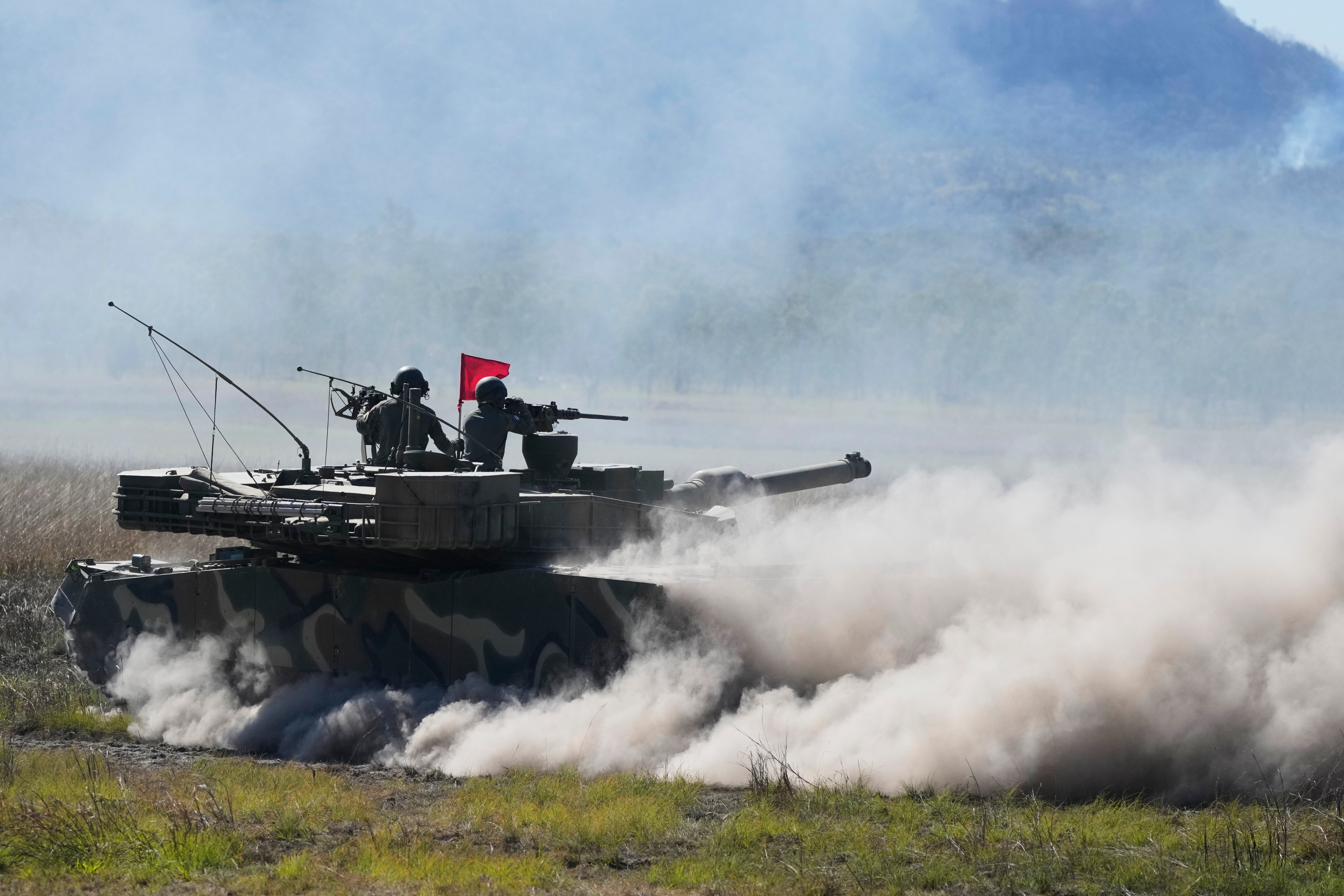
Australia is hosting Exercise Talisman Sabre, its largest-ever war-fighting drills involving 19 nations and 35,000 personnel, highlighted by the Australian Army's first live-fire of newly acquired U.S.-made HIMARS. These drills, extending to Papua New Guinea for the first time, are occurring amidst expected surveillance by Chinese spy ships, a recurring pattern Australian officials acknowledge. Simultaneously, Australian Prime Minister Anthony Albanese is visiting China, indicating that Chinese observation of the exercises will not be raised with President Xi Jinping, underscoring the nuanced geopolitical landscape in the Indo-Pacific.
The commencement of Exercise Talisman Sabre, Australia's largest-ever military drill involving 35,000 personnel from 19 nations, signals a significant deepening of defense cooperation in the Indo-Pacific, centered on the U.S.-Australia alliance. A key development is the Australian Army's first live-fire of its recently acquired U.S.-made M142 HIMARS, demonstrating a tangible enhancement of its long-range strike capabilities. The exercise's operational expansion to Papua New Guinea for the first time underscores a broadening strategic scope. This military posturing occurs under the anticipated surveillance of Chinese naval vessels, a recurring event since 2017 that Australian officials acknowledge as standard procedure. Concurrently, Australian Prime Minister Anthony Albanese's diplomatic visit to China, during which he stated the surveillance issue would not be raised with President Xi, highlights the complex dual strategy of strengthening military deterrence while maintaining economic and diplomatic ties with Beijing. This dynamic reflects the nuanced and persistent geopolitical tensions shaping regional security architecture.
AI-powered research, real-time alerts, and portfolio analytics for institutional investors.
Request DemoOverall Sentiment
neutral
Sentiment Score
0.00
