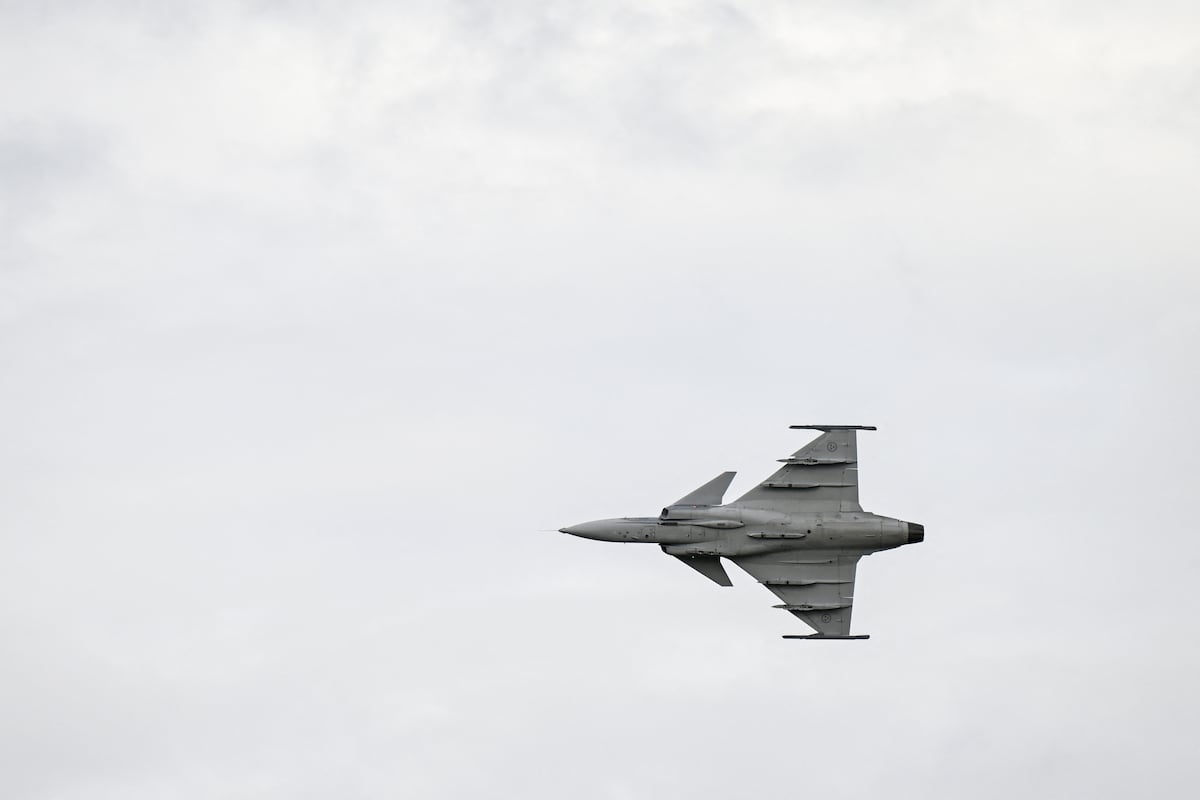
Saab is pitching a Canadian Gripen production line that it says would supply both the Royal Canadian Air Force and export customers, targeting a ramp-up to a combined production capacity of 36 aircraft per year and claiming the potential to create roughly 10,000 Canadian jobs. The proposal comes amid Ottawa’s strategic review of fighter procurement — Canada has budgeted C$19 billion for 88 Lockheed F-35s but only committed to 16 so far — and Saab is positioning the Gripen as part of a possible mixed fleet and as capable of supporting potential large orders (including >100 for Ukraine), creating contingent upside for Saab and Canadian defence suppliers if Ottawa opts to broaden purchases.
Market structure: Saab’s Canada pitch creates a credible alternative to a pure F-35 buy and lengthens the procurement funnel — winners are Saab (SABF/SAAB-B exposure), Canadian OEMs/MRO/training firms (e.g., CAE), and Canadian regional supply chain players if a domestic line is approved; marginal loser is Lockheed (LMT) whose optional upside from a full 88‑jet program is reduced. If Canada adopts a mixed fleet, total aircraft demand could rise (+10–30% lifecycle sorties and MRO spend) but per‑aircraft OEM pricing pressure will increase as competition for follow‑on sustainment and upgrades intensifies.
Risk assessment: Tail risks include (1) Canada sticking exclusively with F‑35s or blocking domestic production on security grounds, (2) US political pressure/Buy‑American rules limiting Canadian exports of Gripens, and (3) Ukraine orders not materializing — each can flip economics abruptly. Time horizons: market noise in days (LMT headlines), procurement decisions over 3–12 months, and production ramp/real job creation over 2–6 years; hidden dependencies include offset agreements, interoperability costs, and Canadian political cycles.
Trade implications: Tactical trades should favor training/MRO exposure (CAE US: CAE) and underweight LMT relative to peers; consider a defensive hedge (small LMT put spread) sized to limit portfolio downside to <1% premium. Cross‑asset: CAD should firm on a confirmed domestic build (tradeable via USDCAD forwards/FX ETFs); commodity impact (aluminum/titanium) is marginal but local metals suppliers could see 1–3% incremental demand over multi‑year production ramp.
Contrarian angles: Consensus underestimates execution difficulty — Saab’s 36/yr figure mixes existing lines and is optimistic for a greenfield Canadian line, so early exuberance can be overdone. Conversely, the market may underprice durable service revenues from a mixed fleet (training, simulators, MRO) which favors listed service providers over prime contractors; unintended consequence: mixed fleets increase aftermarket spend, benefiting CAE‑type names while pressuring integrated OEM lifecycle margins.
AI-powered research, real-time alerts, and portfolio analytics for institutional investors.
Request DemoOverall Sentiment
mildly positive
Sentiment Score
0.25
Ticker Sentiment
