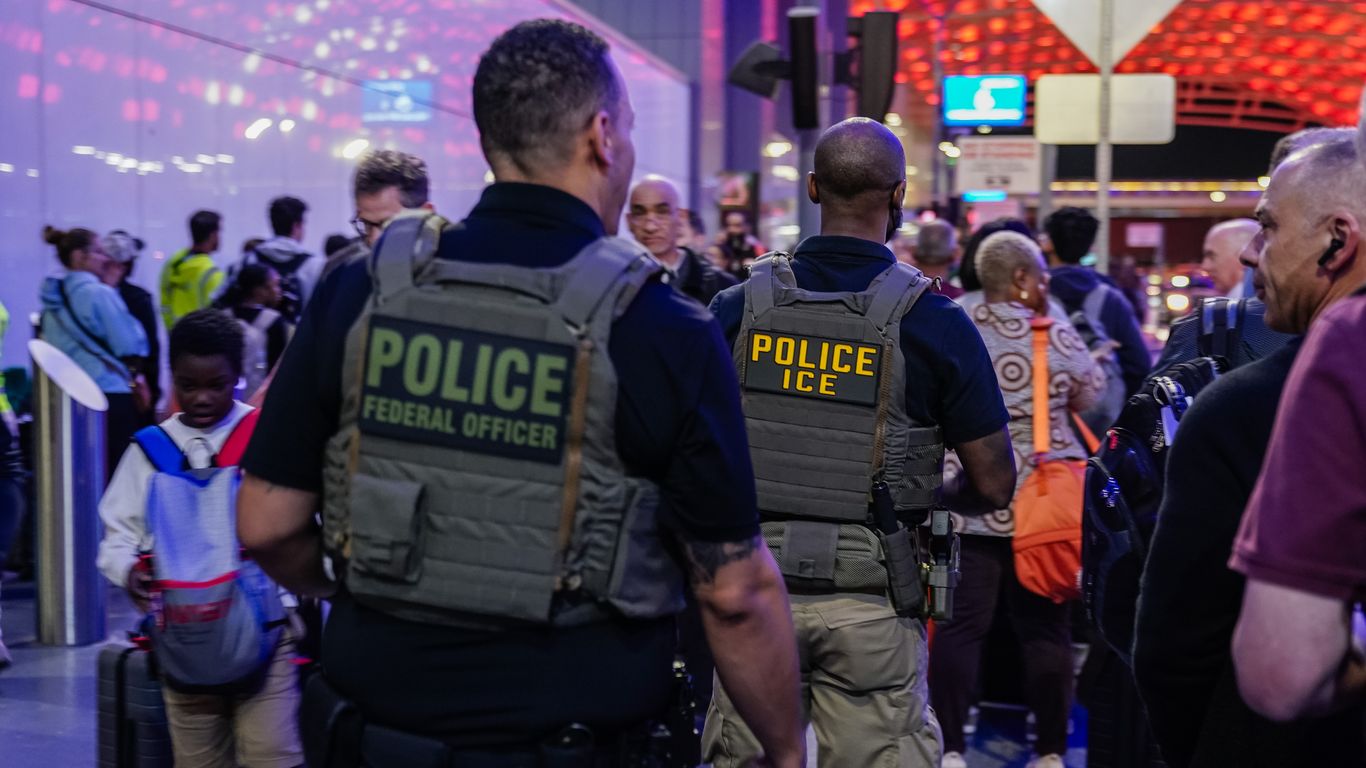
ICE officers were deployed to more than a dozen U.S. airports to assist TSA amid spring travel disruption, but their operational role is unclear. TSA screening duties require 4–6 months of training and annual recertifications, so ICE cannot readily substitute for core tasks like baggage X‑rays, pat‑downs or explosives detection. ICE can help with crowd control, exit lanes, and immigration enforcement, but its presence risks political backlash and protests that could divert resources. DHS will define deployment scope as travel demand rises and staffing gaps continue.
ICE deployments functionally look like a tactical band‑aid rather than a structural fix: TSA’s core screening capabilities require 4–6 months of duty‑specific training and recurring certifications, so redeploying ICE at scale will not materially reduce queue times or baggage‑screening backlogs over the next 30–90 days. Expect persistent operational volatility across peak travel windows as staffing shortfalls ricochet into flight delays, crew cost overruns and higher IFR (irregular flight) expense for carriers with tight turnarounds.
A key second‑order effect is political externalities driving localized demand shocks. ICE presence raises the probability of protests or enforcement incidents that temporarily divert security resources to crowd management; a single large protest or enforcement action at a hub airport could cause concentrated cancellations equal to several percent of a carrier’s daily capacity and produce outsized P&L hits across ancillary revenue streams (bag fees, rebooking costs) for the affected weekend. That risk is highest in major coastal hubs and during headline news cycles — a days‑to‑weeks event horizon rather than months.
Conversely, this episode accelerates a multi‑quarter procurement and automation narrative: DHS incentives to buy id‑verification kiosks, computed tomography baggage scanners and integrated traveler‑processing software rise materially if manual screening proves brittle. Expect follow‑through RFP activity and program awards over 3–12 months that favor large defense/aviation‑security contractors with existing DHS relationships and integrator capabilities, while airport service operators and short‑haul carriers remain exposed to near‑term demand volatility.
AI-powered research, real-time alerts, and portfolio analytics for institutional investors.
Request DemoOverall Sentiment
neutral
Sentiment Score
0.00
