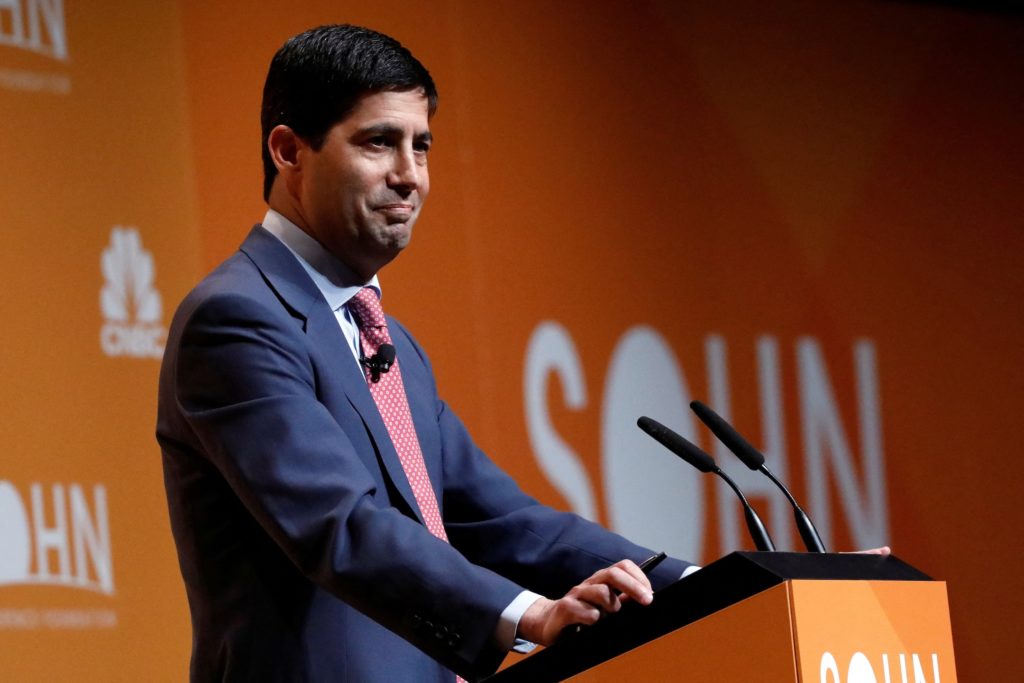
President Trump has nominated Kevin Warsh, a former Federal Reserve governor (2006–2011) and ex-adviser to George W. Bush, to be the next Fed chair, potentially succeeding Jerome Powell when his term ends in May if confirmed. Warsh is characterized as an inflation hawk, a designation that signals a possibility of tighter monetary policy under his leadership and could influence interest rate expectations, bond yields and risk assets ahead of confirmation.
Market structure: A Fed chair perceived as an "inflation hawk" raises the probability of a higher-for-longer short-term rate path, favoring cash, short-duration fixed income (SHY, cash MM) and banks with wide deposit franchises (XLF, JPM). Long-duration assets (TLT, growth tech/QQQ, high-multiple megacaps) face P/E compression: a 50bp rise in real yields can cut long-duration equity multiples by ~8–12% over 3–6 months. FX and commodities: dollar (UUP) tends to appreciate; gold (GLD) and cyclical commodities may suffer if rate-driven demand destruction outpaces supply constraints.
Risk assessment: Tail risks include a policy overshoot that triggers a hard landing (recession within 6–12 months) which would invert the curve, equity drawdowns >20%, and credit stress in regional banks; counter-tail is persistent inflation forcing even sharper hikes. Immediate reaction (days) will be volatility spikes in rates and FX; short-term (weeks/months) sees re-pricing of duration; long-term (quarters/years) depends on realized inflation vs growth outcomes. Hidden dependencies include fiscal policy and election-related bond supply; catalysts are CPI/PCE prints, payrolls, and the Senate confirmation timeline (30–90 days).
Trade implications: Favor short-duration rate exposure and USD longs immediately; initiate duration shorts (TLT) sized to 2–3% portfolio risk and buy 3–6 month TLT put spreads if 10y > +25bp intraday. Rotate equity exposure from growth to cyclicals/financials: pair trade long XLF vs short QQQ (1:1 notional, 2% each). Use options to hedge: buy 3-month ATM puts on concentrated high-duration names (QQQ or ARKK holdings) and consider VIX call spreads to hedge volatility spikes.
Contrarian angles: Consensus assumes hawkish = flatter yield curve and banks win; but an aggressive Fed that forces a recession would sharply lower long yields and reverse bank outperformance—so size duration shorts conservatively and layer protection. Historical parallels: 1994 rate shock and 2018 hikes show outsized losses in long-duration ETFs within 3 months; but post-shock rallies happened when CPI cooled within 6 months. Unintended consequence: a stronger dollar could depress commodity exporters and EM debt—opportunities to short high-beta EM FX if hawkishness persists beyond 3–6 months.
AI-powered research, real-time alerts, and portfolio analytics for institutional investors.
Request DemoOverall Sentiment
neutral
Sentiment Score
0.00
