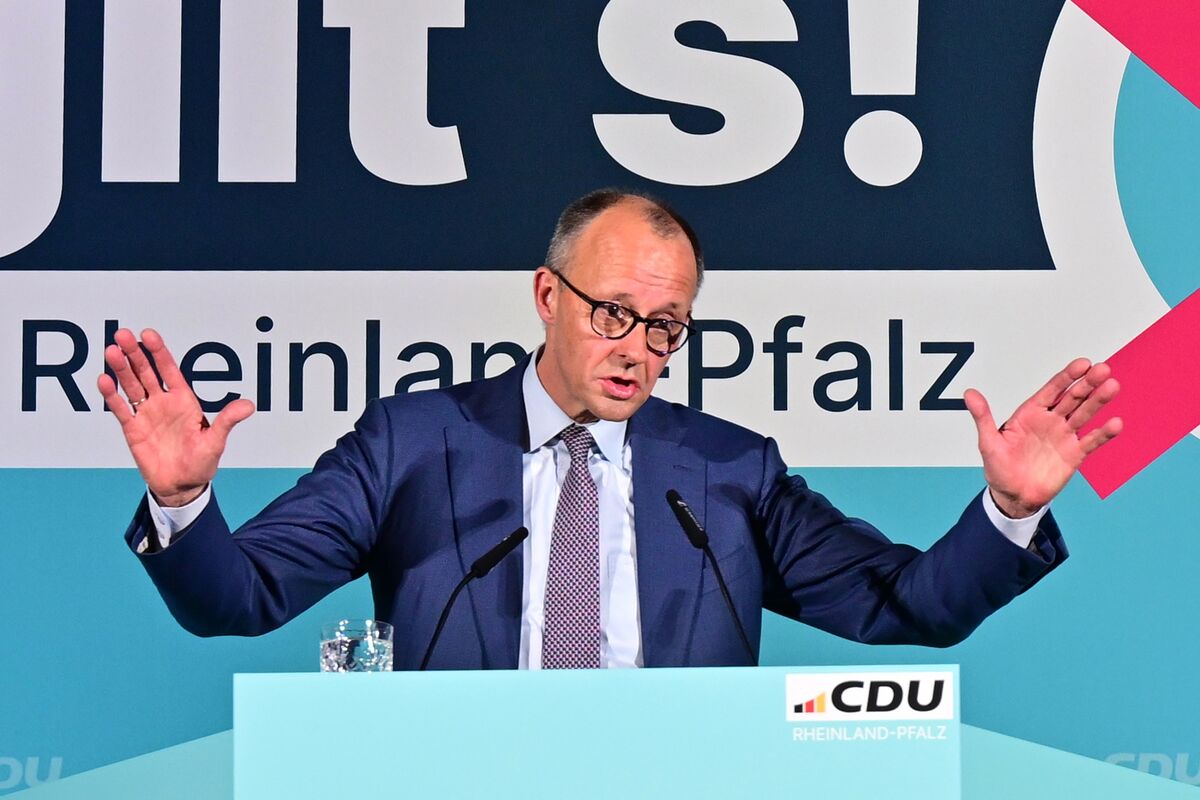
Key event: a regional election in Rhineland-Palatinate is scheduled for Sunday; the Social Democrats have governed the state for 35 years. CDU leader Friedrich Merz seeks a follow-up victory after a bruising defeat in a wealthy southwestern state two weeks ago; failure would be a significant blow to the CDU, while an SPD loss would compound the party's turmoil after its worst-ever result on March 8 in neighboring Baden-Wuerttemberg.
This regional vote is best read as a high-signal, low-policy-impact event — a short-duration information shock that recalibrates probabilities around federal coalition dynamics rather than immediately changing law. Markets will disproportionately price the change in perceived political trajectory: expect the biggest moves in FX and sovereign spreads (EUR and bunds) inside a 48–72 hour window, with 3–10bp moves in 10y bunds and 0.5–2% in EUR/USD on surprise outcomes.
Second-order winners/losers depend on the narrative that the market adopts post-vote. If the market interprets results as accelerating a center-right pro-business shift, domestic cyclicals and banks should outperform over 3–12 months as rate-normalization and regulatory loosening lift NIMs and capex; conversely, if the outcome increases fragmentation or boosts populists, safe-haven bids will compress risk assets and boost demand for Bunds and FX hedges, benefitting long-duration, defensive sectors. The most actionable transmission channels are (1) nominal rates/curve steepness (affects bank earnings and financing costs), (2) EUR moves (directly affects exporters’ margins and FX-hedged cash flows), and (3) permitting/fiscal clarity for energy transition projects (impacts utilities, renewables suppliers and auto capex decisions).
Tail risks are asymmetric: a sudden SPD collapse or AfD surge could trigger credible odds of a snap federal election within months, materially repricing risk premia; a clear coalition signal from party leaders within a week would reverse most of that repricing. For investors, the cheapest exposures are short-duration FX and yield volatility — the event is noisy but payoff windows are narrow, so prefer option-based sizing and tight stop rules rather than large directional outright equity positions unless a persistent narrative emerges.
AI-powered research, real-time alerts, and portfolio analytics for institutional investors.
Request DemoOverall Sentiment
neutral
Sentiment Score
0.00
