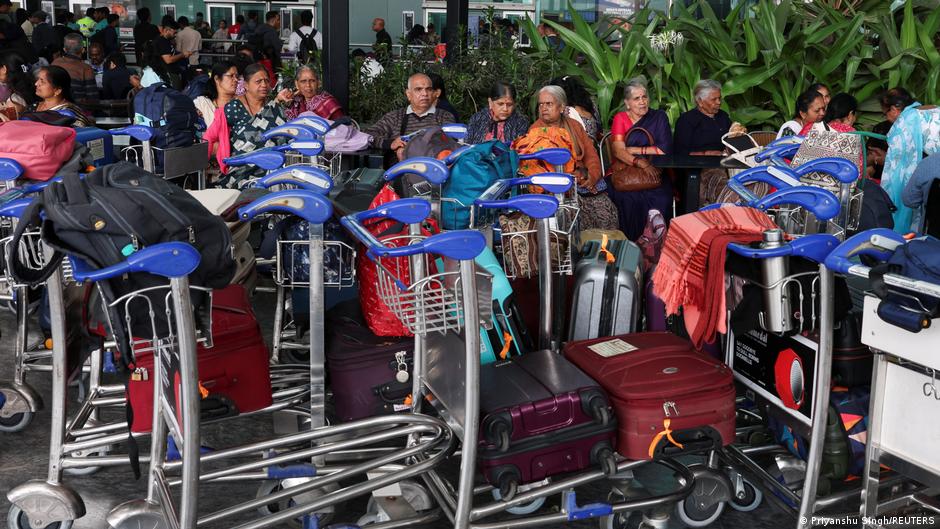
India's Ministry of Civil Aviation ordered airlines to cap fares after IndiGo cancelled more than 1,000 domestic flights on the worst day of disruptions, leaving thousands stranded and prompting other carriers to spike prices. The operational breakdown followed IndiGo's failure to implement new rules on longer crew rest and restricted night flying; the government temporarily relaxed some requirements until February while keeping mandatory pilot rest in place. Regulators said caps will stay until stability returns, IndiGo apologized and expects normalization between Dec. 10–15, creating near-term regulatory and revenue risk for carriers and potential downward pressure on airline equities.
Market structure: Price caps blunt the short-term ability of any carrier to monetise constrained supply, so incumbent network owners (airports, ground-handling, regulated slots) are relatively protected while marginal low-cost carriers lose pricing power. IndiGo’s operational failure (~1,000+ cancellations) implies a near-term domestic capacity shock (~2–5% on peak days) that will pressure yields for 1–3 weeks but not fundamentally remove demand given holiday season in Dec. Cross-asset: expect minor INR downside (<1%) on tourism headlines, negligible sovereign bond move, and a transient 0.5–1% reduction in jet-fuel demand locally (small negative for refiners in near term).
Risk assessment: Immediate (0–14 days) risk is operational recurrence and reputation hit; short-term (weeks–months) risk is extended regulatory intervention (price caps extended past Feb) that can compress carriers’ Q4-Q1 yields 3–8%. Tail risk: prolonged rule extension or pilot attrition causes capacity cuts into Q1 2026, producing a 10–20% EBITDA hit for weak carriers. Hidden dependency: airport revenues are sticky (non-fare), so carriers bear most pain; catalysts include government statements (next 7–14 days), IndiGo ops updates (target Dec 10–15), and holiday booking flow.
Trade implications: Tactical short on InterGlobe Aviation (NSE: INDIGO) via 30–45 day puts sized 1–2% portfolio to capture operational/PR downside if normalcy misses Dec 15; hedge by buying calls on airport operator GMR Infrastructure (NSE: GMRINFRA) 2–3% for rebound capture over 3–6 months. Pair trade (long GMRINFRA / short INDIGO) isolates operational vs. structural exposure; enter immediately, reassess on Dec 16. Options: sell short-dated covered calls against core airport longs and buy cheap 30–60 day puts on airlines to protect downside.
Contrarian angles: Consensus will likely over-penalise IndiGo for operational missteps; if IndiGo recovers by Dec 15 and caps are narrow/temporary, share prices could snap back 10–20% in 1–2 months. Historical parallels (operator meltdowns) show market punishes operational leaders then re-rates once capacity normalises; a >15% post-crisis price drop is a tactical buying opportunity. Watch for unintended consequence: prolonged caps forcing frequency cuts could concentrate profit to better-capitalised carriers or airports, creating asymmetrical winners.
AI-powered research, real-time alerts, and portfolio analytics for institutional investors.
Request DemoOverall Sentiment
moderately negative
Sentiment Score
-0.50
