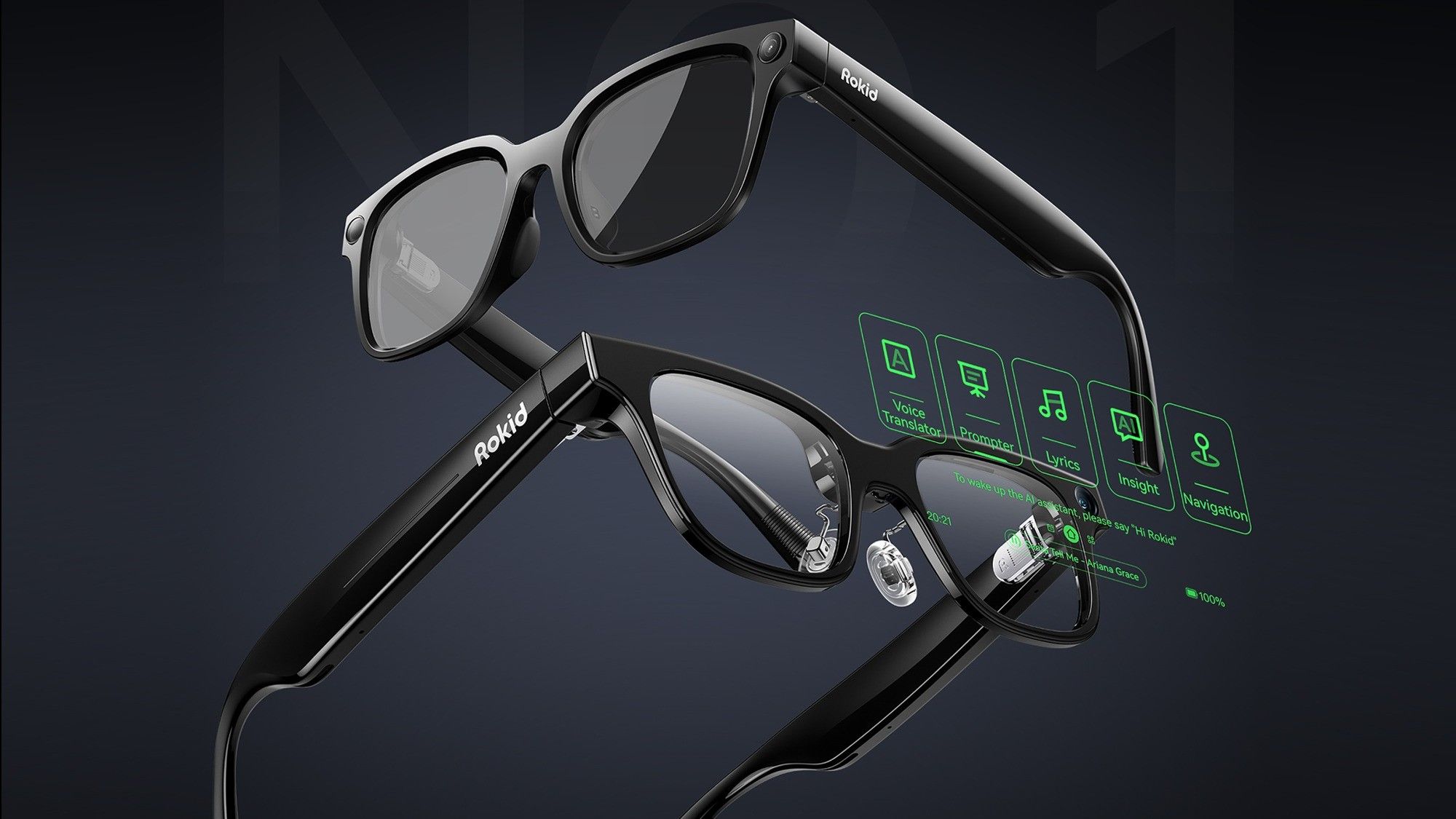
Rokid launched the Style AI glasses — a display-free, voice-first wearable that weighs 38.5g, uses a 12MP Sony camera capable of vertical/social-ready video (advertised 10-minute 4K clips), and claims up to 12 hours of battery life. The device integrates ChatGPT and DeepSeek for AI interactions, runs low-power tasks on an NXP RT600 and AI/imaging on Qualcomm AR1, supports prescription frames, and is available for pre-order with a non‑refundable deposit ahead of a global launch later in January at a sub-$300 price point. This positions Rokid to target mainstream consumer adoption of lightweight AI-enabled eyewear at an aggressive price, potentially increasing competitive pressure in the AR/wearables segment.
Market structure: Rokid’s display-less, $<300 glasses repositions wearables from premium AR overlays to mass-market AI-first devices. Direct beneficiaries are sensor and chip suppliers (SONY for camera modules, QCOM for AR1 compute, NXP for low-power controllers) as volume economics shift toward inexpensive, long-battery products; incumbent display-specialists and high-ASP AR makers (e.g., META’s display roadmap) face pricing pressure and slower adoption. This could expand addressable consumer unit volumes materially over 12–36 months while compressing ASPs for display-enabled devices.
Risk assessment: Key tail risks are regulatory/privacy clampdowns (EU/US biometric/surveillance rules) and API/licensing dependency on third-party LLMs (OpenAI/DeepSeek) that could raise per-device costs by +10–30% if renegotiated. Near-term (0–3 months) risks are execution and review-driven pre-order conversion; medium (3–12 months) is supply-chain bottlenecks for Qualcomm/SONY; long-term (1–3 years) is commoditization reducing supplier margins. Hidden dependency: prescription-lens partnerships and warranty/return rates could materially affect margins.
Trade implications: Tactical longs: QCOM (compute platform) and SONY (camera sensors) as direct plays — consider establishing 1.5–3% position in each over next 2–6 weeks and scaling on 3% positive earnings beats tied to wearables. Use a pair trade long QCOM / short META (equal notional) to express rotation from AR-display to AI-camera, with 3–6 month horizon. Options: buy 6–12 month QCOM 1.2x OTM calls (size 0.5–1% notional) to leverage upside into FY guidance seasons.
Contrarian angles: Consensus may overstate long-term displacement of AR displays; Rokid could be a niche social-video gadget akin to GoPro’s peak — high unit growth can reverse if returns/warranty exceed 5–8% or LLM costs rise >20%. Watch for vertical integration by Apple/Google (own silicon + LLM tie-ups) which would erode third-party supplier margins; increase conviction only if supplier revenue lines explicitly show >2–3% contribution from wearables over two consecutive quarters.
AI-powered research, real-time alerts, and portfolio analytics for institutional investors.
Request DemoOverall Sentiment
mildly positive
Sentiment Score
0.45
Ticker Sentiment
