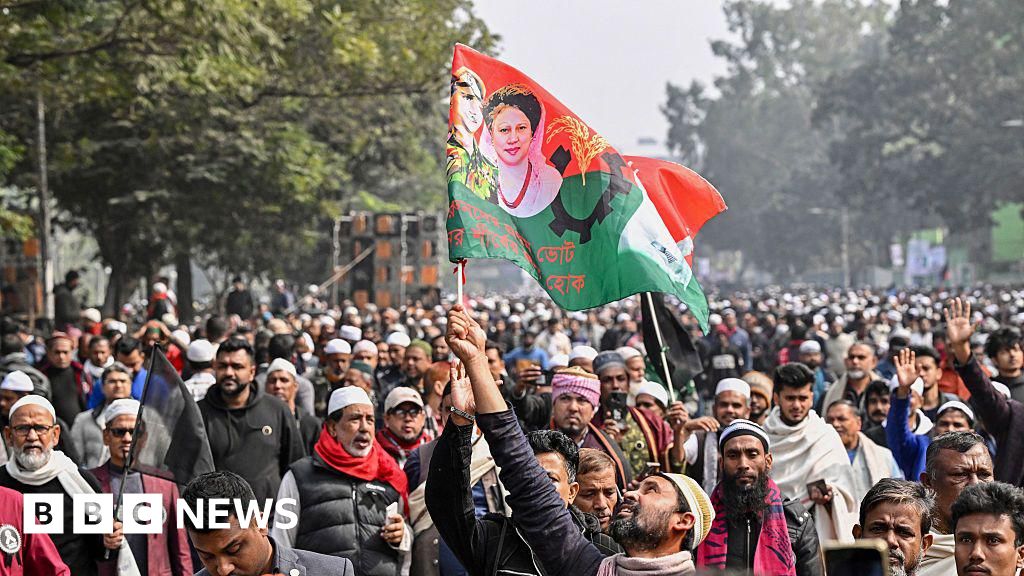
Former Bangladesh prime minister Khaleda Zia, aged 80, died after a prolonged illness and was given a state funeral attended by hundreds of thousands and regional dignitaries. Zia, a two-time premier and long-time leader of the Bangladesh Nationalist Party, had been listed to contest three constituencies in the February 2026 election and her son Tarique Rahman—who returned from 17 years in exile last week—remains the likely succession figure if the BNP regains power. Her passing removes a central political figure ahead of a pivotal vote, increasing short-term political uncertainty and warranting monitoring of election-related risks and investor sentiment in Bangladesh.
Market structure: Short-term winners are safe-haven instruments (USD cash, USTs) and domestic cash providers as crowds push liquidity needs; losers are Bangladesh sovereign credit and local equities where political-risk premia reprice—expect immediate sovereign spread widening of 50–200 bps if large protests or disruptions recur within 7–30 days. Competitive dynamics: political flux increases concentration risk—banks, telecoms and construction firms with strong domestic footprints will see pricing power protected but access to foreign capital may be constrained, raising effective funding costs by ~100–250 bps for leveraged corporates over 3–12 months.
Risk assessment: Tail risks include sustained civil unrest, a military intervention, or targeted sanctions that could cause >20% market drawdowns and FX restrictions; probability low-medium but impact high. Time horizons: immediate (days) volatility spikes 1–5%; short-term (weeks–months) capital outflows of 1–5% of market cap; long-term (to 2026 election) policy uncertainty that can materially change fiscal transfers and investment receipts. Hidden dependencies: remittances, RMG exports and Chinese financing are critical transmission channels—disruptions here amplify sovereign stress.
Trade implications: Tactical trades should be small, event-driven and trigger-based: buy Bangladesh USD sovereign bonds if 5y yields jump +100 bps vs regional peers; consider 1–2% portfolio exposure in FM (iShares MSCI Frontier Markets ETF, ticker FM) on >5% index weakness and selective long positions in DSE-listed BRACBANK (DSE:BRACBANK) after ≥15% pullback. Options: buy 3-month put spreads on EEM if implied vol rises >20% (sell 6% OTM, buy 12% OTM) to hedge EM downside; rotate cash from frontier risk into regional IG credits if spreads compress.
Contrarian angle: Consensus may overstate long-term destabilization—historical analogues (leader deaths in South Asia) show 3–6 month mean reversion once order is restored; mispricing likely if CDS widens >150 bps (creates asymmetric buy opportunity). Unintended consequences: over-hedging could leave investors out of a retracement rally; set concrete re-entry rules (accumulate up to 3% equity exposure if local indices fall ≥10% and CDS >150 bps).
AI-powered research, real-time alerts, and portfolio analytics for institutional investors.
Request DemoOverall Sentiment
neutral
Sentiment Score
0.00
