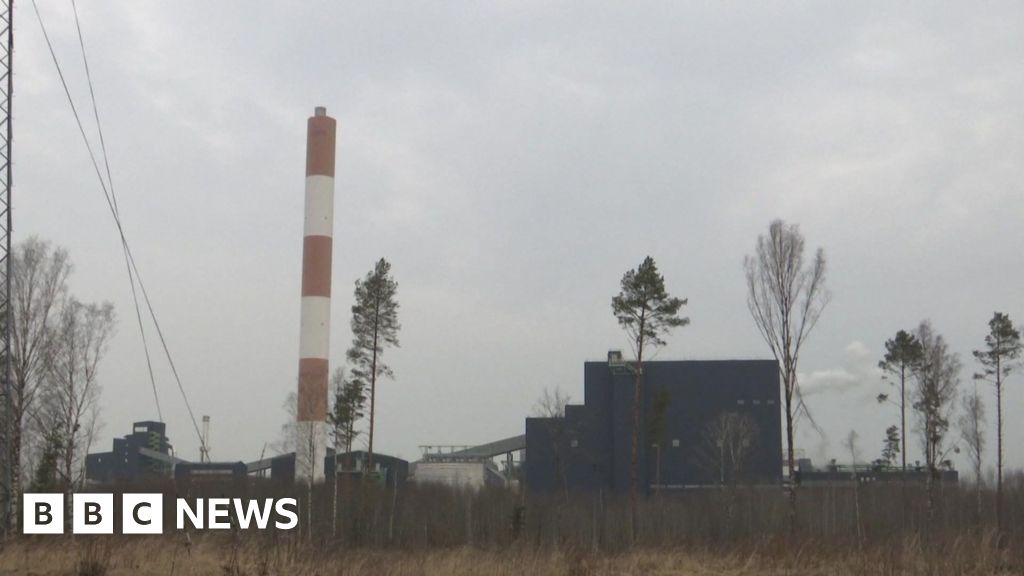
Estonia and Latvia reported Ukrainian drones entered their airspace overnight; one struck the chimney of the Auvere power plant in Estonia and another exploded in Latvia's Kraslava region with no major injuries. The incidents coincided with a large Ukrainian drone attack on the Ust-Luga oil export terminal (~25 km from the Estonian border) that triggered a fire, and Kyiv fired almost 400 drones overnight while Russia launched ~948 drones over a 24-hour period. Authorities say drones likely veered off course or were affected by jamming/electronic warfare, and Baltic states warned of more such incidents, raising near-term risks to regional energy infrastructure and trade/logistics chokepoints.
The immediate market channel to watch is logistics friction: recurring strikes against Baltic terminals force product and crude cargoes to reroute to more southern or western terminals, adding transit time (1–4 days) and incremental bunker/charter cost that can widen product-on-crude margins by $2–6/bbl in stressed windows. That spread is the fastest-translating price signal and will show up first in ICE gasoil (European diesel) cracks and short-term product tanker TCEs; monitor 1–4 week moves for early confirmation.
A second-order political effect is a rising baseline of “near-miss” incidents that compresses the neighbor-states’ risk tolerance and increases demand for C‑UAS, EW, and local air surveillance procurement. Procurement cycles are long, but emergency orders and maintenance/upgrade contracts can materialize within 3–9 months; expect faster, smaller-ticket purchases in 0–6 months (radars, jammers, mobile interceptors) and larger platform buys after 12+ months if incidents persist.
Repricing of political risk will be uneven: marine hull/P&I and war-risk premiums will reprice quickly (days–weeks) as underwriters update route-risk maps, while broader credit or equity risk for regional corporates takes longer (quarters). A de-escalation catalyst that would reverse these moves is formalized deconfliction and pre-notification channels between Ukraine and Baltic states — that reduces “accidental” overflights and would likely compress spreads and insurance loads within 4–8 weeks if implemented credibly.
AI-powered research, real-time alerts, and portfolio analytics for institutional investors.
Request DemoOverall Sentiment
mildly negative
Sentiment Score
-0.35
