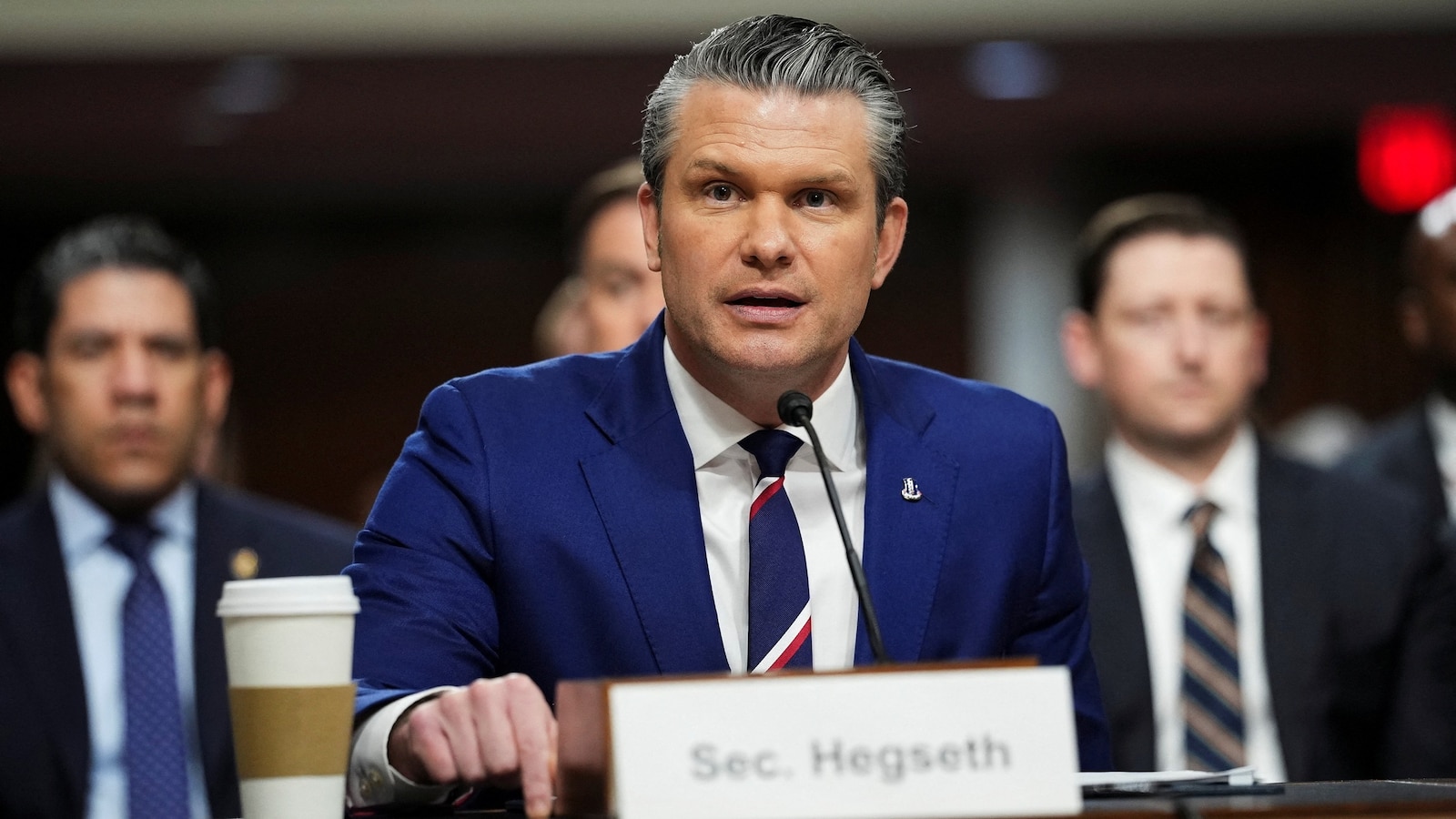
The Pentagon’s 2027 budget request is $1.5 trillion, with the Iran campaign already costing $25 billion and an additional $200 billion in supplemental funding expected. The article highlights escalating political conflict over the war, with Hegseth defending the campaign, Democrats questioning its strategy and costs, and officials citing 14 service-member deaths. The geopolitics and budget implications are material for defense spending and broader risk sentiment.
The market implication is less about the battlefield and more about the funding regime: once a campaign is rhetorically framed as existential and politically non-negotiable, supplemental appropriations become the base case even if the original budget line is blown out. That shifts the burden from operational success to fiscal tolerance, which is supportive for defense primes near term but increasingly toxic for duration-sensitive assets if investors start pricing a larger, stickier deficit path and higher Treasury supply. The second-order winner is the defense supply chain with fast revenue recognition and low dependence on discretionary end-markets: munitions, ISR, EW, and sustainment names should see the cleanest follow-through as replenishment orders and theater support spending outrun the headline war budget. The loser set is broader than Congress: airlines, industrials, and import-heavy retailers face an oil/shipping shock if Middle East risk keeps the Strait of Hormuz premium elevated, while small-cap domestic cyclicals are exposed to a tightening in financial conditions if fiscal hawkishness collides with higher rates. The bigger near-term catalyst is not a military headline but legislative fatigue. If lawmakers conclude the administration is overpromising on costs and endgame, the market may see a sequencing risk: emergency funding gets approved, but with oversight, delays, or earmarks that reduce procurement efficiency and compress contractor margins. Over 1-3 months, the key reversal would be a credible de-escalation or multilateral burden-sharing announcement; absent that, the most plausible path is a higher baseline for defense outlays and a slower grind higher in energy risk premia. Contrarian read: the consensus may be underestimating how quickly political theater can translate into real appropriations but overestimating how much that helps broad defense beta. The more the conflict is sold as a domestic loyalty test, the more it invites oversight, cost scrutiny, and reputational discounts for the Pentagon leadership — which can actually favor diversified primes and punish single-program names with execution risk. This is a classic case where headline hawkishness can coexist with tactical skepticism on the sustainability of the funding stream.
AI-powered research, real-time alerts, and portfolio analytics for institutional investors.
Request DemoOverall Sentiment
moderately negative
Sentiment Score
-0.35
