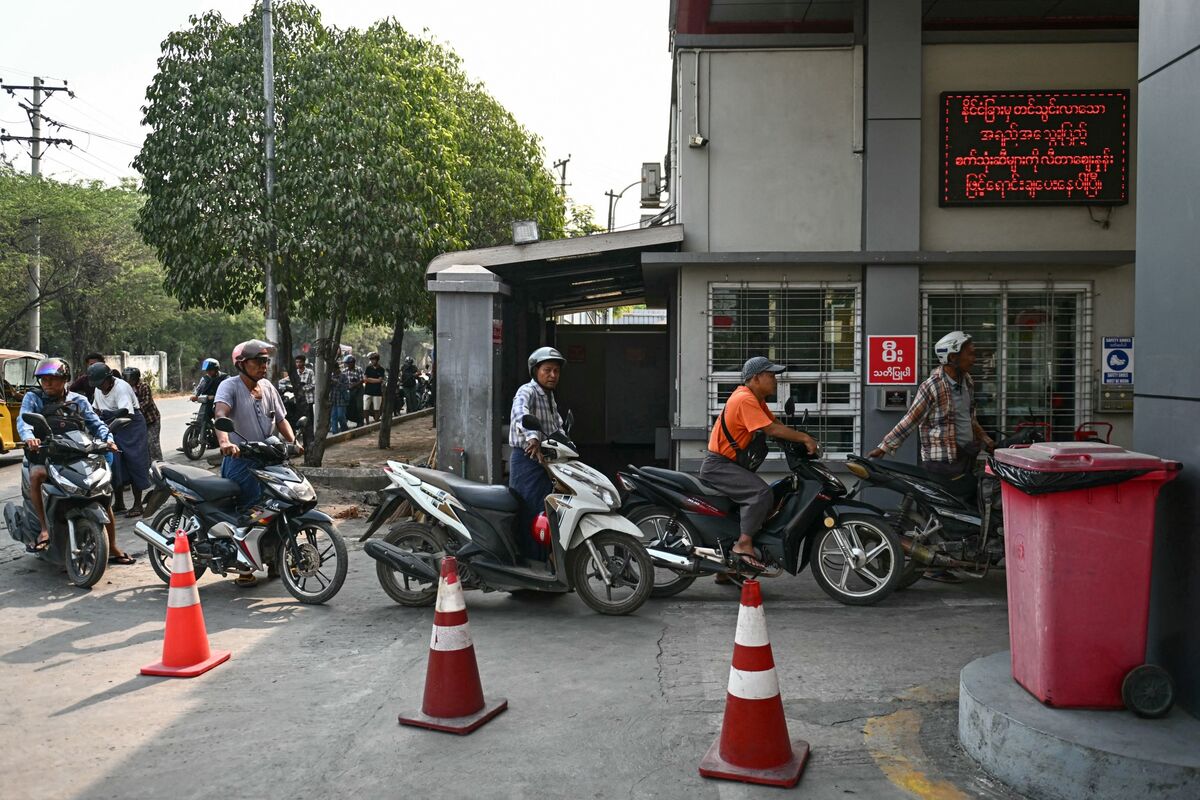
Myanmar will implement a nationwide barcode/QR-code fuel rationing system next week, limiting customers to fuel purchases once or twice weekly depending on vehicle engine size. The measure, following earlier private-vehicle driving restrictions and prompted by shortages amplified by the Middle East war, tightens domestic fuel supply and risks weighing on transport, logistics and consumer activity while potentially nudging regional fuel demand/pricing modestly higher.
Rationing in Myanmar will produce localized demand volatility rather than meaningful changes in global crude balances, but it creates outsized near-term dislocations in refined product flows across Southeast Asia. Expect a two- to eight-week window of elevated domestic retail diesel/gasoline prices and a parallel surge in informal cross-border shipments into Thailand/Bangladesh; margins for traders and bunker suppliers operating in the Singapore/Laem Chabang hub will widen as arbitrageurs rush to cover shortages. Logistics friction is the key second-order effect: trucking and inland container movement in and out of Yangon will face higher transshipment times and idling, which can translate into 5-15% increases in lead times for Myanmar-origin cargoes over 1–3 months and concentrated working capital pressure on SMEs. The structural risk is fiscal — prolonged rationing erodes fuel tax receipts and pushes chronic importers toward complex barter and credit arrangements, raising counterparty credit risk for regional banks and commodity traders over a 3–12 month horizon.
Catalysts that could reverse the dislocation are straightforward and fast: an emergency bilateral import program (supply in 7–14 days), targeted price subsidies that reallocate to state importers, or a temporary surge in ship-to-ship bunker deliveries from Singapore to Yangon—any of which would compress product cracks within 2–6 weeks. Conversely, broader geopolitical escalation in the Middle East would shift this from a local kink to a regional premium, amplifying diesel/gasoil cracks and bunker tightness for 1–3 quarters. Tail risks include accelerated smuggling networks solidifying into semi-formalized supply chains (months) and sovereign credit stress if fuel subsidy burdens or import financing gaps widen (3–12 months).
AI-powered research, real-time alerts, and portfolio analytics for institutional investors.
Overall Sentiment
mildly negative
Sentiment Score
-0.35
