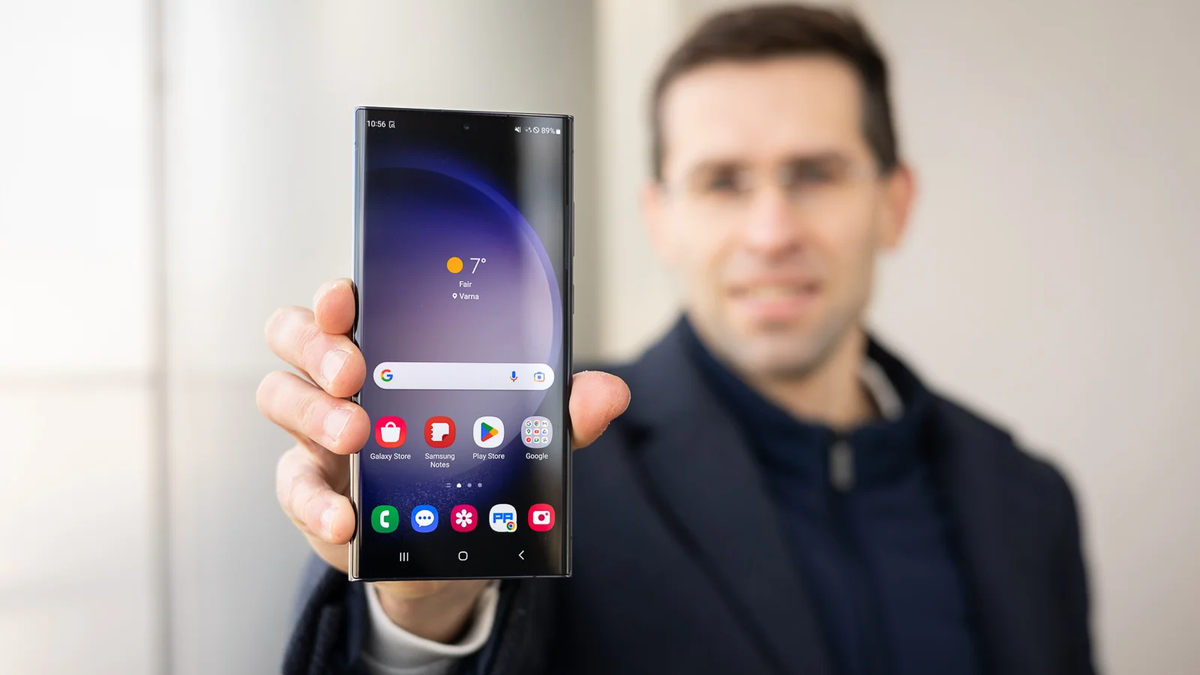
Samsung has started rolling out the stable One UI 8.5 update for Galaxy S23 beta users in South Korea, with the S23, S23+ and S23 Ultra receiving build S918NKSU7FZDT/S918NOKR7FZDT/S918NOKR7FZDP. The update reportedly includes the May 5 security patch, while a broader One UI 8.5 rollout is also underway for the Galaxy S24 series in several countries. The article is mostly a software update note, with limited near-term market impact.
This is a quiet but important signal that Samsung is prioritizing software longevity as a retention lever, not just a launch marketing tool. The economic implication is that premium-device upgrade cycles may lengthen modestly because a larger share of the installed base gets feature parity sooner, reducing the urgency to replace hardware for non-camera, non-battery reasons. That is mildly negative for handset replacement intensity, but positive for engagement and accessory attach, because software satisfaction tends to keep users inside the ecosystem even when the device itself is aging.
The bigger second-order effect is competitive pressure on Android OEMs that still monetize through short software support windows. If Samsung can credibly extend flagship utility across multiple generations, it raises the bar for Google/Pixel, OnePlus, Xiaomi, and domestic Android brands that rely on hardware refresh cycles rather than sticky software layers. It also reinforces the notion that value is migrating from BOM-driven differentiation to update cadence, AI features, and service integration; that tends to favor firms with ecosystem control and compresses the edge for pure-hardware players.
The near-term catalyst path is mostly sentiment-driven over days to weeks, not fundamentals-driven over quarters. The market is likely to overestimate the revenue impact because a stable rollout does not create incremental device demand; if anything, it may defer replacement by 1-2 quarters for some users. The main risk to the thesis is if the broader One UI 9 rollout becomes a feature-rich AI upgrade that meaningfully changes upgrade intent, which would shift the narrative back toward hardware pulls.
Contrarian view: the move is probably underestimated on retention but overestimated on monetization. Better software support does not directly lift handset ASPs, but it can improve ecosystem LTV and reduce churn at the margin, which matters more for the services layer than for phone unit growth. In a market that still treats Android OEMs as cyclical hardware names, this kind of software credibility can quietly re-rate the quality of earnings multiple over time.
AI-powered research, real-time alerts, and portfolio analytics for institutional investors.
Request DemoOverall Sentiment
mildly positive
Sentiment Score
0.20
