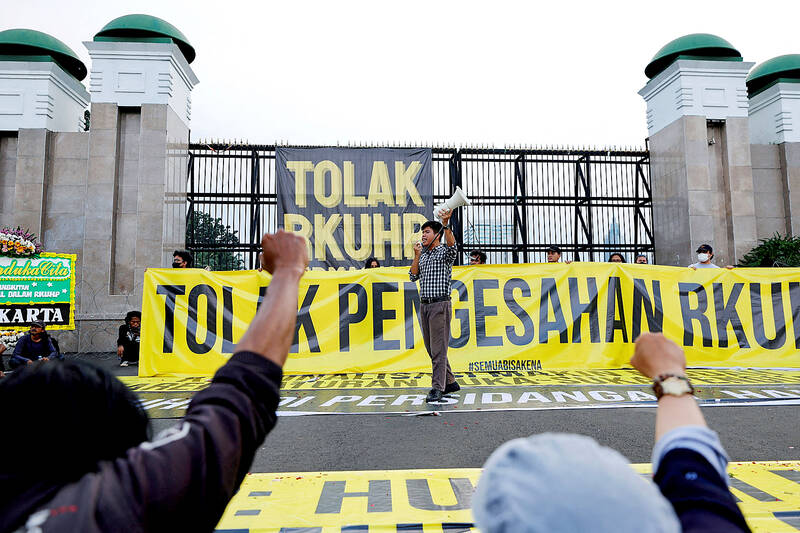
Indonesia has begun enforcing a newly ratified 345-page penal code (KUHP) passed in 2022 after a three-year transition, criminalizing sex outside marriage (up to one year in prison), cohabitation (six months), restoring penalties for insulting the president/state institutions (up to three years), expanding blasphemy provisions (up to five years), and retaining the death penalty while adding a 10-year probationary window for commutation. The government frames the reforms as a shift to restorative justice and is preparing a new criminal procedure law, but rights groups warn of privacy invasions and selective enforcement; the changes raise political and reputational risks that could affect investor sentiment and tourism-related sectors in Indonesia.
Market structure: The KUHP raises idiosyncratic political/regulatory risk for Indonesia's consumer-facing and services sectors (tourism, hospitality, retail, airlines), while exporters and commodity producers (coal, palm oil, metals) gain relative pricing power from a potential weaker IDR and inward domestic demand hit. Capital flows may re-price: ESG-sensitive funds and travel-dependent REITs are immediate losers; state-linked utilities and defense contractors face higher compliance/legal costs. Expect selective liquidity drains in small-mid caps with high domestic revenue exposure over 1–6 months.
Risk assessment: Tail risks include sustained social unrest, sovereign rating pressure and a 2–6% rupiah sell-off or a 20–75bp widening in Indonesia 5–10y sovereign spreads if foreign outflows accelerate; probability medium but impact high. Immediate (days) risks are volatility spikes around protests and headlines; short-term (0–3 months) risks are tourism and retail revenue declines by a plausible 5–15%; long-term (12–36 months) risks are higher sovereign borrowing costs and permanent ESG-driven index exclusions. Hidden dependencies: enforcement discretion and tourism complaints mechanism temper outcomes but create policy uncertainty for multinationals and platforms.
Trade implications: Tactical: establish a 2–3% portfolio short of EIDO (iShares MSCI Indonesia) vs 2–3% long EEM to isolate idiosyncratic risk; buy 3-month USD/IDR call options sized to capture a 3–6% depreciation; consider 1–2% long positions in ID-listed exporters (e.g., ADRO.JK, PTBA.JK) to benefit from weaker IDR. Use a 3-month put spread on EIDO to cap premium; avoid long-duration ID sovereign bonds—prefer underweight or buy CDS protection if available.
Contrarian angles: Consensus overstates permanence—criminalization has procedural guardrails (complaint requirement) that likely limit tourist-targeted prosecutions, so market overreaction could create a 10–20% buying opportunity in beaten-up domestic names after 30–90 days if prosecution frequency remains low. Historical parallels (short-lived policy shocks in Malaysia/Thailand) show recovery within 3–12 months; scale positions with stop-loss at 8–12% and reassess at key datapoints: tourist arrivals, sovereign spread moves, and major prosecutions.
AI-powered research, real-time alerts, and portfolio analytics for institutional investors.
Request DemoOverall Sentiment
moderately negative
Sentiment Score
-0.35
