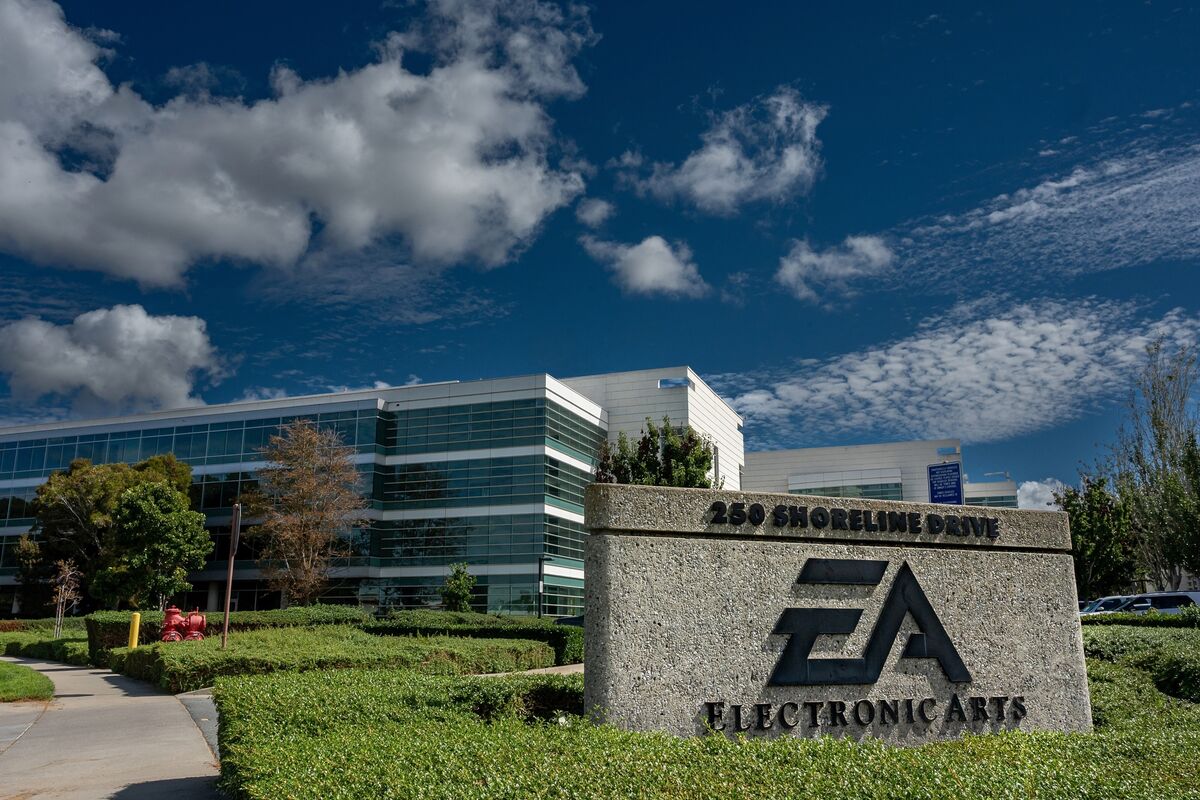
JPMorgan-led lenders increased the US dollar loan tranche for the Electronic Arts buyout to $5.0 billion (up $1.0 billion) while reducing other US dollar-secured debt by $1.0 billion to $3.75 billion. The amendment shifts $1.0 billion of secured debt into the loan portion of the deal, adjusting lender exposure and the financing mix for the EA acquisition.
Syndicated leverage markets are quietly repricing the choice of instrument rather than the underlying risk: lenders are favoring floating-rate loan exposures over fixed-rate secured paper, which amplifies bank fee capture and shifts interest-rate sensitivity onto loan investors and CLOs. That subtle tilt benefits arrangers with large underwriting platforms and balance-sheet capacity — they earn upfront fees and ongoing LIBOR/EFFR-linked spread income while keeping longer-duration secured claims off their books. Over a 3–12 month horizon this increases directional exposure to short-term rate moves for loan holders and raises refinancing and covenant-reset risk for any levered sponsor if growth or cash-flow generation slows.
Second-order effects extend into credit intermediation: larger loan allocations increase demand for institutional leveraged-loan paper and CLO arbitrage, tightening spreads short-term but concentrating downside in the retail loan ETF/CLO equity complex if macro turns south. Competitors in gaming M&A could see a subtle increase in borrowing cost asymmetry — sponsors reliant on securitized bond tranches will be more sensitive to spread shocks than those using banker-arranged loan financing, potentially skewing which bidders prevail in future deals. Watch lender documentation — looser covenants and payment-in-kind mechanics will magnify recovery dispersion across secured vs unsecured tranches over 6–24 months.
Catalysts to monitor: central bank rate pivots (days–months) that change the attractiveness of floating-rate loans, quarterly prints from major arrangers showing underwriting pipeline and fee mix (1–2 quarters), and early signs of stress in retail loan ETFs/CLO equity (weekly–monthly). Tail risks include a rapid reprice of LIBOR/EFFR or a gaming-sector revenue shock that provokes covenant enforcement; either could flip loan spreads materially in 3–12 months. The consensus trade — own arranger exposure and loan assets — is understandable, but the market may be underpricing concentrated refinancing risk sitting in the loan stack.
AI-powered research, real-time alerts, and portfolio analytics for institutional investors.
Request DemoOverall Sentiment
neutral
Sentiment Score
0.00
Ticker Sentiment
