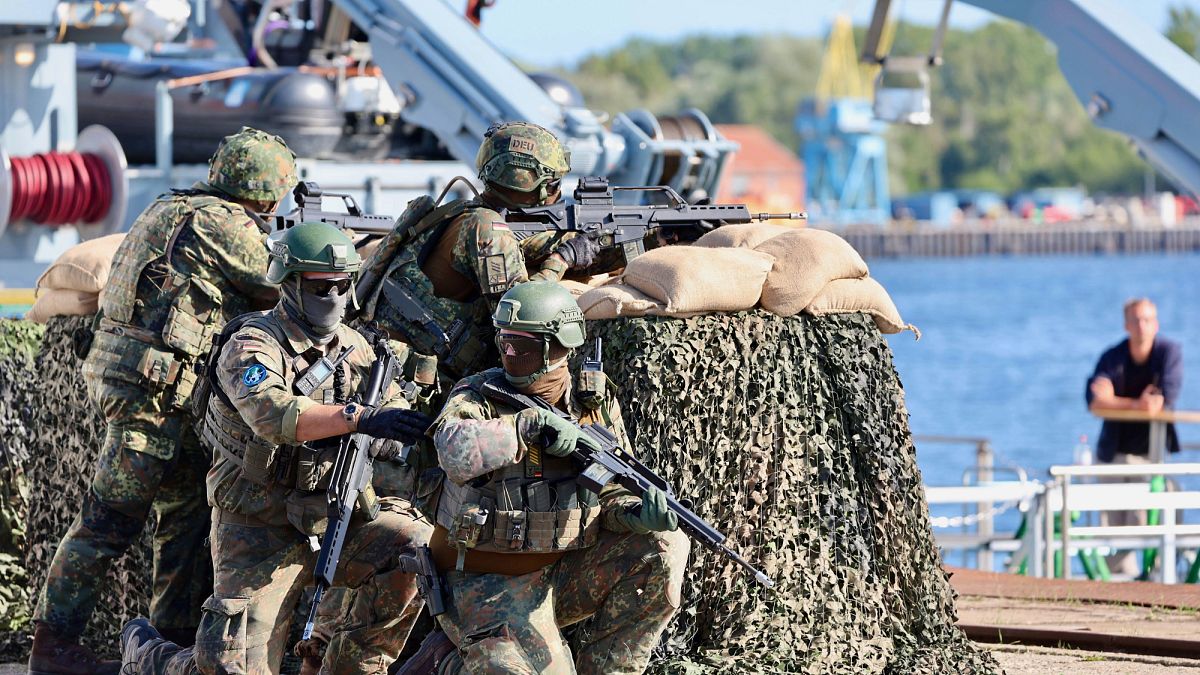
Men aged 17–45 must obtain Bundeswehr approval for trips abroad longer than three months under the Military Service Modernisation Act, effective 1 January 2026. The law aims to boost Bundeswehr personnel from roughly 184,000 to 255,000–270,000 by 2035 and reintroduces systematic registration/call-up for assessment; implementing administrative rules are not yet in force and approvals are currently treated as granted while service remains voluntary. The Defence Ministry describes the change as "profound," but enforcement details and penalties for noncompliance remain unclear.
The law’s principal market effect is timing mismatch: political/regulatory headlines create near-term repricing while the real operational impact — larger recruiter networks, training pipelines, and procurement cycles — plays out over years. Defense-capex and logistics vendors face a multi-year demand ramp if recruitment targets are sustained, but most procurement decisions (platforms, munitions, infrastructure) will materialize on 12–36 month cadences and beyond.
Second-order winners are niche domestic suppliers and training/IT vendors that can scale quickly (simulation, cyber, personnel IT). Conversely, sectors reliant on outbound mobility (education abroad operators, gap-year travel, and short-term international labor placements) face demand leakage; expect booking shifts into shorter trips and increased demand for domestic alternatives, pressuring margins for incumbents over 6–18 months.
Key risk asymmetry: administrative guidance and court challenges are the critical catalysts — publication of implementing regs (likely 3–9 months) is the inflection point for investor clarity, while any sustained legal/political reversal would take quarters to years. Markets that have already priced a large, immediate procurement wave are susceptible to a correction if the administrative tailwinds prove slower or if coalition politics force softening.
AI-powered research, real-time alerts, and portfolio analytics for institutional investors.
Overall Sentiment
neutral
Sentiment Score
0.00
