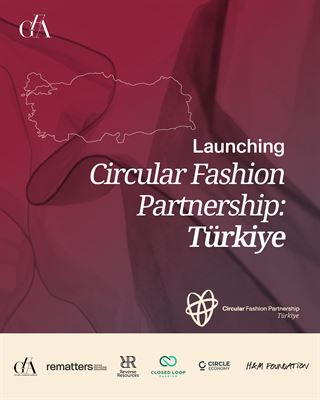
Global Fashion Agenda announced the Circular Fashion Partnership: Türkiye, a H&M Foundation–funded programme led by GFA with national lead Rematters and implementation partners Reverse Resources, Closed Loop Fashion and Circle Economy Foundation, slated to begin in early 2026 to capture and recycle post‑industrial textile waste in Türkiye. The initiative will deploy factory-level textile waste management systems, digital traceability, supplier compliance support, training and recycler‑manufacturer matchmaking to scale fibre‑to‑fibre recycling and domestic recovery routes, leveraging Türkiye’s vertically integrated industry and proximity to the EU. Building on GCFF pilots in Bangladesh, Cambodia and Indonesia (programmes that have digitally traced >21,000 tonnes and connected 100+ factories and 20 brands), the partnership aims to reduce reliance on virgin materials, lower emissions and landfill, and help suppliers meet tightening regulatory pressure—brands producing in Türkiye are invited to participate.
Global Fashion Agenda announced the Circular Fashion Partnership: Türkiye on 9 December 2026, a H&M Foundation–funded programme led by GFA with national lead Rematters and implementation partners Reverse Resources, Closed Loop Fashion and Circle Economy Foundation; the announcement states the programme is set to commence in early 2026. The initiative targets post‑industrial textile waste by implementing factory-level textile waste management systems, digital traceability and manufacturer–recycler matchmaking, and offers supplier support on compliance with evolving policy frameworks.
The programme builds on GCFF pilots in Bangladesh, Cambodia and Indonesia that have digitally traced over 21,000 tonnes of textile waste and connected more than 100 factories and 20 brands, signalling an operational playbook and measurable KPIs to scale fibre‑to‑fibre recycling. Türkiye is framed as a strategically attractive location because of its vertical integration, proximity to the EU and rising regulatory pressure, which the partnership aims to convert into domestic recovery routes and reduced reliance on virgin inputs.
For investors, the initiative implies increased near‑term demand for recycling technologies, traceability/SaaS solutions and on‑site waste management services, while the philanthropic funding model and execution risk mean commercial uptake and margin effects are not guaranteed; monitor rollout metrics, brand participation and local regulatory changes as the primary value‑creation indicators.
AI-powered research, real-time alerts, and portfolio analytics for institutional investors.
Request DemoOverall Sentiment
mildly positive
Sentiment Score
0.35
