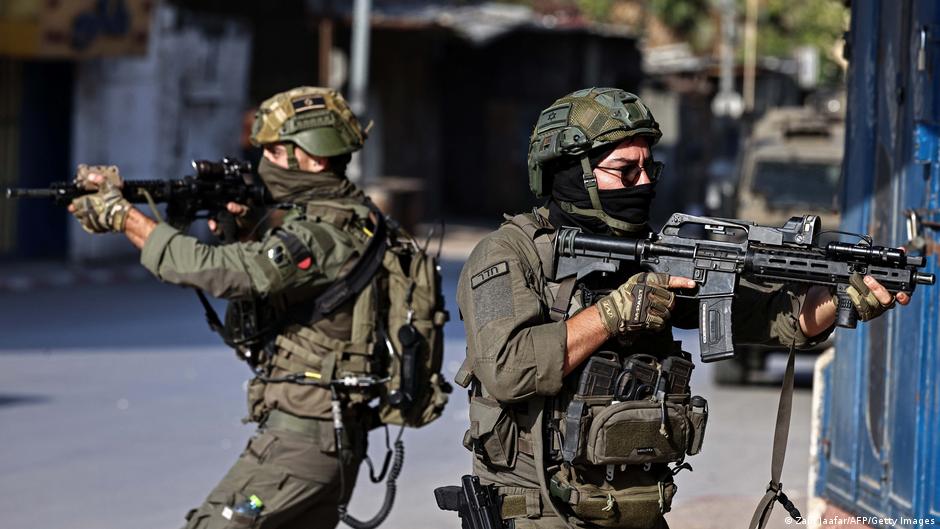
Israel launched a joint IDF, Shin Bet and Israel Border Police counterterrorism operation in northern Samaria (northern West Bank) as violence in the territory has surged since the Oct. 7, 2023 Hamas-led attacks. The report cites at least 1,000 Palestinian deaths in clashes since Oct. 7 (Palestinian Health Ministry), 264 settler attacks recorded by UN OCHA in October, and Human Rights Watch documentation of roughly 32,000 Palestinians displaced from Jenin, Nur Shams and Tulkarem this year; Israel also approved a plan to build nearly 3,500 apartments in Maale Adumim, drawing international condemnation and raising risks to regional stability and potential political/legal repercussions that could affect defense contractors and regional asset risk premia.
Market structure: Near-term winners are defense contractors and ETFs (ITA) and specialty Israeli defense names (Elbit Systems - ESLT) as procurement and surge orders become likelier; losers are Israeli equities/real-estate exposure (EIS, local construction plays) and regional tourism/airlines (JETS) as travel and capital flows retrench. Pricing power shifts to large US/Israeli defense primes (LMT, RTX) and commodity hedges (GLD) as risk premia rise; small-cap Israeli tech and banks face funding/FX pressure if ILS moves >5–10%.
Risk assessment: Tail risks include broader regional escalation (Iran/Hizballah opening second front) leading to oil shocks (WTI +$10–$30/bbl), shipping disruptions, and sovereign credit stress that could widen Israeli 10y spreads by 200–400bps in a severe scenario. Immediate (days): volatility spikes and safe-haven flows; short-term (weeks–months): earnings deferrals and FX-driven margin pressure; long-term (quarters–years): sustained ESG divestment and higher defense budgets that reallocate capex.
Trade implications: Tactical trades: long ITA or select LMT/RTX/ESLT calls for 1–3 months (expect 10–25% upside if conflict escalates), buy 3-month puts on EIS (5–10% downside strikes) as hedge, and long GLD or GDX for 1–6 months as flight-to-quality. Use pair trades: long ITA + short JETS (airline ETF) to capture relative outperformance; target position sizing 1–3% AUM per trade with stop-losses at 6–8% and take-profits at 15–25%.
Contrarian angles: Consensus may overprice perpetual deterioration—historicals (2014, 2021 flare-ups) show 3–9 month recoveries in equities; selective buying of Israeli sovereign or high-grade corporate bonds on >200bps spread widening could be attractive (carry pickup). Beware sanctions/ESG targeting of construction contractors tied to settlements; avoid direct names exposed to international legal risk despite near-term construction demand.
AI-powered research, real-time alerts, and portfolio analytics for institutional investors.
Request DemoOverall Sentiment
strongly negative
Sentiment Score
-0.60
