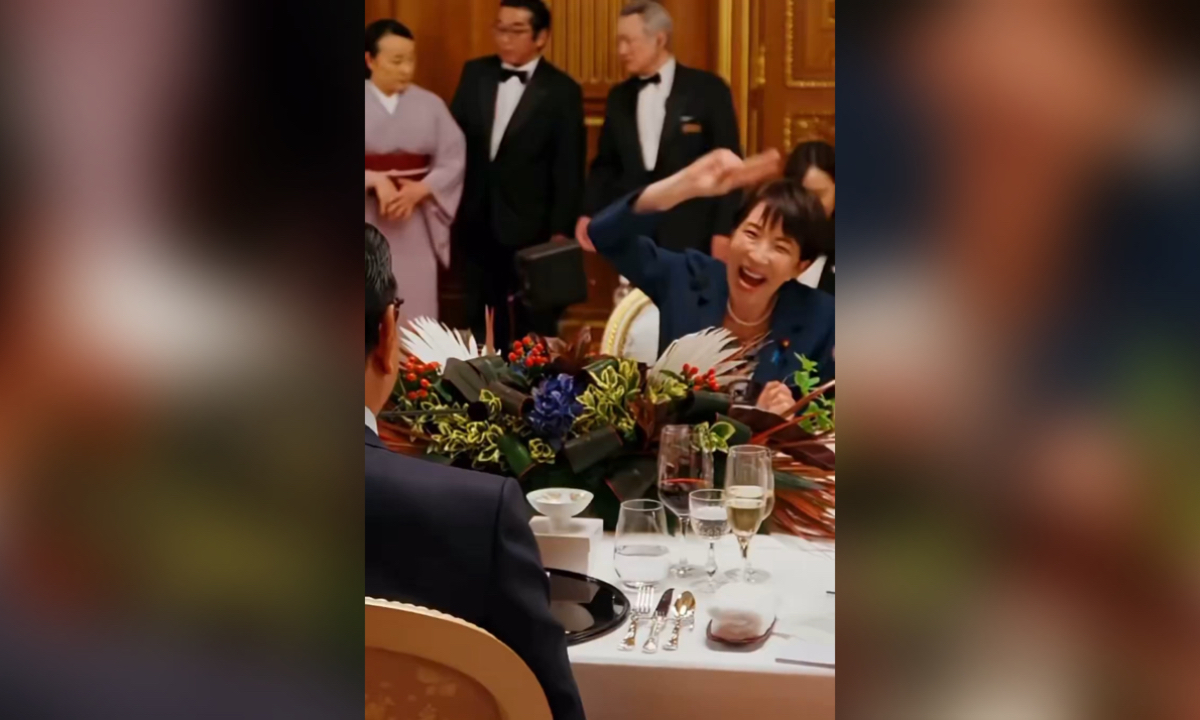
The article centers on criticism of Japanese Prime Minister Sanae Takaichi’s post-summit dinner behavior with Philippine President Ferdinand Marcos Jr., which some Japanese netizens said trivialized diplomacy and damaged Japan’s image. It also ties the episode to broader geopolitical tension, including Japan’s Taiwan-related remarks and efforts to deepen regional security cooperation. The piece is largely reputational and political in nature, with limited direct market impact.
This is less about a viral dinner clip than about how Tokyo is choosing to package strategic alignment in a more theatrical, media-native way. The marginal beneficiary is the Japan-Philippines security axis: public informality can lower political friction for deeper defense cooperation, but it also raises execution risk by making the relationship feel personality-driven rather than institutionally anchored. That matters because any future policy reversal or scandal would be amplified by the same social channels that currently create goodwill.
The second-order loser is Japan’s diplomatic brand premium. For allies, the optics may be harmless; for swing states and bureaucratic counterparts, it can signal a lack of protocol discipline and create doubt about follow-through on more serious issues like procurement, basing access, and maritime coordination. In practical terms, this can increase the cost of coalition-building by forcing Japan to spend more on repeat messaging and ceremonial reassurance, especially across ASEAN where elites are sensitive to face and decorum.
The market implication is that this is a soft-power signal with a hard-power tail: it modestly supports Japanese defense-industrial optionality over a 6-18 month horizon if Tokyo keeps leaning into regional alignment against China, but it also adds headline volatility around political leadership and governance competence. The real catalyst is not the dinner video itself; it is whether subsequent summit deliverables convert the performative warmth into contracts, exercises, or funding. If not, the narrative likely fades quickly and the reputational damage becomes net negative.
Contrarian view: consensus is over-indexing on the embarrassment and underweighting the strategic utility of “accessible” diplomacy in a region where personal rapport still lubricates deals. The bigger risk is not the viral clip, but a future domestic backlash that constrains Takaichi’s room to operate, forcing a reversion to more cautious diplomacy just as Japan is trying to accelerate its regional security architecture.
AI-powered research, real-time alerts, and portfolio analytics for institutional investors.
Request TrialOverall Sentiment
mildly negative
Sentiment Score
-0.20
