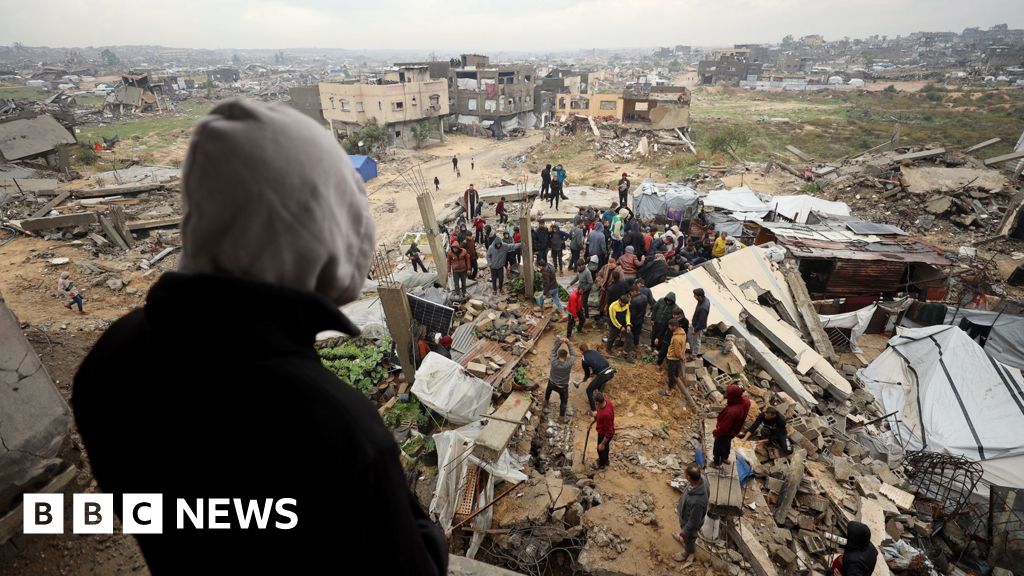
Two months into a U.S.-brokered ceasefire, Donald Trump's multi-stage Gaza peace plan has stalled: Gaza remains divided, reconstruction and a planned new government are frozen, and more than 800,000 people face flooding risk as winter storms worsen humanitarian conditions. The impasse centers on Israel's insistence—driven by the unresolved case of missing hostage Ran Gvili—that Hamas return all hostages before moving to phase two, which would require Hamas to be disarmed and security handed to an international stabilization force; Israeli political reluctance and Hamas's reorganisation mean foreign troops and large-scale reconstruction are unlikely without further concessions. With Trump pressing to accelerate the process and reports that Israel is preparing rubble clearance and temporary housing in Israeli-held Rafah (with vetting of residents), the near-term outlook points to continued fragmentation of Gaza, heightened humanitarian and security risks, and uncertainty for reconstruction contractors, aid flows and regional stability that investors should monitor closely.
Two months into a U.S.-brokered ceasefire, Donald Trump's multi-stage Gaza peace plan has stalled: Gaza remains divided by the ceasefire "yellow line," plans for reconstruction and a new government are frozen, and the UN warns more than 800,000 Gazans face flood risk after severe winter storms and building collapses. Reports that Israel is preparing rubble clearance and temporary housing in the Israeli-held area of Rafah indicate limited, conditional moves toward shelter for tens of thousands, subject to vetting and political resistance from many Gazans.
The impasse centers on the unresolved case of missing hostage Ran Gvili and Israel’s insistence that Hamas return all hostages before entering phase two, which would require Hamas disarmament and handover of security to an international stabilization force; Hamas denies holding him and Netanyahu has expressed skepticism about foreign forces’ capabilities. Retired General Israel Ziv warned Hamas is reorganising and that delay risks losing the window for effective disarmament and reconstruction.
For markets, the immediate outlook is continued fragmentation, constrained reconstruction spending and heightened geopolitical risk. The article’s moderately negative sentiment and market-impact signals imply near-term headwinds for regional infrastructure, reconstruction contractors, aid-dependent operations and any assets sensitive to prolonged instability; key event risk centers on the upcoming Netanyahu–Trump discussions and confirmation of hostage status.
AI-powered research, real-time alerts, and portfolio analytics for institutional investors.
Request DemoOverall Sentiment
moderately negative
Sentiment Score
-0.50
