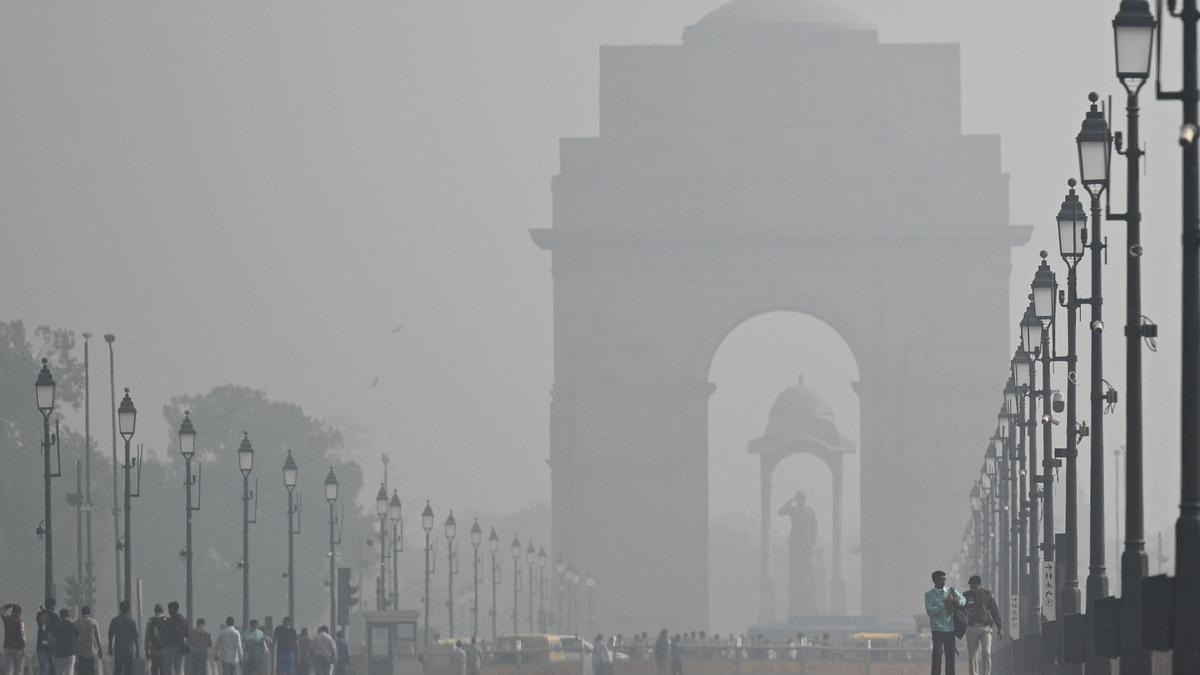
Delhi's Environment Department invoked stage three of the Graded Response Action Plan (GRAP) under Section 5 of the Environment (Protection) Act, 1986, ordering that all Delhi government offices and private establishments operate with no more than 50% staff physically present and the remainder work from home, effective November 24, 2025. The mandate, aimed at curbing severe air pollution, may modestly reduce office-based economic activity and local footfall in the near term but is unlikely to materially move broader financial markets.
Market structure: Expect a near-term rotation from physical retail/foodservice and commercial real-estate footfall toward last-mile delivery, cloud/collaboration services and indoor-air solutions. Estimate localized demand shock: retail footfall -10% to -30% in affected districts for 2–6 weeks, while cloud/collab usage rises 3–8% for the same period, favouring market-share gains for dominant platforms.
Risk assessment: Tail risk includes an extension to stage 3+ restrictions for >3 months or national policy escalation, which would magnify revenue hits and accelerate structural WFH adoption; conversely rapid meteorological improvement within 7–10 days would rollback impacts. Hidden dependencies include corporate WFH policies and school closures that amplify consumer behaviour; monitor AQI >400 for 7 consecutive days as a binary catalyst.
Trade implications: Bias toward small, concentrated longs in air-purifier/indoor-climate (VOLTAS.NS, HAVELLS.NS) and last-mile/delivery (ZOMATO.NS) for 1–3 month tactical gains, financed by shorts in Delhi-centric commercial REITs/retail landlords (DLF.NS, PHOENIXLTD.NS). Use 1–3 month call spreads to cap cost on appliance names and 4–6 week put spreads on mall/office REITs; size exposure 1–3% portfolio each, re-evaluate at AQI thresholds.
Contrarian angles: Consensus understates duration risk if this becomes seasonal (annual Nov–Jan repeat), which would re-rate REIT cap rates and raise secular demand for home appliances. Conversely the market may be overpricing long-term damage to national stocks; cut shorts if AQI <200 for 10 consecutive days or if municipal compensation/relief > INR 500m is announced.
AI-powered research, real-time alerts, and portfolio analytics for institutional investors.
Request DemoOverall Sentiment
neutral
Sentiment Score
-0.10
