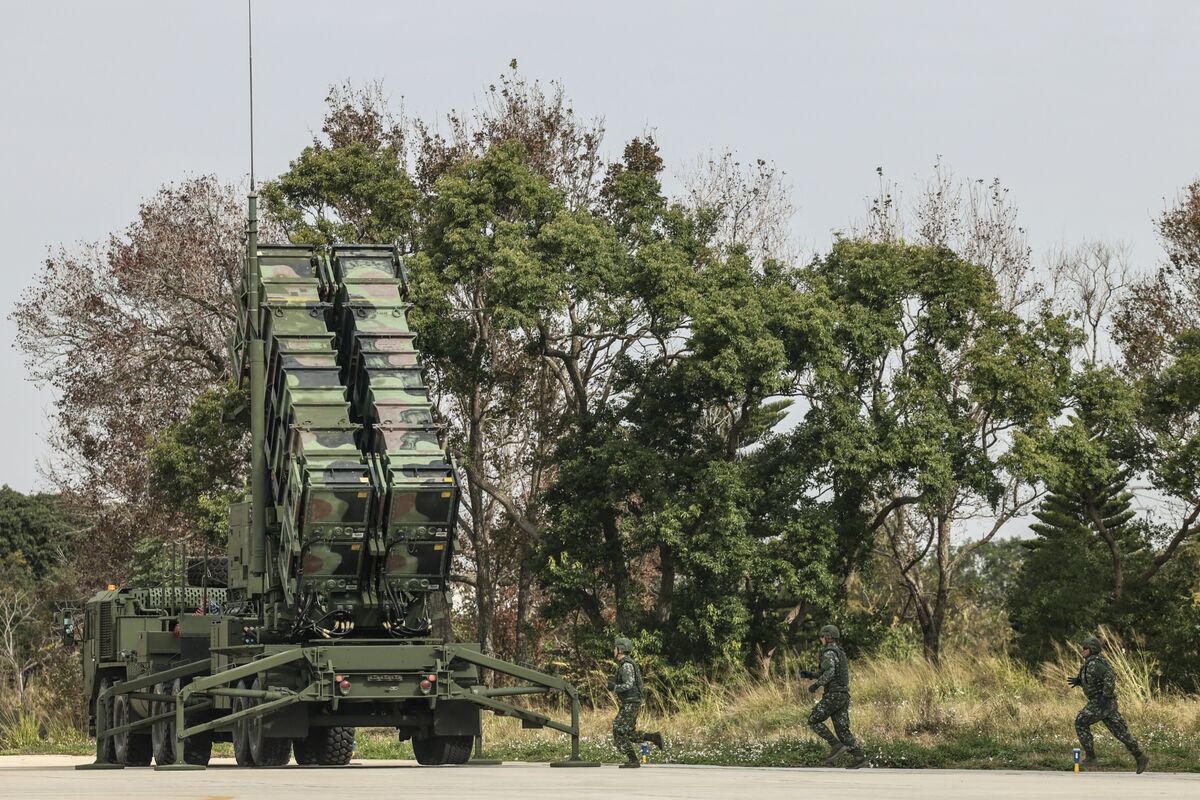
Taiwan’s Defense Ministry is working with the U.S. de facto embassy to procure Northrop Grumman’s Integrated Battle Command System (IBCS) to link domestically produced weapons into the newly announced T-Dome air-defense program, reflecting urgency amid rising Chinese military pressure. The move strengthens U.S.-Taiwan defense integration and could provide incremental near-term revenue visibility for defense suppliers while signaling heightened regional security risk and potential implications for arms export controls and supply-chain coordination.
Market structure: Northrop Grumman (NOC) and US systems integrators are direct beneficiaries; Taiwanese integrators and missile/radar suppliers (domestic and US primes) also gain negotiating leverage. If Taipei scales T‑Dome purchases, expect a mid-to-high single‑digit percentage revenue tailwind to NOC over 12–36 months and incremental pricing power on integration work due to constrained RF‑semiconductor and radar lead times. Cross‑asset: confirmed procurement events typically lift defense equities +3–7% and can cause short‑term safe‑haven flows into USTs and USD while pressuring TWD/CNY; commodity impact (copper, rare earths) is modest but persistent for RF materials.
Risk assessment: Key tail risks are a PRC kinetic/intimidation escalation, US export‑licensing denial or re‑imposition of tighter controls, and supply‑chain chokepoints for GaN/solid‑state radar chips causing cost overruns. Time horizons: immediate (days) = headline-driven volatility; short (weeks–months) = licensing, Taiwan budget approvals and initial contracts; long (1–3 years) = integration revenue, sustainment and follow‑on orders. Hidden dependencies include US State/Commerce approvals, Taiwanese parliamentary budget timing (likely 30–90 days), and interoperability testing failure modes.
Trade implications: Direct play = establish a measured 2% long in NOC with a 6–12 month target of +20% and a 10% stop‑loss; add a 6‑month 5%–15% OTM call spread sized 1% portfolio to amplify upside. Hedging = buy a 12‑month 20% OTM NOC put (0.5% portfolio) or pair long NOC vs short EWT (iShares Taiwan 0.5–1% notional) to hedge regional political risk. Sector rotation: add +2–3% to A&D ETFs (ITA/XAR) funded by trimming China‑exposed cyclicals; reassess after contract award or 90 days.
Contrarian angles: Markets may underprice the probability (>25%) of export‑control delays and integration overruns; upside is therefore binary — meaningful on contract award but muted if approvals drag past 90 days. Historical parallels (Eastern Europe procurements post‑2014) show 6–24 month procurement cycles and cost creep; set explicit trigger rules: add to longs after export license granted or budget appropriation within 60 days, cut if either delayed beyond 90 days or if reported integration tests fail.
AI-powered research, real-time alerts, and portfolio analytics for institutional investors.
Request DemoOverall Sentiment
neutral
Sentiment Score
0.10
Ticker Sentiment
