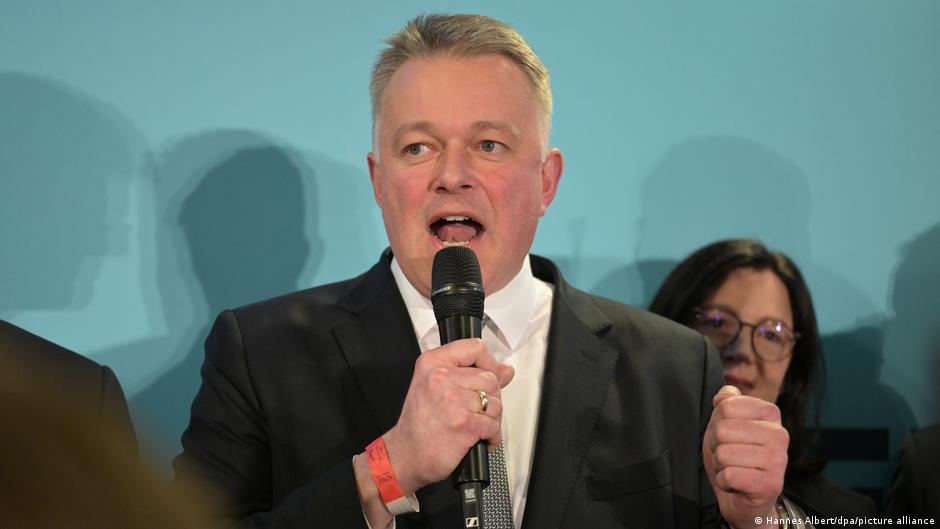
CDU projected at ~30.5% vs SPD ~27% and AfD ~20%, enabling a likely CDU‑SPD coalition that would top 50% and put Gordon Schnieder on track to replace SPD premier Alexander Schweitzer. Geopolitical risk is elevated as Chancellor Merz spoke with US President Trump amid the US‑Iran war; Berlin will investigate rising food prices linked to the conflict, implying upside pressure on inflation and energy prices. Structural domestic weakness noted with brick‑and‑mortar retail stores set to fall below 300,000 this year; Munich mayor runoff shows strong Green performance (Dominik Krause 59.1% with 495/926 precincts reported).
The immediate political alignment at the state level reduces near-term legislative tail-risk for pro-business reform (labor/social-security) that the market discounts into cyclicals and financials over a 3–12 month window. However, the AfD’s step-change in western vote share raises the structural political-risk premium: expect sporadic policy swings at state level that can create episodic volatility in German equities, bunds, and EUR crosses rather than a smooth policy path.
Geopolitical linkage between Berlin and Washington increases the probability of German industrial/energy provisioning (stocks, inventories, emergency gas purchases) and accelerated defense procurement. These are discrete triggers — defence contract announcements and Bundeswehr budget votes — that can re-rate suppliers within 30–90 days, while energy/food price shocks would feed through to core inflation and corporate margins over 1–4 quarters.
Retail store closures crossing a structural threshold compress mall cashflows and accelerate cap-rate repricing for European retail landlords, while secular winners are parcel/logistics operators and online-native retail infrastructure (warehousing, cloud). Expect operating-leverage divergence: logistics EBITDA should rebase higher within 6–12 months as brick-and-mortar shrinkage stabilises e-commerce volumes, whereas retail landlords face a 10–25% valuation haircut if vacancy and rents continue to deteriorate.
Primary catalyst risks that could reverse these themes are rapid de-escalation in the Middle East (weeks) which would depress energy/defense plays, or a CDU policy pivot toward fiscal conservatism that eases inflation concerns (months). Monitor Bundeswehr procurement calendar, German CPI prints, and bund yield moves as 3 high-leverage signals.
AI-powered research, real-time alerts, and portfolio analytics for institutional investors.
Request DemoOverall Sentiment
mildly negative
Sentiment Score
-0.15
