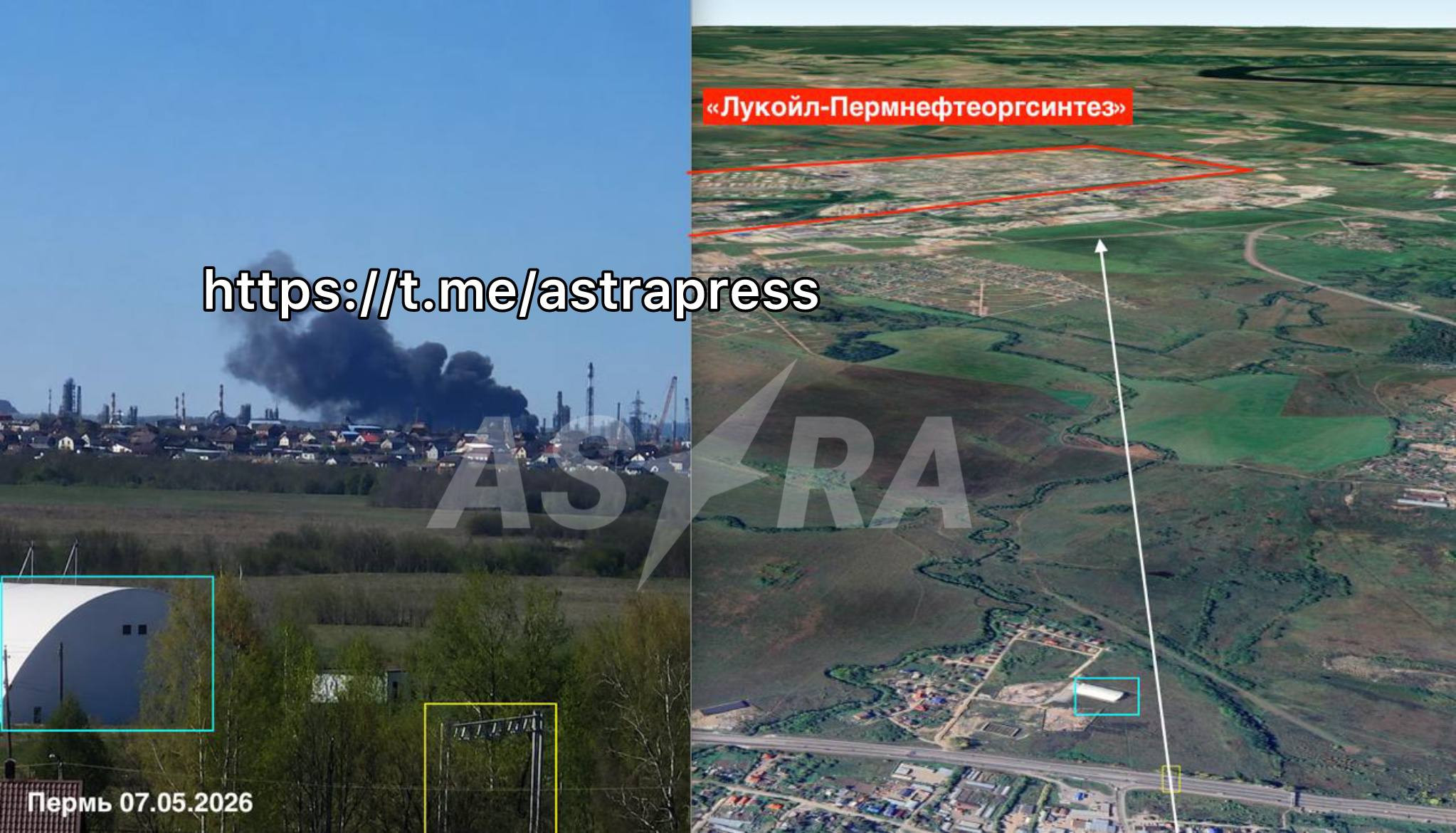
Ukraine struck a Lukoil-linked oil refinery in Perm, about 1,500 km from the Ukrainian border, in one of its deeper long-range attacks inside Russia. Russian officials said an industrial facility was hit and nearby buildings were damaged, while Ukrainian forces later claimed responsibility. The attack is part of Kyiv's broader campaign against Russian oil infrastructure aimed at curbing energy revenue and disrupting fuel output.
The market takeaway is not the headline hit itself, but the widening probability that Russia’s inland fuel and military-industrial logistics are no longer insulated by distance. Even modest physical damage to a refinery can force precautionary throughput cuts, maintenance deferrals, and higher operating costs well beyond the immediately affected site; that matters more in a tight product market than in crude. The second-order effect is a push higher in regional diesel and gasoline cracks, which can persist for weeks even if headline crude is unchanged.
This also raises the strategic value of any Russian asset tied to exportable refined products rather than crude production. If domestic refining is intermittently disrupted, barrels get re-routed into crude exports, but that is not a clean offset: pipeline and port bottlenecks, sanctions friction, and lower netbacks can all cap the benefit. The net result is that attacks on refineries can be mildly bearish for global crude supply growth while still bullish for refined product margins and tanker utilization, especially for longer-haul flows that replace lost domestic product.
The bigger issue is escalation geometry. Long-range drone success deep in Russia implies the campaign can keep moving up the value chain toward energy infrastructure, repair crews, and adjacent dual-use facilities, which creates a persistent risk premium over a 1-3 month horizon. What could reverse it is not just air defense improvement, but a diplomatic pause or a material Russian hardening of refinery defenses; absent that, the market should assume periodic outages and higher volatility in refined products rather than a one-time event.
Consensus may be underestimating how much this supports non-Russian beneficiaries more than it hurts the global system. The obvious losers are Russian refiners and domestic transport/logistics, but the broader winners are global refiners with cleaner balance sheets and exporters of diesel, jet fuel, and naphtha into Europe and the Black Sea. If crude itself rises only modestly while product cracks widen, the best expression is not outright long oil but long downstream margin exposure.
AI-powered research, real-time alerts, and portfolio analytics for institutional investors.
Request DemoOverall Sentiment
mildly negative
Sentiment Score
-0.25
