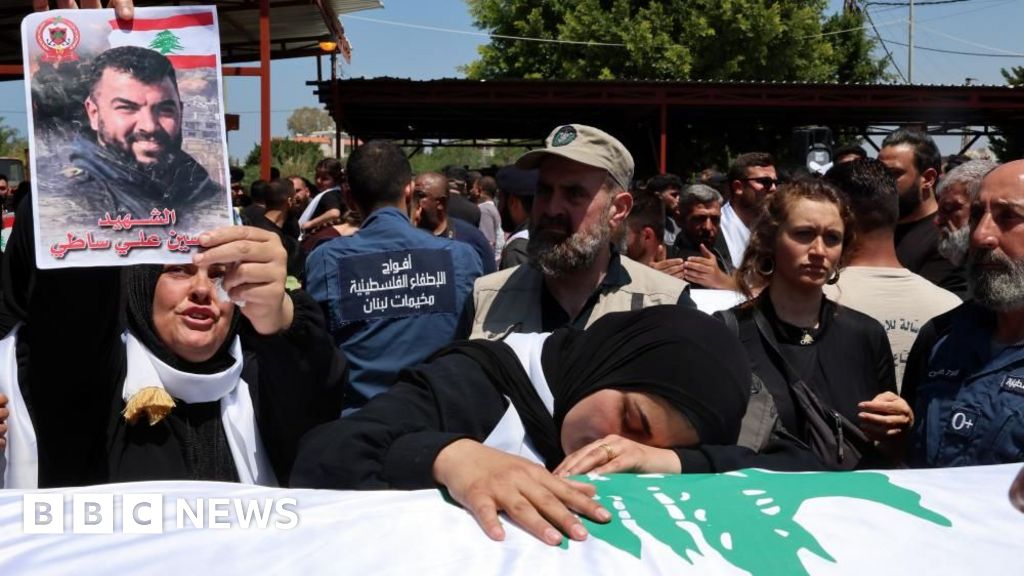
Israeli strikes in southern Lebanon killed 20 people on Sunday and 77 since Thursday, despite a ceasefire that began just over two weeks ago. Lebanon's health ministry says more than 2,600 people have been killed since 2 March, while Israel says 17 of its soldiers died in the same period and accuses Hezbollah of hundreds of rocket and drone attacks. The renewed escalation raises regional geopolitical risk and underscores that diplomatic efforts to enforce the ceasefire have so far produced no tangible results.
This is less a localized flare-up than a stress test of the ceasefire architecture, and the first-order market implication is a rising probability that “temporary” security operations become normalized. That shifts the risk premium higher for any assets exposed to Levant reconstruction, southern Lebanon logistics, and regional border throughput, even if headline war-risk pricing initially stays contained. The key second-order effect is that when one side can claim ceasefire compliance while still striking across a buffer zone, enforcement becomes ambiguous — a setup that typically prolongs violence rather than containing it. The most important catalyst is not diplomacy but decision latency: if Israel concludes drone and rocket threats are improving operationally faster than negotiations can constrain them, escalation can continue in short bursts for weeks. That creates a persistent tail risk for regional airline, shipping, and insurer names because the relevant variable is not just casualty counts, but whether commercial actors begin pricing a broader rules-of-engagement reset. The children-injury detail also raises the political cost of restraint for Lebanon’s leadership, making any fast de-escalation less likely absent third-party enforcement. Contrarian-wise, the consensus may be underestimating how much the ceasefire’s ambiguity benefits hawkish actors on both sides. Israel can preserve deterrence without a full ground campaign; Hezbollah can reframe limited retaliation as legitimacy restoration. That makes a clean negotiated settlement less likely than a grinding, low-to-mid intensity conflict that periodically jolts risk assets and keeps reconstruction capital on the sidelines. For portfolios, the trade is not a directional war thesis so much as a volatility and regional-discount trade. The cleanest setup is to fade anything that depends on near-term Levant normalization while keeping optionality on broader Middle East risk spillover if the buffer-zone logic expands. This is a days-to-weeks catalyst, but if it persists into months it becomes a capital allocation story for insurers, logistics, and EM risk premiums rather than just a headline event.
AI-powered research, real-time alerts, and portfolio analytics for institutional investors.
Request DemoOverall Sentiment
strongly negative
Sentiment Score
-0.78
