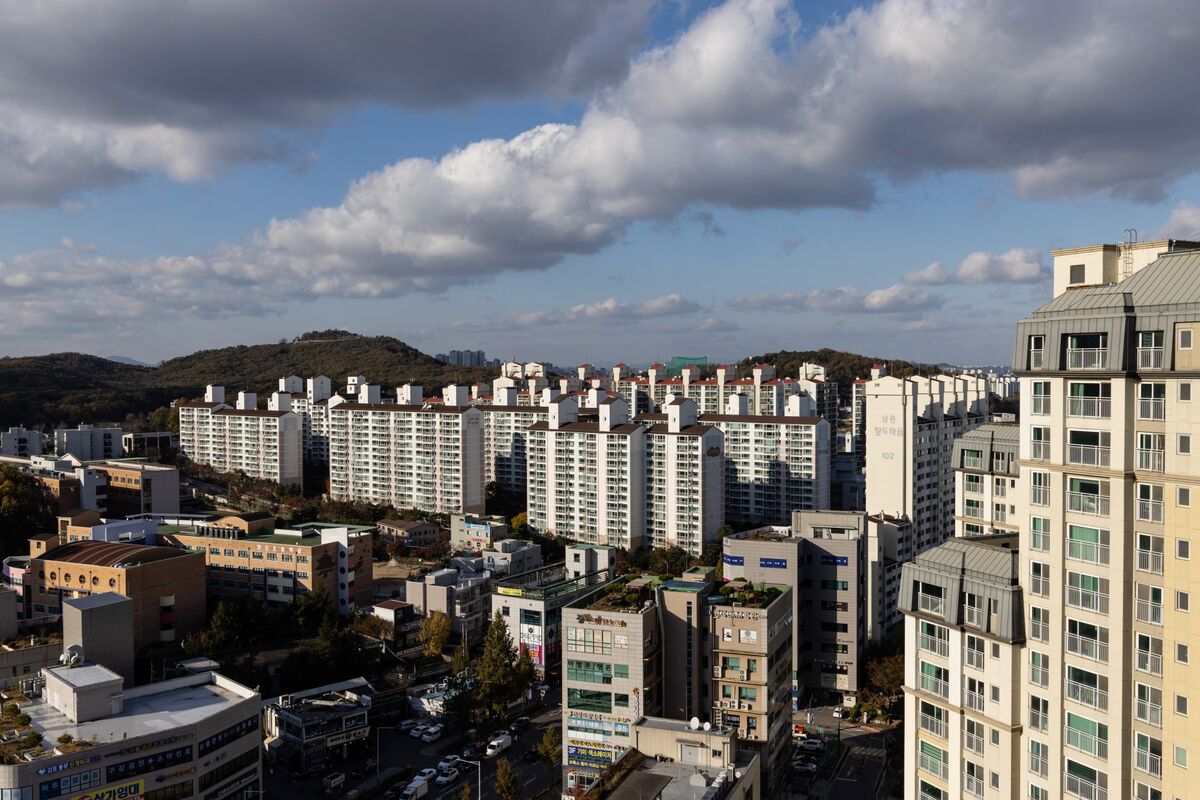
Morgan Stanley and KKR are actively investing in South Korea's $153 billion residential rental market, capitalizing on a significant, decades-long shift that presents a rare opportunity for global institutions. KKR recently acquired an apartment block in Seoul, while Morgan Stanley partnered with local manager Gravity for smaller homes, marking a notable entry of institutional capital into the region's housing sector.
Global institutional capital, led by KKR & Co. and Morgan Stanley, is making a strategic entry into South Korea’s $153 billion residential rental market, capitalizing on what is described as its most significant shift in decades. This trend is substantiated by KKR's recent acquisition of an apartment block in a prime Seoul neighborhood and Morgan Stanley's partnership with local manager Gravity to target smaller homes. The entrance of M&G Real Estate with its first-ever residential investment in the country further validates this as a rare opportunity for institutional players. These actions, viewed with strongly positive sentiment, signal a targeted deployment of private capital to capture value from structural changes in a market previously under-penetrated by global firms, highlighting a new growth vector in Asian real estate.
AI-powered research, real-time alerts, and portfolio analytics for institutional investors.
Request DemoOverall Sentiment
strongly positive
Sentiment Score
0.75
Ticker Sentiment
