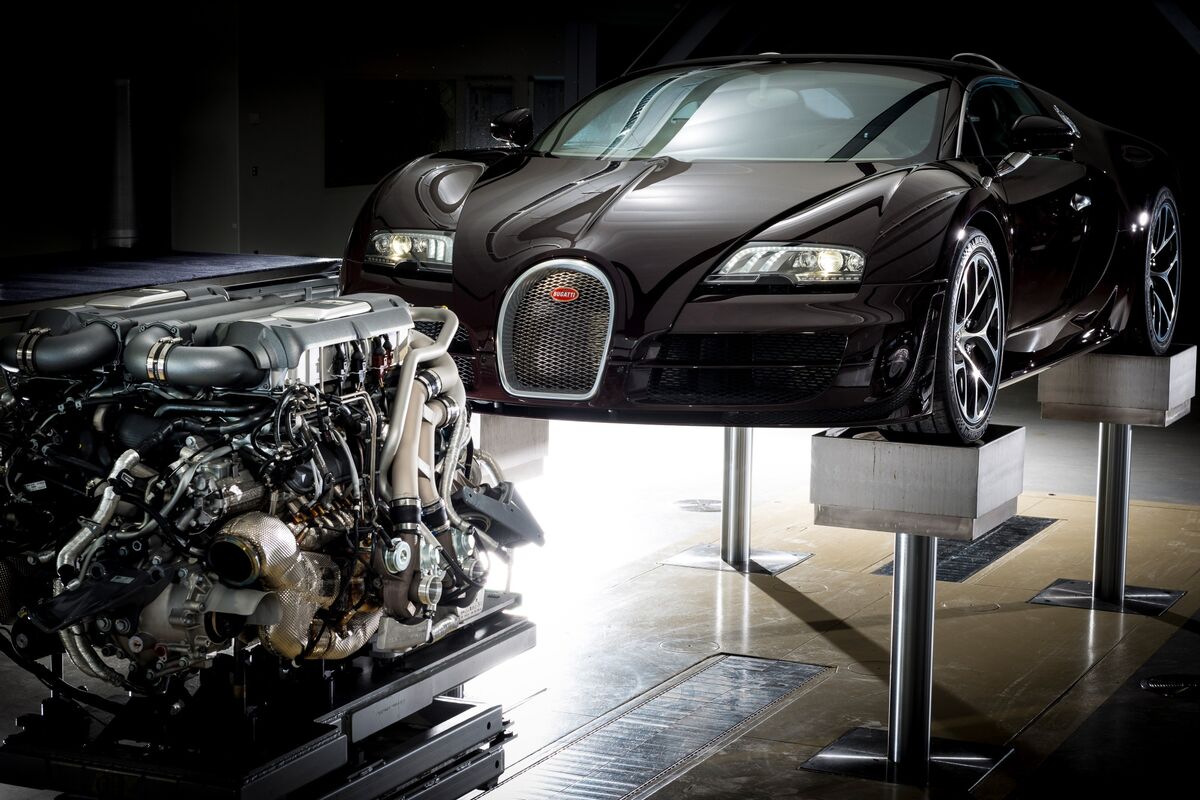
Porsche AG agreed to sell its stake in the venture that owns the Bugatti brand to a consortium led by HOF Capital, with Abu Dhabi-based BlueFive Capital as the largest investor. The deal marks Porsche’s retreat from ultra-luxury cars and is a private transaction involving institutional investors across the US and EU. The announcement is notable for Porsche’s portfolio reshaping, but the direct market impact appears limited.
This is less about a single trophy-brand divestment than a quiet signal that the ultra-luxury halo is no longer strategic core for incumbent OEMs. The likely winners are the capital providers and adjacent asset-light operators that can underwrite exclusivity without tying up industrial balance-sheet capacity; the losers are OEMs trying to defend sub-scale niche brands while funding EV, software, and compliance capex. Second-order, this reinforces a broader carve-out playbook: legacy carmakers will increasingly monetize non-core luxury assets, IP, or JV stakes to de-lever and reallocate capital toward higher-volume platforms.
For competitors, the message is that scarcity and brand narrative still command value, but only if ownership structure is flexible enough to support low-volume economics. That benefits specialty manufacturers, coachbuilders, and bespoke suppliers with pricing power, while pressuring mainstream luxury OEMs whose brand extensions may now look like capital traps rather than growth engines. Supply-chain spillover is limited in the near term, but any restructuring of ultra-low-volume production can shift procurement away from captive systems toward outsourced, variable-cost setups over the next 6-18 months.
The key risk is that this is read as a confidence signal on demand when it may actually be a capital allocation decision: if premium end-demand remains soft, the consortium inherits a brand that needs patient capital and a much longer monetization horizon. The contrarian view is that the move is not an admission of weakness in luxury demand, but recognition that ultra-luxury is better owned by financial sponsors than industrials. If that framing sticks, expect a broader rerating of non-core brand carve-outs across autos over the next several quarters.
AI-powered research, real-time alerts, and portfolio analytics for institutional investors.
Overall Sentiment
neutral
Sentiment Score
0.05
