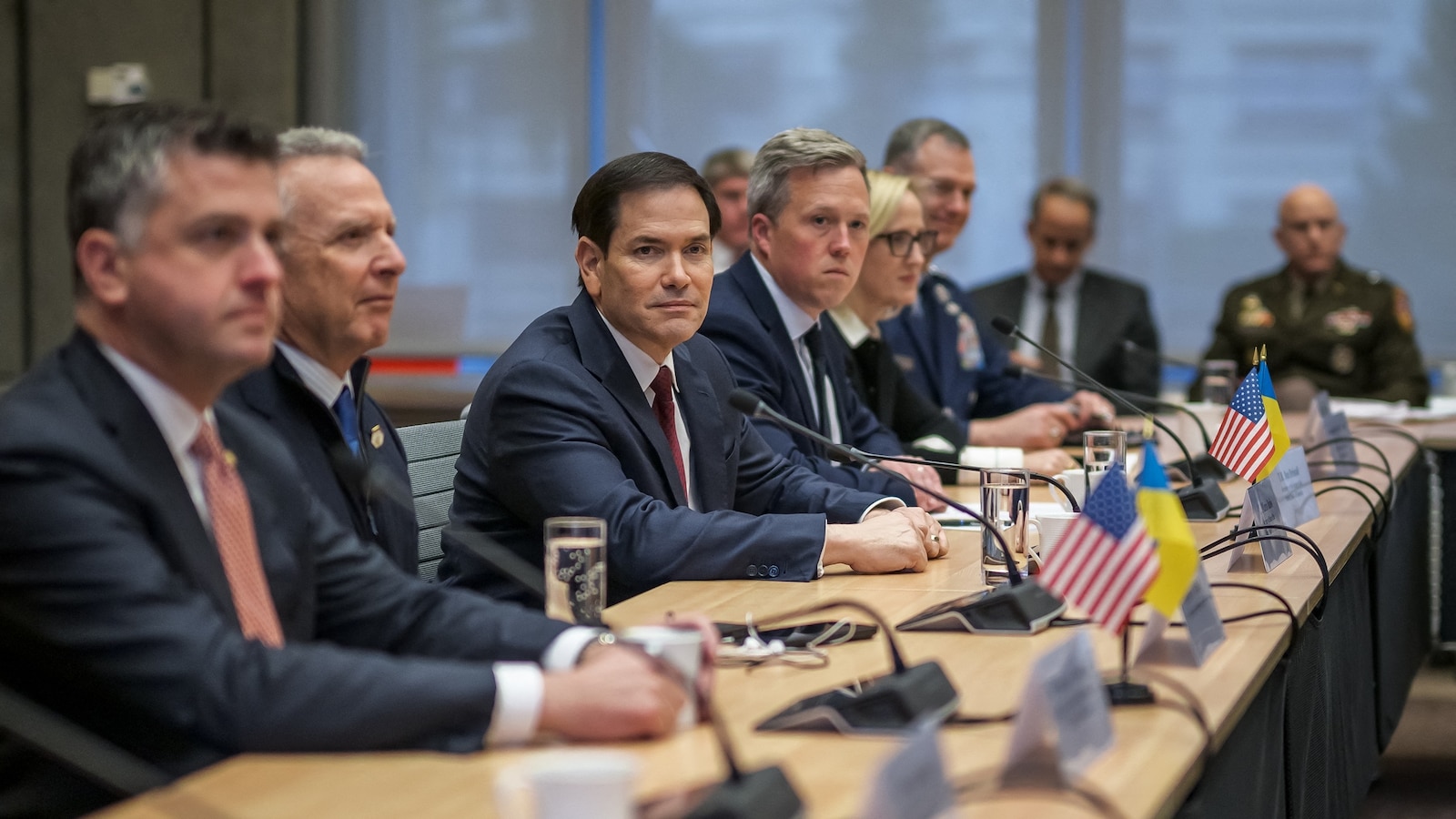
Marco Rubio called Geneva talks between U.S., Ukrainian and European delegations “productive,” as they negotiated a controversial U.S.-proposed 28-point peace plan that critics say amounts to a Ukrainian capitulation by demanding cuts to Ukraine’s armed forces of more than half, territorial concessions, a ban on long-range weapons and de facto recognition of Crimea. U.S. officials warned that Washington could halt all assistance — including air-defense missiles and intelligence sharing — if Kyiv rejects the proposal, even as Ukrainian negotiators described meetings as constructive and said some elements reflect Ukrainian priorities; Russia has received the text and President Putin said it could form a basis for settlement, while European leaders and some U.S. senators expressed skepticism about authorship and appeasement risks. With Russia continuing strikes (Ukraine reported 98 drones launched, 69 shot down), the talks carry immediate operational implications for Ukraine’s defense posture and could materially alter Western military support, regional security and political risk for markets depending on whether a deal is agreed or collapses.
U.S., Ukrainian and European delegations met in Geneva to negotiate a controversial U.S.-proposed 28-point peace plan that U.S. Senator Marco Rubio described as "probably the most productive and meaningful meeting" to date; the plan reportedly would require Ukraine to cut its armed forces by more than half, cede additional territory, forswear long-range weapons and accept de facto recognition of Russia's 2014 seizure of Crimea. The proposal was drafted with input from the Kremlin and Ukrainian security officials, but authorship and intent are contested by bipartisan U.S. senators and several European leaders, and President Putin said Moscow received the text and it "could" form a basis for settlement.
U.S. officials warned Washington could halt all assistance to Kyiv — explicitly including air-defense missiles and intelligence sharing — if Ukraine rejects the deal, while Ukrainian negotiators described Geneva talks as constructive and Kyiv stressed the need to strengthen air defenses after Russia launched 98 drones (69 of which Ukraine said were shot down). Domestic political pressure is evident: Zelensky warned of a stark choice between "dignity" and losing a key partner, and a coalition of 48 officials warned against appeasement, highlighting sovereign and reputational risks for Western backers.
AI-powered research, real-time alerts, and portfolio analytics for institutional investors.
Request DemoOverall Sentiment
mixed
Sentiment Score
-0.10
The immediate market implication is heightened geopolitical and policy risk: a collapse or acceptance of the plan would materially alter the flow of Western military support and defense procurement needs, and could affect European energy dependency dynamics flagged by U.S. criticism of Europe buying Russian oil. Investors should treat the outcome as an event-driven catalyst that will influence demand for air-defense systems, volatility in regional political-risk premia, and the timing of Western assistance; monitor further diplomatic confirmations and formal presidential approvals as near-term triggers.
