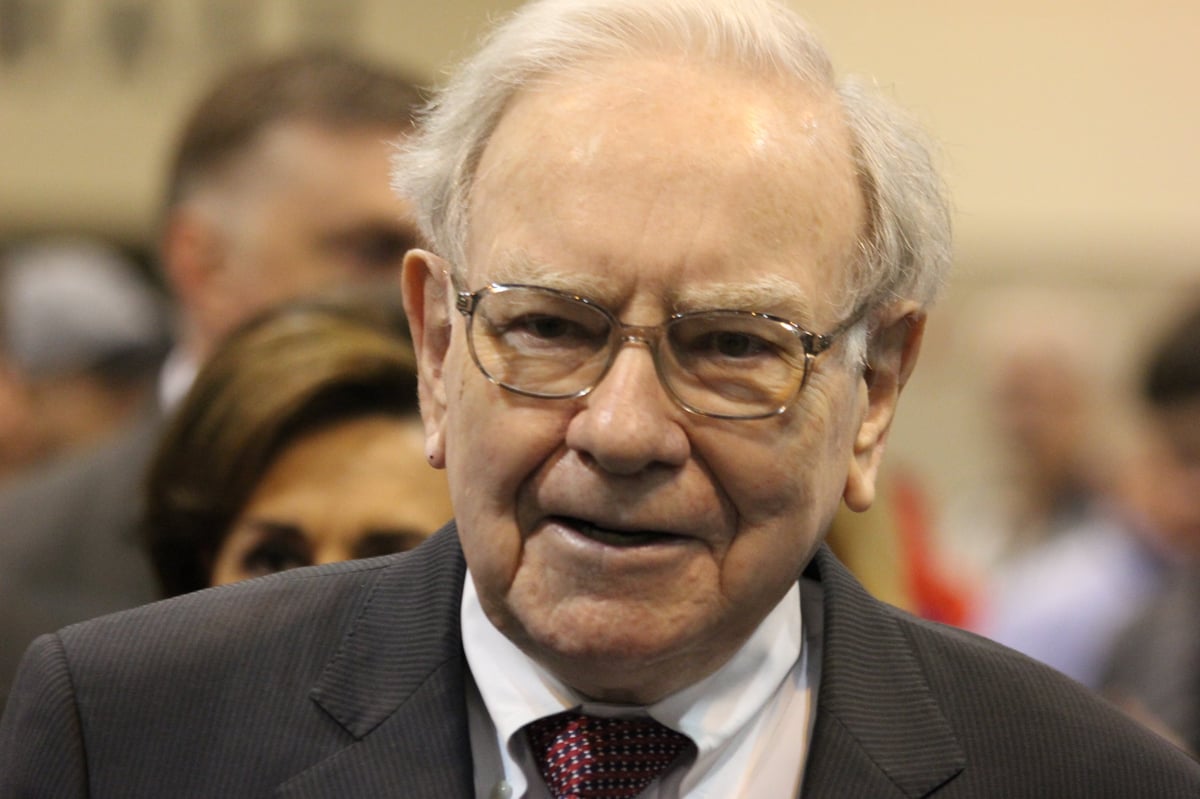
Berkshire Hathaway, which began accumulating Apple in 2016 with an initial $1bn purchase and at one point held a position worth over $100bn, has trimmed Apple in six of the last eight quarters as it accumulates record cash (roughly one‑third of its market cap). The move reflects broad caution about rich market valuations (S&P trading above 30x earnings) and a view that Apple’s multiple has expanded materially — P/S rising from <3 to >10 and P/E from <12 to nearly 40 — while revenue growth has slowed from routine 10%+ gains (2012–2022) to slight declines in 2023–24 and consensus sales growth of ~8.8% this year and ~6.2% next year. The combination of stretched valuation and Berkshire's difficulty finding acquisitions to deploy cash is the likely driver of the reductions, signaling a defensive positioning that could influence investor sentiment toward large-cap tech.
Market structure: Berkshire's progressive trimming of AAPL and record cash (≈33% of BRK market cap) benefits liquid buyers (index funds, active managers seeking large blocks) and creates short-term supply that can pressure AAPL in the next 2–8 weeks around 13F/portfolio rebalances. Losers: concentrated AAPL holders and momentum funds that depend on continued multiple expansion; beneficiaries: large-cap tech peers (MSFT, NVDA) that can capture investor rotation into secular software/AI growth. This increases dispersion within mega-cap tech and reduces AAPL's relative pricing power if investors demand higher growth for the same multiple.
Risk assessment: Tail risks include an iPhone demand shock (>-15% revenue surprise over a quarter), an accelerated US/EC antitrust push on App Store/services, or a broad market re-rate that knocks S&P forward P/E from ~30 to <20, each capable of a 20–40% AAPL move. Immediate (days) risk: block sales around filings; short-term (weeks–months): multiple compression if growth misses; long-term (years): secular slowdown in device cycles versus services expansion. Hidden dependency: Berkshire selling may be liquidity-driven, not fundamental bearish on Apple products — a catalyst that could reverse if buybacks/acquisitions accelerate at BRK within 6–12 months.
Trade implications: Direct plays: short-biased positioning on AAPL for 3–6 months given P/E ~40 and P/S >10 vs forecasted revenue growth decelerating to ~6% next year. Pair trade: go long BRK.B (1–2% portfolio) vs short AAPL (1–2%) to capture potential upside if Buffett redeploys cash into M&A/buybacks while AAPL faces re-rating. Options: implement defined-risk put spreads on AAPL (3–6 month buy 5% OTM put / sell 15% OTM put) or sell covered calls if holding AAPL to generate yield. Rotate 3–6% from hardware-heavy mega-cap to AI/semiconductor exposure (NVDA) and defensive consumer staples until valuation dispersion narrows.
Contrarian angles: Consensus assumes Berkshire selling = secular loss of confidence; missing is that cash build implies potential large, non-linear redeployments (acquisition or buybacks) within 12 months which would be bullish for BRK.B re-rating. Reaction may be overdone for AAPL if services growth reaccelerates or margins expand — consider accumulating on >20% pullback or if forward P/E drops below 25. Historical parallel: large cap deconcentrations (e.g., GE, IBM) created multi-quarter volatility but often left the underlying business intact; asymmetric opportunities exist for option-defined shorts and conditional long accumulation.
AI-powered research, real-time alerts, and portfolio analytics for institutional investors.
Request DemoOverall Sentiment
moderately negative
Sentiment Score
-0.45
Ticker Sentiment
