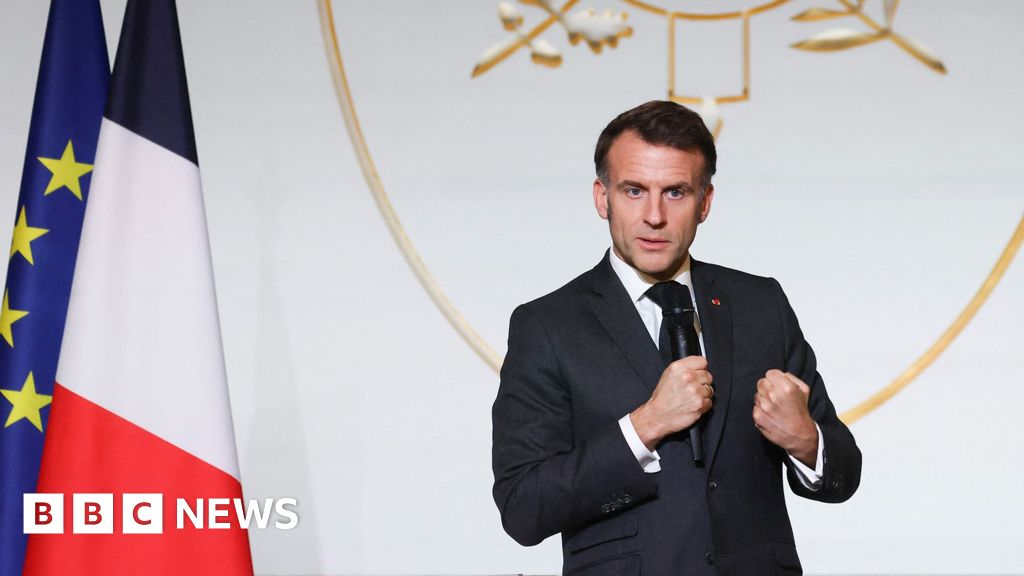
French President Emmanuel Macron urged the EU to assert itself geopolitically and economically, proposing EU-wide mutualised borrowing (eurobonds) to raise 'hundreds of billions' and backing calls for a shared debt capacity to fund large industrial programmes. He quantified an investment need of €1.2tn per year for security and defence, clean energy and artificial intelligence, warned of growing strategic pressure from China, Russia and a distancing US, and faced likely resistance from fiscally conservative member states such as Germany.
Market-structure: Macron’s public push for mutualised EU debt and €1.2tn/yr of industrial spending elevates optionality for large-scale euro fiscal issuance and coordinated capex (defence, clean energy, AI). Winners: European defence primes, AI/semiconductor suppliers, clean-energy installers, and sovereign borrowers in the periphery via spread compression; losers: US Treasury safe-haven demand and exporters who face tougher EU “coherence” trade rules. Expect upward pressure on EUR and European equity multiples if markets price credible fiscal capacity within 6–18 months. Risk assessment: The largest tail risks are political pushback (Germany/Netherlands veto) or legal constraints that prevent true debt mutualisation — a failed process could widen peripheral spreads >100bp in days and trigger equity volatility. Near-term (days–weeks) volatility will hinge on the EU summit and statements from Berlin; medium-term (3–12 months) depends on treaty or fiscal-tool design; long-term (1–3 years) depends on execution and ECB interaction. Hidden dependencies include credit-rating reactions, ECB QE calibration, and investor appetite for EUR-denominated safe assets that could reverse flows. Trade implications: If political traction accelerates post-summit, expect 50–150bp fall in Italian/Spanish yields vs Bunds over 6–12 months and 5–10% EUR appreciation vs USD. Capitalize by rotating into European defence (structural fiscal upside) and AI/semiconductor supply chain names while trimming US-duration exposure. Use options to express directional EUR and rate views rather than outright leveraged cash bets because of binary political outcomes. Contrarian angles: Consensus assumes either immediate eurobonds or outright rejection; market is underpricing intermediate outcomes (partial mutualisation, project-level guarantees). A phased programme (EU guarantees for specific green/AI projects) would still compress spreads and benefit corporates without full political consolidation — that would favor equities over sovereigns in the short run. Beware moral-hazard debates and credit-rating downgrades for large debtor states if fiscal backing is ambiguous.
AI-powered research, real-time alerts, and portfolio analytics for institutional investors.
Request DemoOverall Sentiment
mildly negative
Sentiment Score
-0.25
