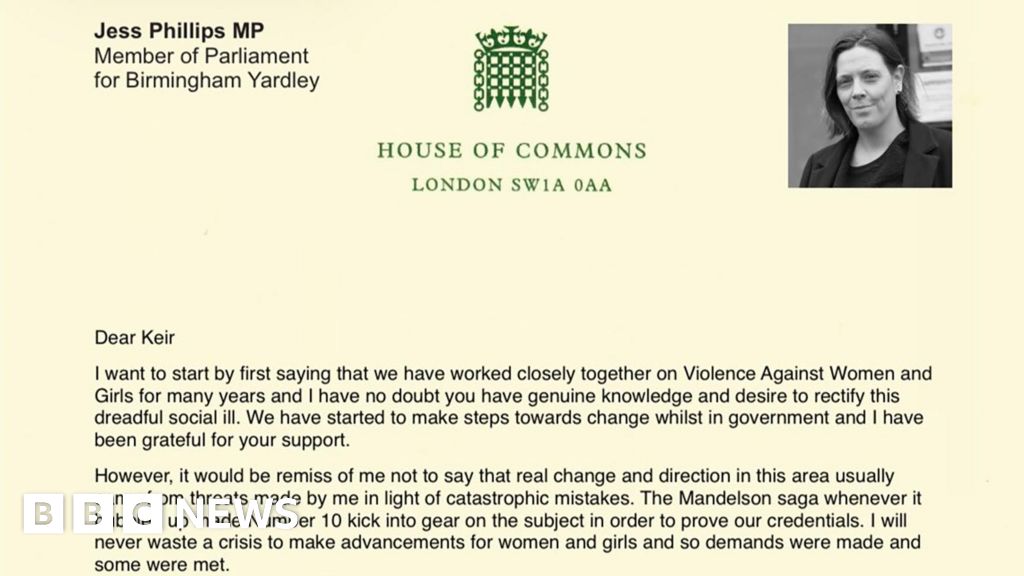
Four UK ministers, including safeguarding minister Jess Phillips, have resigned in protest, with the letters directly calling for Prime Minister Keir Starmer to set out a timetable for departure or transition. The resignations cite loss of public trust, inadequate pace on policy delivery, and leadership failures across issues including women’s safety, devolution, welfare, and health innovation. The event heightens political instability in the Labour government and could unsettle near-term policy execution, though direct market impact is likely limited.
This is less about the resignations themselves than the collapse of ministerial cohesion in a government whose market premium has been built on “competence” rather than ideology. That premium is now at risk of repricing, because the key second-order effect is not immediate policy reversal but legislative drift: when senior ministers leave over pace and direction, the probability of diluted, delayed, or internally vetoed reforms rises materially over the next 1-2 quarters. That is particularly relevant for sectors that depend on state follow-through rather than headline promises — health-tech procurement, digital public services, housing retrofit, and regulated online safety compliance.
The biggest beneficiary may be opposition-linked policy volatility traders rather than any single equity. If leadership instability persists, the government becomes more likely to sacrifice controversial but economically meaningful measures to restore discipline, which means lower near-term policy velocity in regulation-heavy names and a higher chance of fiscal recalibration ahead of the next budget cycle. For healthcare and life sciences, that creates a bifurcated setup: near-term headlines can support contract awards and innovation messaging, but multi-year capital allocation decisions could be slowed if Whitehall attention shifts from execution to survival.
The contrarian read is that the market may overstate the chance of an imminent policy reset. Cabinet resignations of this type often produce a short-lived narrative shock while institutional inertia keeps most spending and procurement pipelines intact. If the prime minister survives the next few weeks, the greater risk is not an immediate unwind but a slower credibility bleed that widens risk premia in domestic cyclicals, UK midcaps, and any company reliant on government implementation rather than regulation alone.
AI-powered research, real-time alerts, and portfolio analytics for institutional investors.
Request DemoOverall Sentiment
strongly negative
Sentiment Score
-0.70
For healthcare-specific exposure, the resignation from an innovation/safety brief matters because it raises execution risk around digital NHS projects and specialty safety remediation. The market should not discount the possibility that public-sector counterparties slow down commercial decisions for 3-6 months, which would hit revenue recognition more than long-term demand.
